
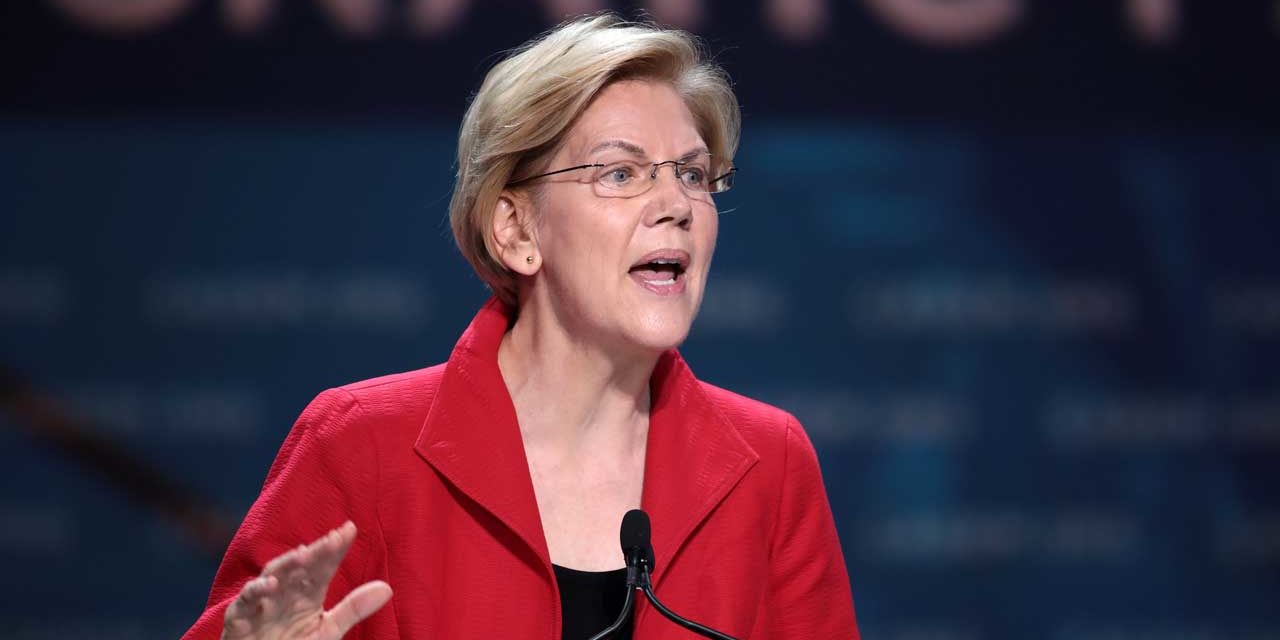
Democrats securing control of both chambers of Congress in November’s midterm elections has amplified investor anxiety over AI regulation, power consumption rules, and restrictions on data center construction.
The political shock compounded an already deteriorating picture for the sector, with the Global X Data Center & Digital Infrastructure ETF losing nearly 4% in a single session and extending its six-month decline to more than 18%.
The NASDAQ 100 recorded its steepest one-day drop in 19 months, falling nearly 6% and trimming its year-to-date advance to just 5% after the index had surged to a record peak of 30,800 on AI enthusiasm.
Short sellers have responded aggressively, targeting companies that combine heavy debt loads with uncertain cash flow timelines across the AI infrastructure space.
TeraWulf Inc. (NASDAQ: WULF) carries the highest short interest among the group at 24.34% of outstanding shares as of October 30, even though the stock remains fractionally positive for the year at 5.20%.
The company has shed nearly 40% of its value over the past six months as investors question whether its shift from Bitcoin mining toward high-margin AI infrastructure leasing can generate returns quickly enough to justify costs.
TeraWulf announced credit support agreements with Google on November 4 covering approximately $19 billion in contracted lease commitments, yet concerns persist about the $4 billion to $4.5 billion in development costs required for its Hawesville, Kentucky campus alone.
Third-quarter revenue climbed to $76.23 million from $50.57 million a year earlier, and the company swung to a net income of $709.9 million against a loss of $455.01 million in the prior-year period, offering some evidence that the business model is maturing.
IREN Limited (NASDAQ: IREN) ranks second on the short-seller target list with 22.31% of its shares sold short, and the stock has shed nearly 53% of its value year-to-date through November 12.
A first-quarter fiscal 2027 net loss of $263 million revealed the cost of IREN’s aggressive infrastructure push, even as revenue climbed 66% sequentially to $228 million and AI Cloud revenue surged 182% to $200 million.
The company’s target of achieving more than $4 billion in annualized run-rate revenue slipped from year-end 2026 to January 2027, while capital commitments reached $18.95 billion at the close of September.
Applied Digital Corporation (NASDAQ: APLD), with short interest at 20.32%, has delivered a year-to-date loss of 37.92% and carries $6.4 billion in debt against $3.7 billion in cash, cash equivalents, and restricted cash as of August 31.
Despite the financial strain, the company has locked in approximately 1.41 gigawatts of contracted critical IT capacity across five campuses, anchored by a major agreement with AI cloud provider CoreWeave.
Nebius Group N.V. (NASDAQ: NBIS) has drawn 18.74% short interest after raising its 2026 capital expenditure forecast to roughly $27 billion and securing a $3.5 billion senior secured financing facility from Citi for data center and GPU expansion.
The bearish positioning contrasts sharply with Nebius’s second-quarter results, which showed revenue surging 454% to $582 million with AI cloud-adjusted EBITDA reaching 50%, suggesting real demand rather than purely speculative momentum.
Cipher Digital Inc. (NASDAQ: CIFR) rounds out the group with 18.49% short interest and a year-to-date loss of 54.38%, the steepest decline among the five stocks, as its pivot from cryptocurrency mining to high-performance computing weighs on near-term financials.
Long-term borrowings on its September balance sheet reached approximately $5.45 billion, more than double the $2.71 billion recorded at the end of 2025, while third-quarter revenue of roughly $27 million remains modest relative to that debt burden.
The company’s Barber Lake lease does provide a longer-term anchor, with contracted revenue of approximately $9.1 billion over 20 years and a development pipeline of about 5.9 gigawatts supported by customers including Amazon Web Services.
Across all five names, the central tension is the same: multibillion-dollar infrastructure commitments and expanding debt loads are colliding with a political climate that may impose new constraints on the industry’s growth trajectory.
Whether the current sell-off represents a temporary reset or a deeper reassessment of AI infrastructure valuations will depend heavily on how quickly these companies can convert contracted capacity into reliable cash flows.
