
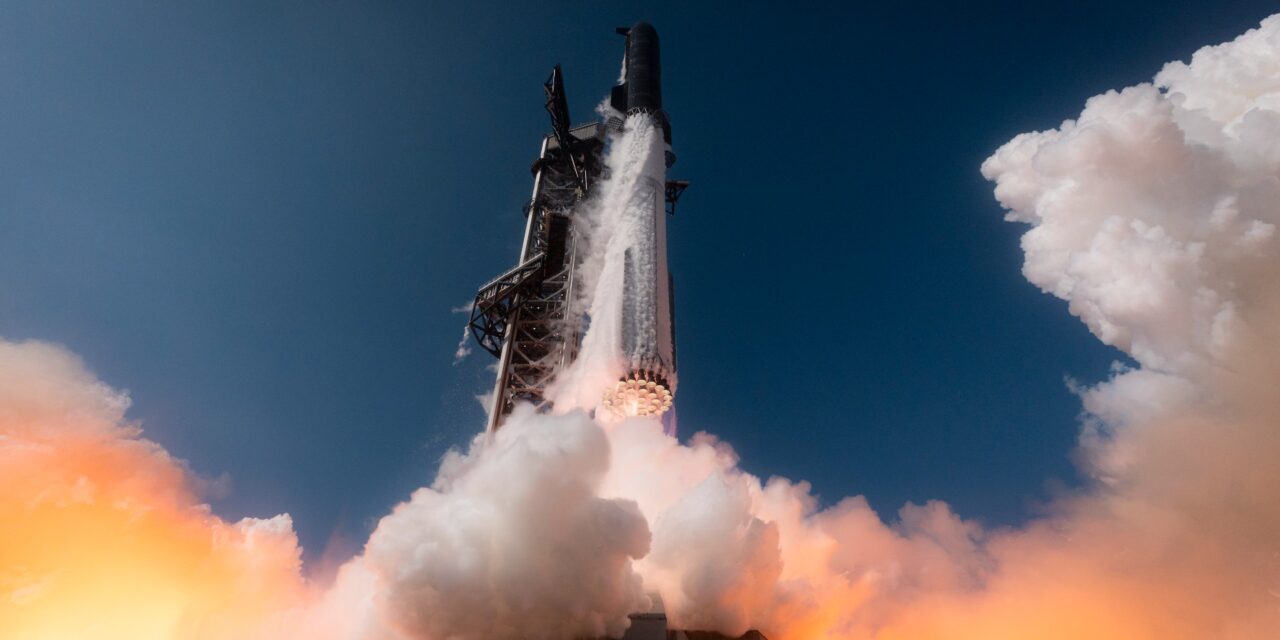
When SpaceX (NASDAQ: SPCX) went public in June, capital flooded toward the rocket giant and drained away from a cluster of smaller rivals, triggering a broad selloff across the sector.
That rotation may have created a buying window, with three mid-tier space companies now drawing renewed attention from investors willing to hold through the end of the decade.
AST SpaceMobile (NASDAQ: ASTS) stands out on pure growth velocity, posting revenue expansion of 185% and carrying a price-to-sales ratio of 63, reflecting the market’s appetite for its ambitious satellite connectivity model.
The company builds large low Earth orbit satellite arrays designed to extend cellular coverage into remote regions that conventional ground-based towers cannot serve, partnering with carriers including AT&T and Verizon.
AST has deployed 13 BlueBird satellites to date, but analysts note the constellation must surpass 45 satellites before the company can generate stable, recurring commercial revenue at meaningful scale.
Rocket Lab (NASDAQ: RKLB), which manufactures reusable orbital rockets and is broadening its business toward full-spectrum space services, recorded 43% revenue growth and trades at a price-to-sales multiple of 41.
Analysts project that if Rocket Lab sustains a 20% compound annual revenue growth rate through 2030 and the stock trades at 20 times forward sales, its market capitalization could expand by roughly 25% in that final year alone.
Redwire (NYSE: RDW) is the most conservatively valued of the three, carrying a price-to-sales ratio of just 4, with 25% revenue growth underpinned by rising demand for space hardware components as the broader industry scales.
Analysts tracking the sector believe two of the three companies carry genuine multibagger potential before the decade closes, though the projections rest on assumptions that deserve healthy skepticism.
A shared vulnerability across all three is the absence of near-term profitability, which exposes each company to aggressive short-selling pressure whenever broader market conditions deteriorate.
Investors with a tolerance for volatility and a long time horizon may find the post-SpaceX-IPO dislocation has left these three names trading at levels that better reflect their risk-reward profiles than they did earlier in the year.
The space economy’s long runway for growth means component suppliers, launch providers, and satellite connectivity platforms could all see sustained demand, but execution risk remains elevated for companies still burning cash to build out infrastructure.
