
Despite operating in completely different industries, the valuation gap separating Booking Holdings (NASDAQ: BKNG) and GameStop (NYSE: GME) has grown surprisingly narrow, raising a legitimate question for investors planning ahead.
The contrast between the two companies could hardly be sharper on the surface, with one running a high-margin global travel platform and the other managing a sprawling physical retail footprint in transition.
GameStop’s pivot away from its traditional retail identity accelerated in ways that few analysts anticipated, most notably when the company launched an unsolicited bid to acquire eBay earlier this year.
That bold move signaled a deliberate shift toward a capital allocation strategy, suggesting GameStop’s leadership is less focused on reviving its legacy retail business than on deploying its balance sheet elsewhere.
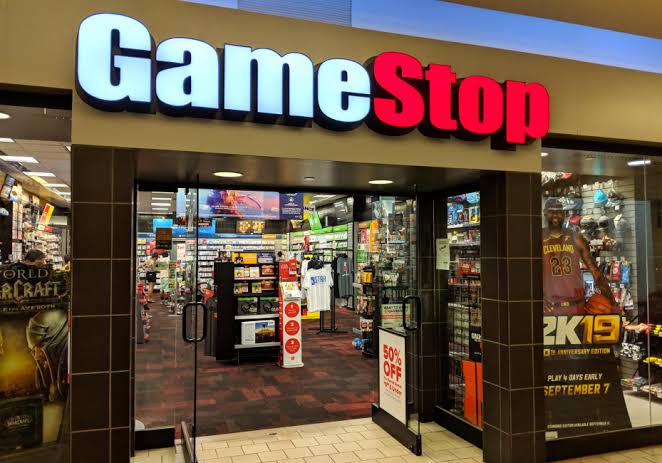
The company still maintains an extensive network of physical stores and relies on third-party delivery providers to support its buy-sell-trade fulfillment operations for games and collectibles.
Whether those partnerships represent a sustainable foundation or merely a bridge while management pursues larger ambitions remains one of the central uncertainties hanging over the stock.
Booking Holdings, by contrast, has continued to generate the kind of free cash flow that gives long-term investors confidence in the underlying durability of its business model.
Its global travel platform commands premium margins, and the company’s growth trajectory has remained strong enough that its current valuation looks inexpensive relative to both direct competitors and an unlikely comparison point in GameStop.
The fact that Booking’s valuation appears cheap compared to a retailer mid-pivot is itself a telling data point about how the market has been pricing these two very different stories.
For investors weighing where to position capital ahead of 2027, the fundamental picture points in one direction, with Booking Holdings offering a combination of growth momentum, margin quality, and free cash flow generation that GameStop’s transformation story cannot yet match.
GameStop’s eBay bid may ultimately prove to be a shrewd capital move, but strategic ambition alone does not close the gap against a proven, high-margin global platform with demonstrable earnings power.
The verdict for 2027 favors Booking Holdings, where business quality and valuation together make a more compelling case than the speculative upside embedded in GameStop’s ongoing reinvention.
