
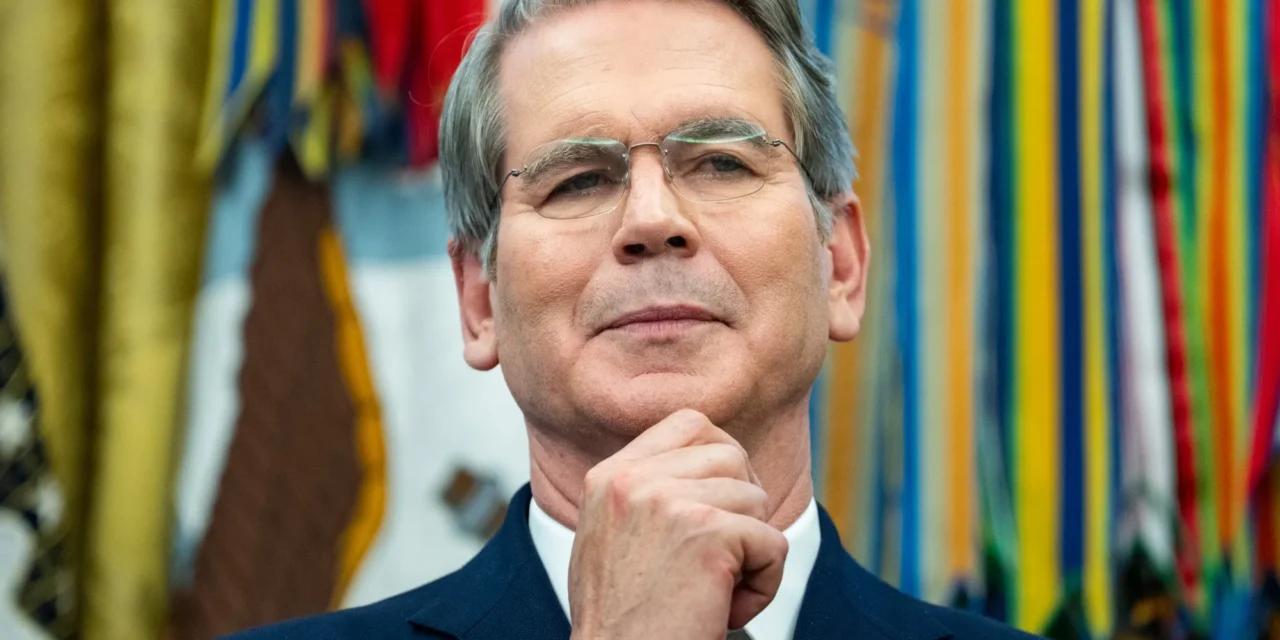
Scott Bessent, the U.S. Treasury Secretary, chose a national television appearance to point the finger squarely at a colleague, publicly holding Commerce Secretary Howard Lutnick responsible for the Nvidia spy scandal.
Speaking on CNBC, Bessent singled out Lutnick’s Commerce Department as the source of the problem, an extraordinary public rebuke between two officials who continue to serve side by side in the same administration.
The Nvidia affair has intensified scrutiny of the Commerce Department’s oversight role, and Bessent’s on-camera remarks ensured the blame landed firmly at Lutnick’s door rather than spreading across the broader executive branch.
The public fracture between two senior cabinet officials underscores a wider pattern of turbulence inside an administration that has seen a notable wave of high-profile departures, particularly among women who once held senior posts.
Former Homeland Security Secretary Kristi Noem, former Attorney General Pam Bondi, and former Labor Secretary Lori Chavez-DeRemer are among those who have exited, along with former National Intelligence Director Tulsi Gabbard.
U.S. Ambassador to Greece Kimberley Guilfoyle and press secretary Katie Zacharia have also recently departed, adding to a lengthening roster of prominent women pushed out or sidelined.
The concentration of female officials among those fired or forced to leave has drawn attention to the administration’s internal dynamics and the durability of political alliances within Trump’s inner circle.
Against this backdrop of personnel churn and public feuding, a structural shift in how the administration controls its public messaging is also underway, driven by new chief of staff Stephen Miller.
A memo circulated under Miller’s authority expands the messaging autonomy granted to individual Cabinet secretaries, a meaningful departure from the tight centralized control that defined the tenure of his predecessor, Susie Wiles.
Sources described Wiles as having maintained a near-total grip on administration communications, making Miller’s move to decentralize that authority a significant realignment of power within the West Wing.
Whether broader messaging latitude will reduce the kind of public cabinet clashes exemplified by Bessent’s CNBC remarks, or simply create new arenas for internal conflict, remains an open question for an administration already navigating considerable internal pressure.
