
The iShares Semiconductor ETF (SOXX) climbed 6% at close and the VanEck Semiconductor ETF (SMH) gained nearly 5% as traders repositioned around Nvidia Corp. (NASDAQ: NVDA)’s leadership upheaval.
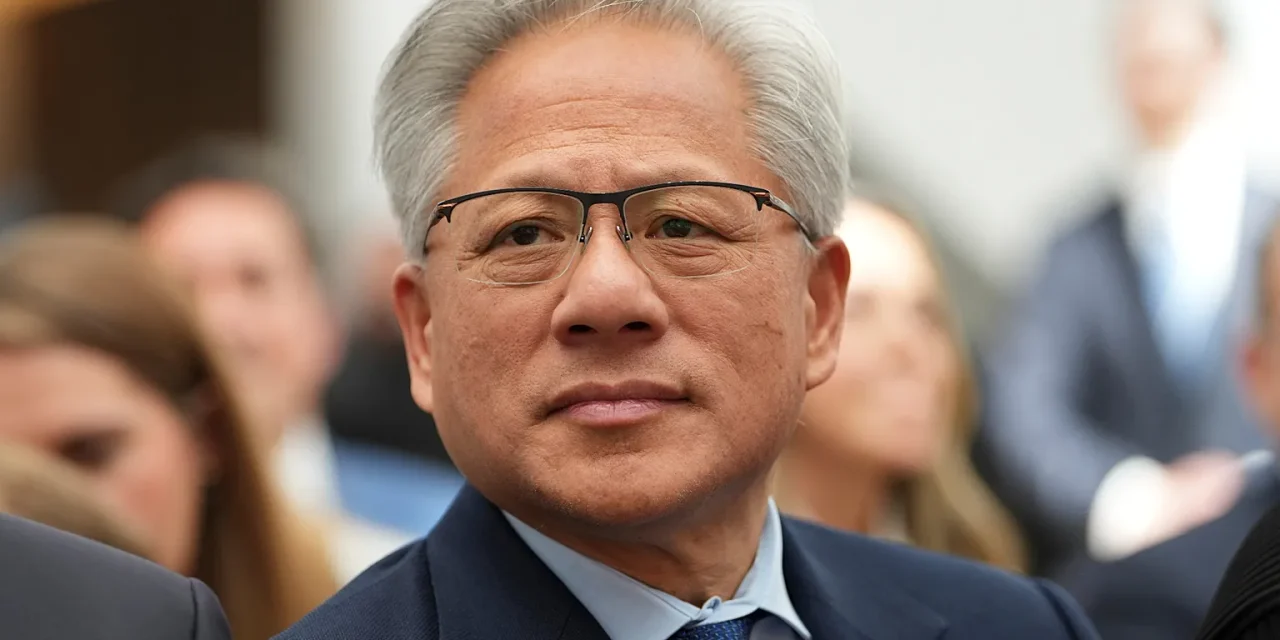
Reports that Nvidia’s board is actively exploring the replacement of CEO Jensen Huang, following an infidelity incident involving a company executive, sent the chipmaker’s shares down more than 8% in extended trading.
The fallout has spread capital across the technology sector, with rivals and adjacent names absorbing flows that once concentrated in the AI darling’s stock.
Advanced Micro Devices Inc. (NASDAQ: AMD) surged more than 7% at close and added over 1.5% overnight, while Broadcom Inc. (NASDAQ: AVGO), Marvell Technology Inc. (NASDAQ: MRVL), and Intel Corp. (NASDAQ: INTC) also posted gains at close.
The Vanguard Information Technology ETF (NASDAQ: VGT) rose nearly 3%, reflecting how broadly the rotation registered across the sector beyond pure-play semiconductor names.
Apple Inc. (NASDAQ: AAPL) stock edged up 0.20% overnight, touching a fresh all-time high on Wednesday, while Alphabet Inc. (NASDAQ: GOOG) gained 0.26% in the same session.
The move into traditional large-cap technology builds on an earlier rotation away from AI-focused names that began after a Democratic sweep of both chambers of Congress stoked concern about a potential slowdown in the artificial intelligence industry.
Retail investor chatter on Stocktwits captured the sentiment shift in real time, with one user writing, “$AAPL all the Nvida money coming to Apple,” while another took a sharper tone: “$AAPL i think im just going to wait for aapl earnings report. at least john ternus can control himself around chinese spies.”
Alphabet attracted similar commentary, with one user posting, “$GOOG This scandal at Nvidia should be positive for Google,” and another offering the blunt instruction, “$GOOG buy and sell $NVDA.”
Dan Niles, founder of Niles Investment Management, framed the Huang situation through a historical lens, drawing a direct parallel to Steve Jobs’ departure from Apple in 2011 due to health complications.
“There are 40K employees at Nvidia and Jensen was a generational CEO but the pipeline of products I believe will sustain the company for ~2 years. There is a deep bench of direct reports. The analogy I would give is Steve Jobs took his medical leave in Jan-2011 and sadly died in October,” Niles wrote in a post on X.
He noted that AAPL stock rose 26% between 2011 and 2012, outpacing gains in both the S&P 500 and the Nasdaq as Apple’s revenue expanded sharply.
The warning embedded in that comparison, however, is that the momentum eventually faded, with Niles pointing out that Apple’s revenue growth dropped below 10% in FY13 and the stock underperformed meaningfully that year.
Posting on X, he pressed investors on a larger structural question, writing: “It took till year 3 for Apple revenue growth to slow dramatically to <10% in FY13 and then the stock massively underperformed that year. For the AI trade and Nvidia's stock, the bigger question for me remains the same. Was June 22nd the top in the AI trade overall?"
Niles indicated he believes Nvidia's Agentic AI cycle, which he said started this year, could keep the stock supported in the near term, noting that "Agentic requires 10-100x more tokens. But time will tell if that was THE TOP."
The combination of leadership uncertainty and a shifting political backdrop has compressed the window of clarity for investors who built positions around Nvidia's dominance in AI infrastructure.
Whether the current rotation into Apple and Alphabet reflects a durable shift in institutional conviction or a short-term flight to stability remains the central question hanging over the technology trade heading into earnings season.
