
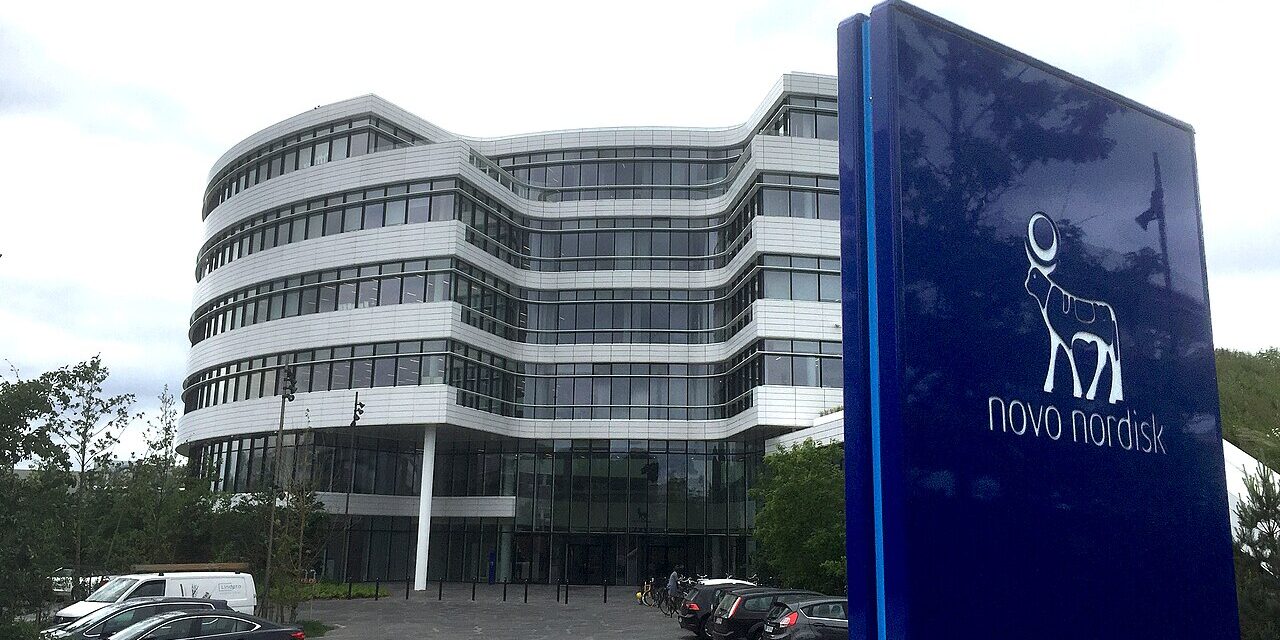
Shares of Novo Nordisk (NYSE: NVO) have shed roughly 70% of their value since a 2024 peak, drawing fresh attention from income and value-oriented investors watching the drugmaker’s latest earnings.
The company’s third-quarter results showed operating profit falling 9% year over year, a decline that reflects a deliberate strategic shift rather than deteriorating demand.
Novo Nordisk is actively transitioning toward a high-volume, lower-price model for its GLP-1 portfolio, and management has explicitly framed the current period as a “transition year.”
The short-term pain in profit margins is the direct consequence of that repricing strategy, which is designed to drive broader patient access and build dominant market share.
Encouragingly, the volume side of that equation is delivering, with the company’s Wegovy pill accumulating more than eight million cumulative prescriptions since its commercial launch.
JPMorgan Chase (NYSE: JPM) had flagged the likelihood of robust Wegovy pill sales ahead of the earnings release, and Novo Nordisk’s quarterly figures confirmed that call.
The prescription milestone carries strategic weight because Novo Nordisk was already the first mover in GLP-1 weight-loss injections, effectively building an entirely new drug category from scratch.
Translating that injectable dominance into a leading position in the oral GLP-1 market was therefore a critical next step, and the company has now accomplished that as well.
The core question for investors is whether surging prescription volumes will eventually translate back into earnings growth once the pricing transition runs its course.
Strong adoption numbers suggest the underlying model is functioning as designed, but the company’s own framing acknowledges that profit recovery will take additional time to materialize.
For investors with a longer time horizon, the combination of a heavily discounted share price, first-mover positioning in a high-growth drug category, and mounting prescription data represents a risk/reward profile that increasingly tilts toward the upside.
The operating profit contraction will likely remain a point of scrutiny in coming quarters, but the prescription trajectory gives management a credible data point to defend the strategy’s direction.
Whether the transition year narrative holds up will depend on how quickly higher volumes begin to offset the margin compression built into the new pricing structure.
