
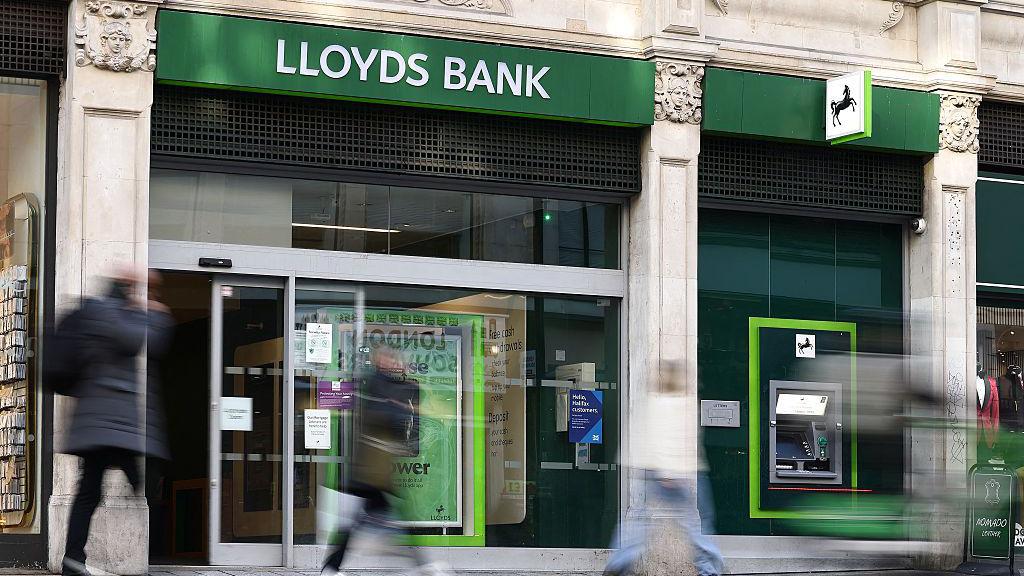
A 5.29% pre-market share price drop signaled investor unease at Lloyds Banking Group (LON: LLOY), even as the British lender posted robust nine-month financial results across the board.
The selloff reflected concern about what comes next, with management guiding toward a materially slower pace of net interest income growth heading into 2027.
Competitive pressure across mortgage, lending, and deposit markets is expected to constrain NII expansion to a mid-single-digit rate next year, trailing the stronger growth achieved through 2026.
Chief Executive Chalmers acknowledged that rivalry in both lending and deposit markets would partly erode the benefits the bank continues to derive from volume growth and structural hedge income.
The structural hedge, a key income driver, is forecast to generate more than £8 billion in 2027, but its annual growth contribution will shrink to roughly £1 billion from £1.5 billion the prior year.
That declining tailwind, combined with slower deposit market growth and the possibility of mortgage activity moderating if interest rates remain elevated, frames a more challenging revenue environment for the bank.
Despite the cautious forward guidance, Lloyds delivered strong underlying performance through the first nine months of 2026, with statutory profit after tax reaching £4.8 billion.
Net income climbed 9% over the same period to £14.8 billion, while return on tangible equity came in at 17.9%, reflecting continued operational efficiency across the group.
Net interest income for the nine-month period rose 10% year over year to £11.1 billion, with the net interest margin advancing 3 basis points sequentially to reach 325 basis points.
The bank’s credit book held up well, with the asset quality ratio steady at 25 basis points, suggesting that broader economic pressures have not yet translated into meaningful loan deterioration.
Lloyds reiterated its 2026 NII guidance of above £14.9 billion and said the full-year outcome is expected to land “modestly above” that threshold, keeping it on track to exceed its stated return targets.
Other operating income is projected to grow at a high-single-digit rate in 2027, outpacing net interest income and potentially becoming a more prominent contributor to overall revenue.
Operating costs are expected to increase at a rate slightly above 3%, adding a further layer of pressure on net income margins as the bank navigates a more competitive landscape.
On the capital front, the board is weighing year-end distributions funded partly through the Basel 3.1 capital benefit, though any such move remains subject to regulatory approval.
