
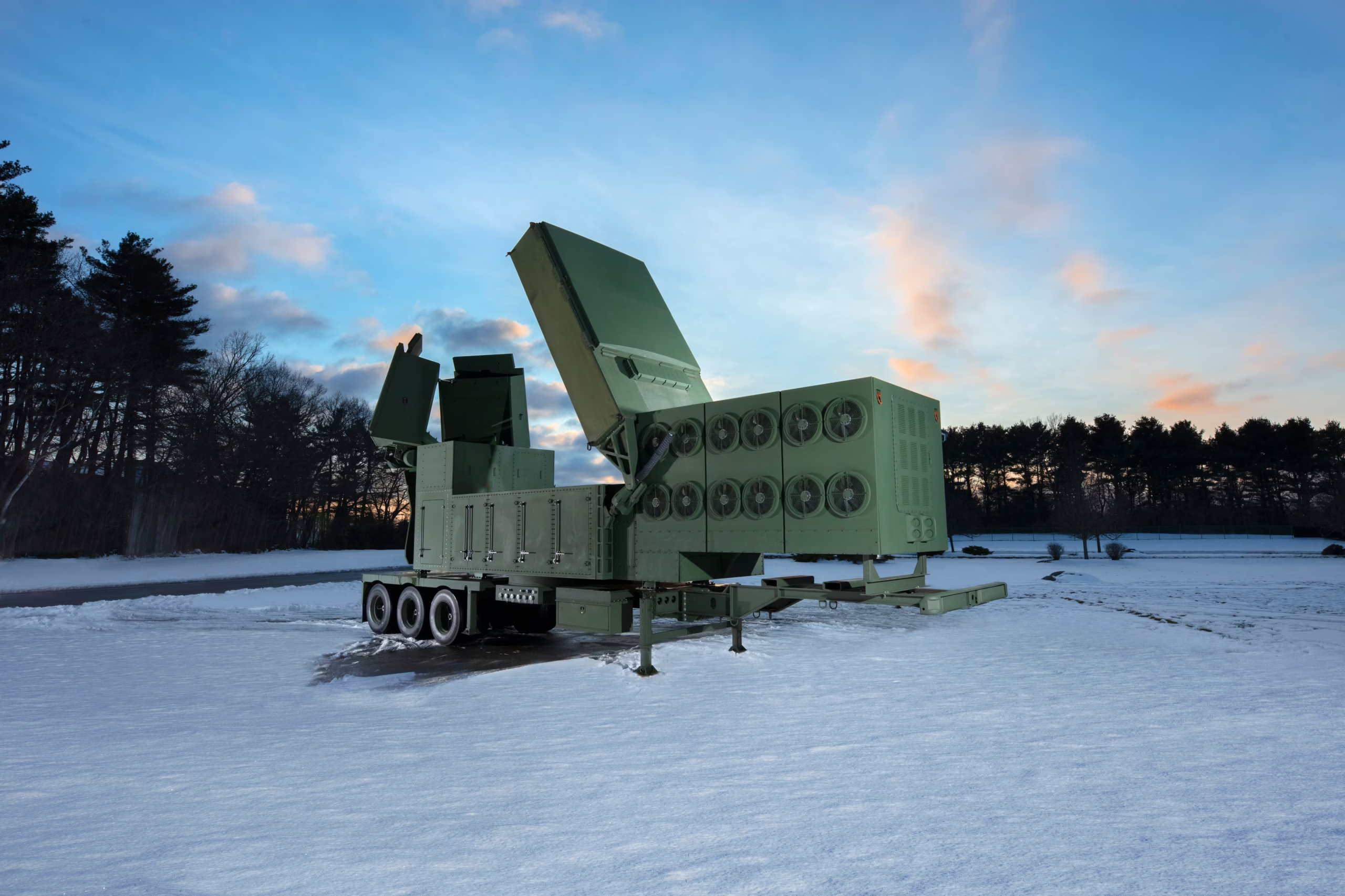
A surge in overseas demand is reshaping RTX’s (NYSE: RTX) growth story, with international Raytheon bookings through September running at 2.5 times the pace recorded during the same stretch of 2025.
The aerospace and defense giant pulled in $9 billion in international Raytheon awards during the third quarter alone, a figure that underscores how allied nations are accelerating military procurement across Europe, the Middle East, North Africa, and Asia-Pacific.
Raytheon’s international exposure now accounts for 52% of its backlog, excluding munitions framework contracts, signaling a structural shift in where future revenue originates.
Among the most consequential developments is the conversion of munitions framework agreements into binding undefinitized contracts, which could ultimately represent up to $70 billion in total contract value.
Those agreements now provide Raytheon and its suppliers with demand visibility stretching across a 10-year horizon, a runway that Chief Financial Officer Neil Mitchill said could push margins above current levels as scale and production efficiencies take hold.
To meet that expanded demand, RTX added 150 alternative suppliers last year and is directing investment into rocket-motor supply, castings, and microelectronics capacity.
Speaking at a Baird conference, Mitchill projected that all three of RTX’s business segments, Pratt & Whitney, Collins Aerospace, and Raytheon, will deliver operating-profit growth and margin expansion in 2027, with formal guidance scheduled for January.
Supporting that optimism is a total company backlog of $340 billion, and at Raytheon specifically, slightly more than 80% of projected 2027 sales are already in backlog, with at least 85% of that amount fully funded.
“Our focus right now is squarely on execution,” Mitchill said, adding that product deliveries will drive fourth-quarter financial results while customer collections remain the key variable for meeting the cash-flow target.
RTX reaffirmed its 2026 financial outlook, targeting sales of $97 billion to $97.5 billion, which represents organic growth of 10% to 11%, alongside adjusted earnings of $7.65 to $7.75 per share and free cash flow of $9 billion to $9.2 billion.
Looking into 2027, the company anticipates a roughly $500 million cash-flow tailwind from declining powdered-metal-related payments, though that benefit will be partially offset by expiring cash items and a pension headwind.
Commercial aerospace is contributing meaningfully to the broader performance, with Collins Aerospace posting 10% revenue growth driven by a 23% jump in commercial original equipment sales.
Pratt & Whitney matched that 10% revenue gain, supported by a 21% increase in commercial aftermarket revenue, with aftermarket growth continuing to outpace broader market trends.
RTX’s commercial OE output remains calibrated to production schedules at Boeing and Airbus, positioning the company to capture sustained demand as narrowbody and widebody delivery rates evolve through the decade.
