
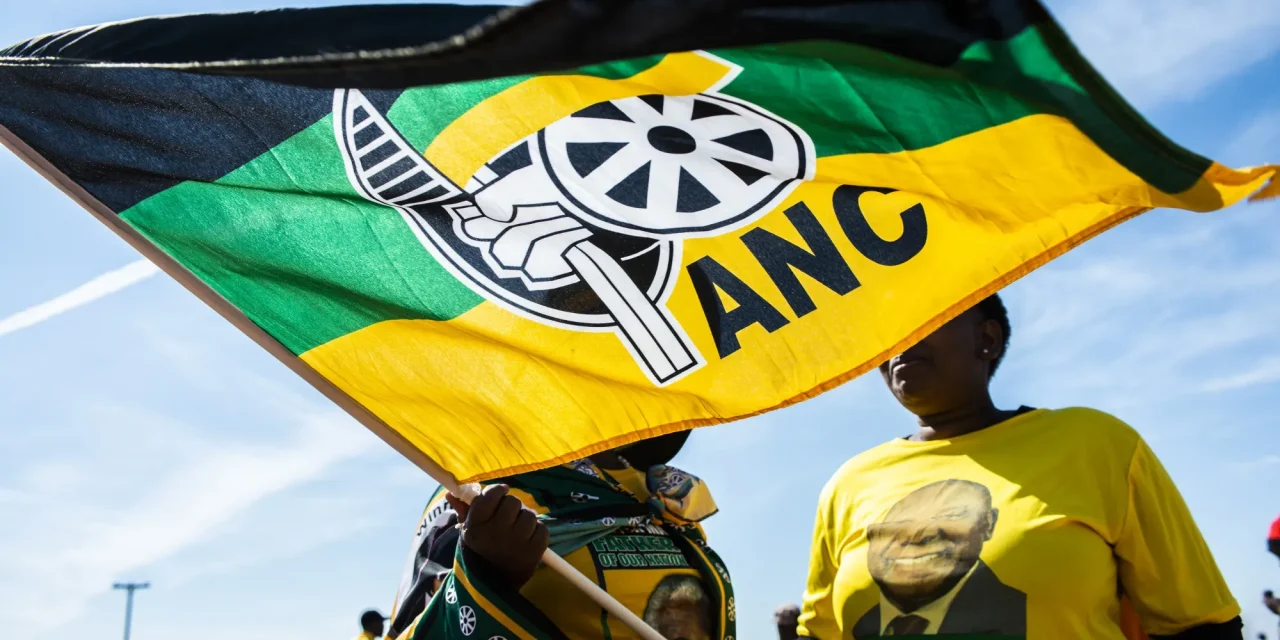
A party that governed South Africa with an unchallenged majority for three decades has now recorded the lowest vote share in its entire electoral history.
Wednesday’s municipal polls handed the African National Congress less than 31% of the national vote, a collapse that continued a steep slide from 46% at the 2021 local elections and just over 40% in the 2024 national polls.
The party that Nelson Mandela led to power in 1994, ending apartheid and ushering in democratic rule, now finds itself locked out of majority control in six of South Africa’s eight metropolitan regions.
ANC Secretary-General Fikile Mbalula did not soften his assessment when speaking to reporters on Saturday, describing the result in terms that offered little comfort to the movement.
“This has been a very catastrophic outcome for the ANC … as much as we are the largest party, it has been catastrophic for the movement,” Mbalula said.
His remarks pointed to a party grappling not just with electoral arithmetic but with a deeper crisis of legitimacy among the voters it once dominated.
“We cannot ask the people to trust us merely because of our history,” Mbalula added, signaling an acknowledgment that past revolutionary credentials no longer translate into ballots.
Political analyst Daniel Silke, speaking to the AFP news agency, was equally blunt, calling it “the ANC’s worst result in history” and warning that the outcome will erode the party’s capacity to exercise authority at both the local and national level.
Silke also framed the municipal results as a potential preview of what awaits the ANC at the 2029 general elections, raising questions about whether the party can reverse a structural decline before the country next goes to the polls nationally.
Voter frustration has been building for years over water and electricity shortages, persistent unemployment, violent crime, and corruption scandals that have attached themselves to the ANC’s governing record across multiple administrations.
President Cyril Ramaphosa, who leads both the country and the ANC, had not directly addressed the election results as of Sunday, though his weekly presidential letter acknowledged that “municipal failures have contributed to declining public trust and confidence in democratic governance.”
The ANC had already lost its outright parliamentary majority at the 2024 general election, the first time that had happened in South Africa’s democratic era, and subsequently formed a broad cross-party national unity government with all parties represented in parliament.
Now the party faces a similar dynamic at the local level, with coalition negotiations expected in several major cities where no single party secured an outright mandate.
The center-right Democratic Alliance, which won just under 25% of the vote nationally, is positioned to be the dominant force in those talks after strong performances in Pretoria and the economic hub of Johannesburg.
In Cape Town, the DA secured an absolute majority and will retain control of the city outright, cementing its status as the primary alternative to ANC governance for urban voters.
DA leader Geordin Hill-Lewis struck a forward-looking tone after the results came in, saying “All of the cut and thrust that comes with the election is now over, and it is time now… to put together governments that can actually fix these towns and cities.”
Hill-Lewis confirmed his party had already begun outreach across the political spectrum, stating “We have already reached out to many parties over the last 24 hours and will continue to do so today.”
The emergence of smaller parties across South Africa’s fragmented political landscape has further complicated the ANC’s path back to relevance, with new entrants drawing away voters who might previously have had no alternative to the ruling movement.
