
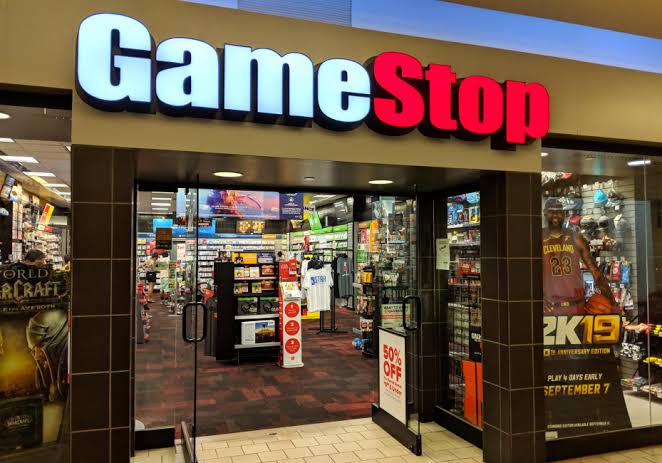
GameStop (NYSE: GME) has long captured market attention, but its stock movements remain tethered to speculative trading and short squeezes rather than any underlying business momentum.
The video game retailer carries a cash-heavy balance sheet, yet that financial cushion has done little to mask a deeper problem: the company has not demonstrated a path back to sustainable revenue growth.
Analysts watching the retail sector increasingly frame the GameStop question not as a turnaround story but as an unresolved one, with no proven business model yet in place.
Against that backdrop, Coupang (NYSE: CPNG) presents a structurally different proposition, combining e-commerce scale with logistics infrastructure, restaurant delivery, and video streaming under one platform.
The South Korean tech giant’s WOW membership program anchors customer loyalty across both individual consumers and merchants, giving the company recurring revenue dynamics that GameStop simply cannot replicate.
On valuation, Coupang’s price-to-sales ratio sits well below GameStop’s, a notable gap that suggests the market may be underpricing the former’s revenue base relative to its speculative peer.
Coupang does carry a significantly higher forward price-to-earnings ratio, a reflection of thinner net margins that come with operating a capital-intensive logistics and delivery network at scale.
Thinner margins are a known trade-off in high-volume e-commerce infrastructure plays, and investors willing to accept near-term margin pressure are essentially betting on long-run operating leverage as the platform matures.
Both companies are competing for retail sector capital at a moment when consumer habits continue migrating toward digital-first shopping and on-demand services, raising the stakes for which model proves more durable.
The contrast between the two comes down to a fundamental question of substance: one company is building diversified digital commerce capacity across multiple verticals, while the other is still searching for a coherent strategy.
For investors weighing retail exposure heading into 2027, the case for Coupang rests on its expanding service ecosystem, a more grounded valuation on a sales basis, and the structural advantage of a loyalty-driven membership model.
GameStop’s cash reserves may offer a degree of downside protection, but cash alone does not constitute a business strategy, and until the company charts a credible growth path, its stock remains a speculative instrument rather than an investment thesis.
