
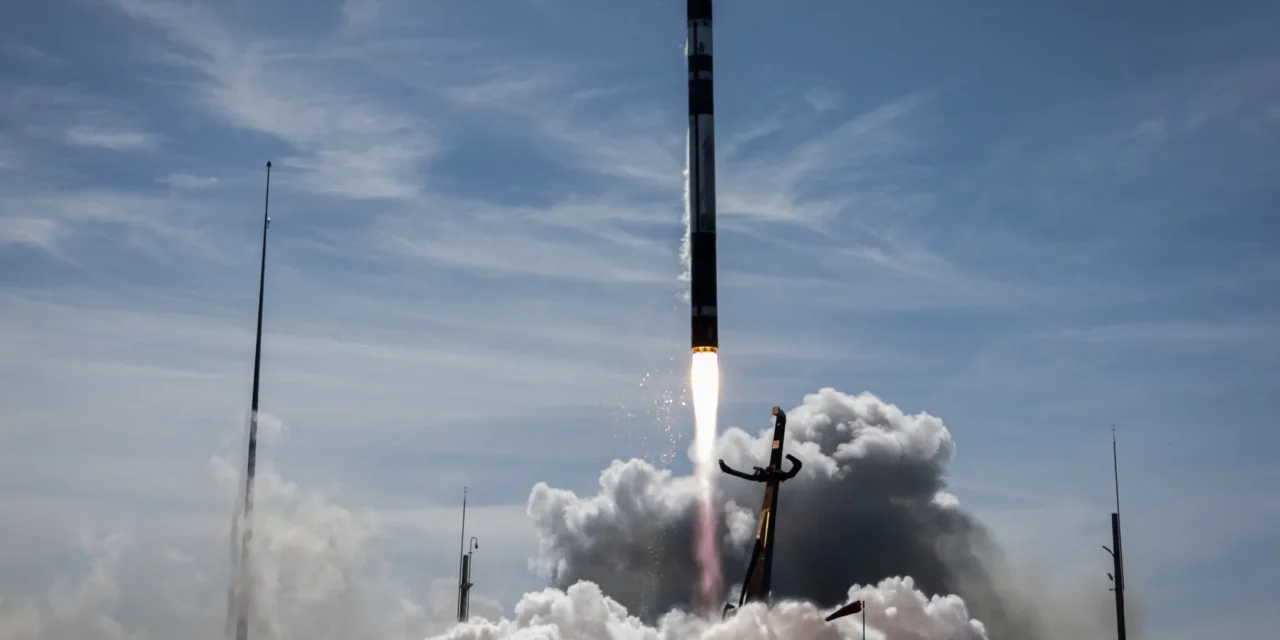
Investors punished Rocket Lab (NASDAQ: RKLB) alongside its chief rival on Wednesday, sending shares down 4% in a broad space-sector retreat tied to Elon Musk’s political fortunes.
The drop came as Democrats swept Tuesday’s midterm elections, stoking fears that a newly empowered Congress would scrutinize Musk’s federal contracts and weigh on SpaceX (SPCX), which also lost 4%.
The selling logic breaks down quickly for Rocket Lab, which competes directly with SpaceX for launch contracts and government business that a hostile Congress might redirect away from Musk’s companies.
Short seller George Noble captured the post-election mood when he posted on X: “Elon Musk is the biggest loser in the elections tonight.”
AST SpaceMobile (NASDAQ: ASTS) and Planet Labs (NYSE: PL) were also swept into the downdraft, falling 4% and 6% respectively, though each faces a different set of pressures than Rocket Lab.
Against that political backdrop, Wall Street’s underlying growth projections for Rocket Lab remain untouched, with analysts forecasting revenue to climb from $602 million in 2025 to $1.74 billion by 2028.
That trajectory is anchored by recent operating momentum: second-quarter revenue surged 62% year-over-year to $234.1 million, a result the midterm outcome does nothing to undermine.
The more pressing event for Rocket Lab investors arrives Monday, when the company posts third-quarter results after the close on November 9, and the market will be watching for a concrete timeline on the Neutron rocket program.
Neutron’s first launch slipped into 2027 as of an October 14 announcement, with no specific date attached, leaving analysts and shareholders hungry for clarity the upcoming report may or may not deliver.
Valuation adds another layer of tension: Rocket Lab traded at 28 times forward sales before Wednesday’s drop, well above its five-year average multiple of 21 times, leaving limited room for execution missteps.
One structural risk that no election result resolves is the company’s customer concentration, with a single government client accounting for 42% of first-half revenue.
AST SpaceMobile’s situation is more directly entangled with Musk’s fortunes, since it relies on SpaceX for launches while competing against Starlink for mobile phone service, even as SpaceX announced a new Qualcomm partnership for Starlink Mobile on Wednesday.
AST also reports on November 9, and investors will focus on whether the company can schedule its next round of BlueBird satellite launches after guiding for $150 million to $200 million in 2026 revenue back in August.
Planet Labs carries a different vulnerability, with its business model dependent on government imagery contracts, including awards won in August from the National Geospatial-Intelligence Agency and the German government, whose renewal prospects under the incoming Congress remain uncertain.
For Rocket Lab specifically, the midterm results may ultimately prove to be background noise compared to what management says next week about Neutron, its revenue pipeline, and whether a rival’s political troubles translate into a genuine contract opportunity.
