
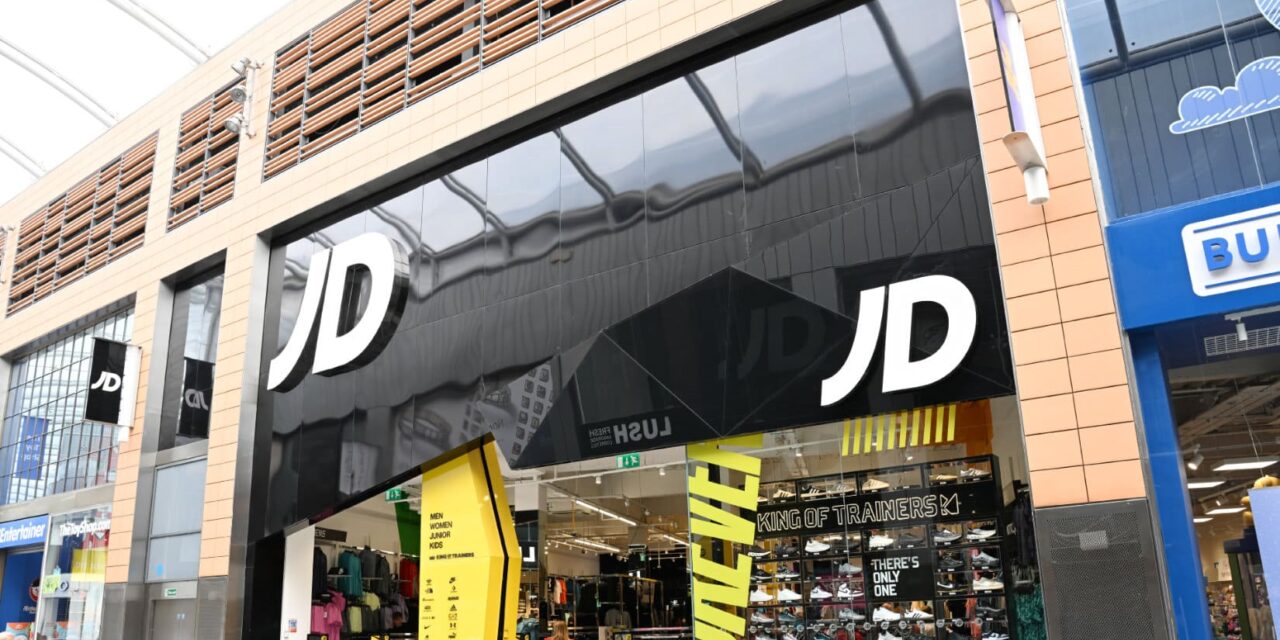
A capital-light push into Latin America is emerging as JD Sports Fashion’s (LSE:JD.) most telling strategic move of the year, overshadowing a difficult set of first-half trading numbers.
The London-listed sportswear giant has signed a long-term franchise agreement with Grupo Axo, described as Mexico’s leading multi-brand omnichannel distributor, to operate a large network of JD-branded stores across the country.
Starting next year, Axo will convert its existing sneaker store estate to the JD fascia, with plans to upsize key locations into the retailer’s larger flagship format over time.
The arrangement mirrors a model JD already operates with Courir spanning Europe, the Middle East, Africa, and Asia, extending the brand’s geographic footprint without committing heavy capital.
Management pointed to Mexico’s young demographic profile and its rapidly expanding activewear and e-commerce sectors as the primary draw for the new partnership.
The franchise announcement arrived days before first-half results that painted a more complicated picture of the business’s near-term health, with group revenue slipping on both reported and constant-currency measures.
Like-for-like sales declined as the company lapped a particularly strong prior-year comparative, while profit before tax and adjusting items dropped sharply amid a weak footwear cycle and aggressive discounting from competitors.
Asia Pacific delivered the clearest bright spot, recording positive like-for-like growth and solid margins, while North America and Europe both saw revenues soften and the UK posted a small organic decline, though comparable sales moved marginally higher.
Despite those headwinds, the balance sheet improved meaningfully, with the group reporting net cash at the period end after carrying net debt a year earlier, and free cash outflow narrowing considerably.
The board chose to lift the interim dividend substantially, a move that signals confidence in the cyclical rather than structural nature of the current softness, even as underlying profit retreated.
JD’s buyback programme is also running in parallel, with a second tranche having commenced in early August following the completion of the first tranche in late spring, and the full programme is targeted for completion before the financial year closes.
Chief executive Regis Schultz framed the period in measured terms, saying the group was “focused on controlling the controllables while the trading environment stays tough.”
A governance change also registered during the period, with non-executive director Kath Smith tendering her resignation in mid-October, adding to an unusually busy autumn of corporate newsflow.
The next major milestone for investors will be the third-quarter trading statement later this month, which will capture the crucial early weeks of the Black Friday and festive trading window.
Management has already flagged that the pressures weighing on the first half could extend into the second, meaning the upcoming update will be scrutinised closely for any sign that the footwear market is beginning to recover.
