
With borrowing costs still squeezing capital-intensive technology ventures, investors are increasingly turning to companies where founders retain meaningful equity stakes and financial discipline tends to run deeper.
Owner-operators who built their businesses from scratch often allocate capital differently than hired executives, a distinction that matters most when cheap money stops being a guaranteed tailwind.
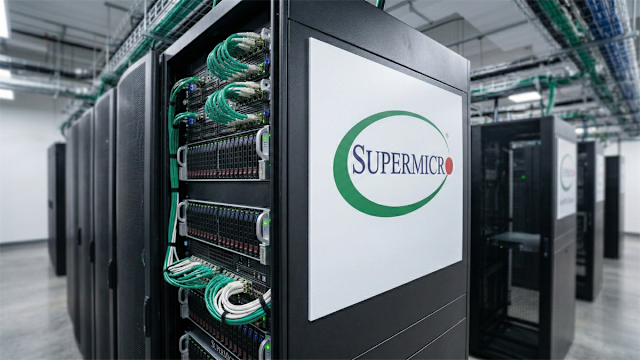
Super Micro Computer (NASDAQ: SMCI), anchored by founder and longtime chief Charles Liang, reported roughly $39.1 billion in revenue from high-performance server solutions and related services, making it one of the largest AI infrastructure plays in the market today.
With a market capitalization near $21.6 billion, SMCI trades at a notable discount to its revenue base, a gap that reflects lingering concerns about margin compression and cash generation rather than any doubt about demand.
The company’s own framing of the opportunity is expansive: “The accelerating global adoption of AI and analytics continues to drive demand for high-performance, scalable server and data center solutions.”
Liang’s continued ownership and strategic direction shape how aggressively Super Micro pursues full rack deployments across data center, cloud, and enterprise clients, though near-term profitability pressure remains the central variable to watch.
At a market value of approximately $56.1 billion, Nu Holdings (NYSE: NU) is the largest of the three by capitalization, built on roughly $8.4 billion in banking revenue generated from digital accounts, cards, lending, and investment tools across Latin America.
Founder David Vélez retains voting control that directly influences product expansion decisions and risk appetite, giving the business a longer-term orientation than many fintech peers of comparable scale.
The regulatory picture in Brazil adds complexity, and one analyst framing captures it plainly: “The most important headwind in my opinion. The Central Bank of Brazil (Banco Central do Brasil) has watched Nu’s rise with a mixture of admiration and caution.”
How that supervisory relationship evolves will determine whether Nu’s credit pricing power and customer growth trajectory remain on separate tracks from tightening oversight.
Figure Technology Solutions (NYSE: FIGR), the smallest of the three at roughly $4.8 billion in market value, operates a blockchain-based lending and marketplace platform connecting loan origination to capital distribution through its FLOS and Figure Connect products.
The company generated $619 million in revenue entirely within the United States, a concentrated footprint that reflects the early-stage nature of its marketplace ambitions relative to its two larger peers.
A key tension sits inside the revenue mix: “Although Figure Technology Solutions is capturing growing consumer loan marketplace volume and higher ecosystem fees, the rapid mix shift toward Figure Connect and volume tier discounts for large partners has already pushed the net take rate to 3.6% at the low end of guidance, which could restrain revenue growth even if headline volumes keep rising.”
Whether FIGR’s leadership can convert that mix shift into durable margin expansion, rather than a quiet drag on long-run profitability, is the defining question for the stock heading into 2027.
Across all three names, the common thread is founder influence as a structural feature rather than a marketing point, a quality that screens well when rate conditions demand restraint alongside ambition.
