
Early on the morning of October 21, 2026, engineers outside Granite Falls, Washington demonstrated something the wireless industry has long struggled to deliver without interruption.
AT&T (NYSE: T) and AST SpaceMobile (NASDAQ: ASTS) executed what the companies describe as the industry’s first successful handoff between a terrestrial cellular network and a direct-to-device satellite network, using an ordinary smartphone.
The technical barrier being cleared is one familiar to anyone who has lost a call while moving through a coverage gap: switching between ground and space networks historically meant dropped connections and service interruptions.
By reducing transition times from seconds to milliseconds, the integrated system aims to make that boundary invisible to the end user, whether they are a consumer in a rural valley or a first responder in a crisis zone.
Ericsson (NASDAQ: ERIC) contributed the radio and core network automation technology on AT&T’s ground-based side, while Nokia (NYSE: NOK) supplied the radio access and mobility software underpinning AST SpaceMobile’s space-based infrastructure.
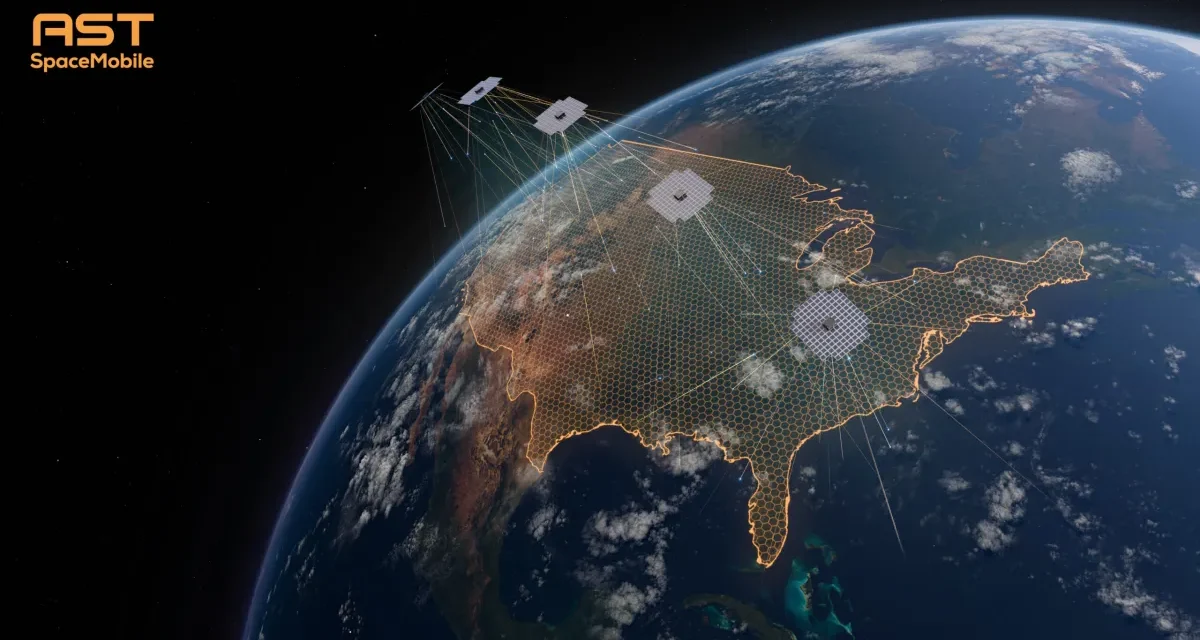
AST SpaceMobile’s BlueBird satellites, which carry what the company says are the largest communication arrays ever deployed in low Earth orbit, form the space segment of the network that connects directly with unmodified consumer handsets.
Wayne Thorsen, Chief Commercial Officer of AST SpaceMobile, framed the achievement in terms of both everyday users and emergency services: “It also adds a new layer of resilience for first responders who depend on reliable communications when it matters most.”
The October test built on earlier demonstrations involving voice calls, text messages, and video calls routed through BlueBird satellites, but addressing the handoff problem represents a more complex layer of network integration.
AT&T’s SVP of Network, Robert Walters, was direct about where the program stands now, stating: “The successful handoff is a significant milestone, but it’s not the finish line. The next phase is expected to include beta services under real-world conditions, allowing the companies to further refine performance.”
Beta testing under live conditions is the next scheduled step, with both companies keeping their sights on eventual commercial deployment that would extend coverage to remote and hard-to-reach locations across AT&T’s network footprint.
The commercial opportunity is substantial, with AT&T already serving more than 100 million U.S. households and nearly 2.5 million businesses, while AST SpaceMobile targets a global addressable market of nearly 6 billion mobile subscribers.
Satellite connectivity in this model is designed to complement AT&T’s existing ground network rather than replace it, filling geographic gaps where terrestrial infrastructure cannot economically reach.
The partnership between four major technology players, spanning core networks, radio systems, and orbital hardware, signals how capital-intensive and technically layered the path to ubiquitous mobile coverage has become.
