
When Amazon (NASDAQ: AMZN) CEO Andy Jassy told Thursday’s earnings call that Leo satellite service would launch this year, rival space stocks absorbed the blow overnight.
AST SpaceMobile (NASDAQ: ASTS) dropped 5%, Rocket Lab (NASDAQ: RKLB) fell 6%, and SpaceX proxy fund SPCX shed 4% in after-hours trading heading into Friday.
The moves reversed gains logged during the regular session, when ASTS added 2%, RKLB climbed 1%, and SPCX edged down just 1%.
Year-to-date losses tell a harder story: ASTS has shed 41%, RKLB is off 15%, and SPCX has declined 11% since January.
The competitive anxiety centers on how aggressively Amazon can push into a market Starlink has spent years building, with more than 11,000 operational satellites against Leo’s nearly 400 across 14 missions.
Starlink’s subscriber base further illustrates the gap, with SpaceX reporting 13.6 million consumer subscribers at the end of September, alongside hundreds of thousands of enterprise accounts and more than 3,800 aircraft equipped with its service.
Jassy offered no caveats on the timeline, stating simply: “Finally, Amazon Leo remains on track to begin initial service this year.”
CFO Brian Olsavsky reinforced the commitment but flagged a shift in accounting, noting that cost capitalization for production and launch expenses would arrive later than he had previously forecast.
“Amazon Leo’s commercial service is on track to begin initial service this year, and we expect to begin capitalizing certain costs in Q1 of next year, including production and launch costs,” Olsavsky said, adding that the majority of Leo-related costs would continue to be expensed through the fourth quarter.
Amazon’s distribution strategy leans heavily on its deal with AT&T, which will become the first major U.S. carrier to package Leo broadband for enterprise and government clients, bundling it with fiber and 5G while managing installation, billing, and technical support.
The FCC’s approval this week of Amazon’s $11.5 billion Globalstar acquisition sharpened concerns about ASTS specifically, as the deal expands Amazon’s satellite spectrum holdings and edges it closer to the direct-to-device market AST SpaceMobile is targeting.
Amazon has separately proposed deploying up to 5,105 direct-to-device satellites starting in 2028, well after Leo’s initial broadband rollout but squarely aimed at the same unmodified-smartphone connectivity that underpins ASTS’s BlueBird network.
AST SpaceMobile reported 13 spacecraft in orbit as of August and preparations for beta services in 2026, backed by partnerships with more than 60 mobile operators collectively covering over 3 billion subscribers, including AT&T, Verizon, and Vodafone.
Rocket Lab’s position in the sell-off is more indirect, with its business built around launching and building spacecraft for commercial, defense, and government customers rather than operating satellite constellations.
Electron completed its 98th mission this month, a dedicated flight for signals-intelligence firm HawkEye 360 that marked the rocket’s 19th launch of 2026 and the third dedicated mission for that customer.
The company’s larger Neutron reusable rocket, aimed at constellation-scale deployment opportunities, remains on track for an inaugural flight in 2027, as the broader satellite industry accelerates.
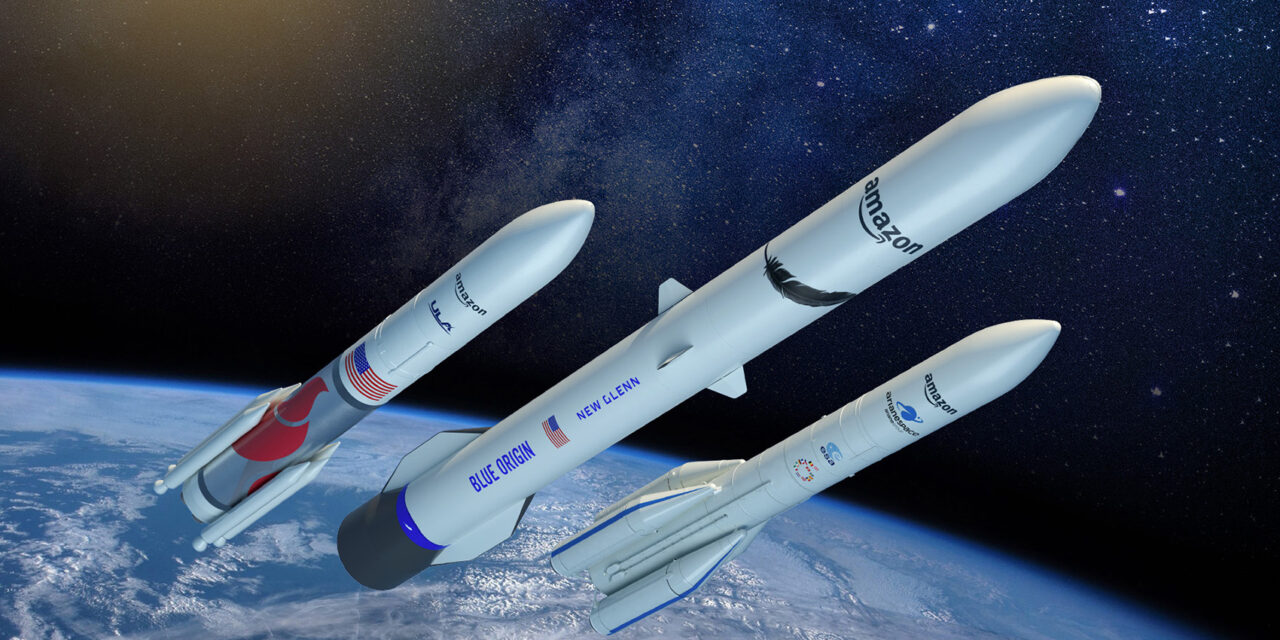
Amazon itself has spread its Leo launch contracts across Arianespace, Blue Origin, SpaceX, and United Launch Alliance, offering Rocket Lab no direct role in the constellation’s buildout.
Retail sentiment on Stocktwits skewed cautious, with ASTS and SPCX both carrying bearish readings and RKLB holding at neutral, though message volume remained low across all three tickers.
Trader commentary ranged from speculation about a potential Amazon acquisition of ASTS to debate over whether expanding mega-constellations would starve smaller operators of launch business or create new openings.
One user challenged Rocket Lab’s long-term positioning with a pointed question: “What is $RKLB going to launch? The giants are taking up Space.”
A counterargument emerged from another trader who saw opportunity in potential SpaceX conflicts of interest: “If Musk chooses to not service other space companies with launches, Rocket Lab will be glad to take that business.”
