
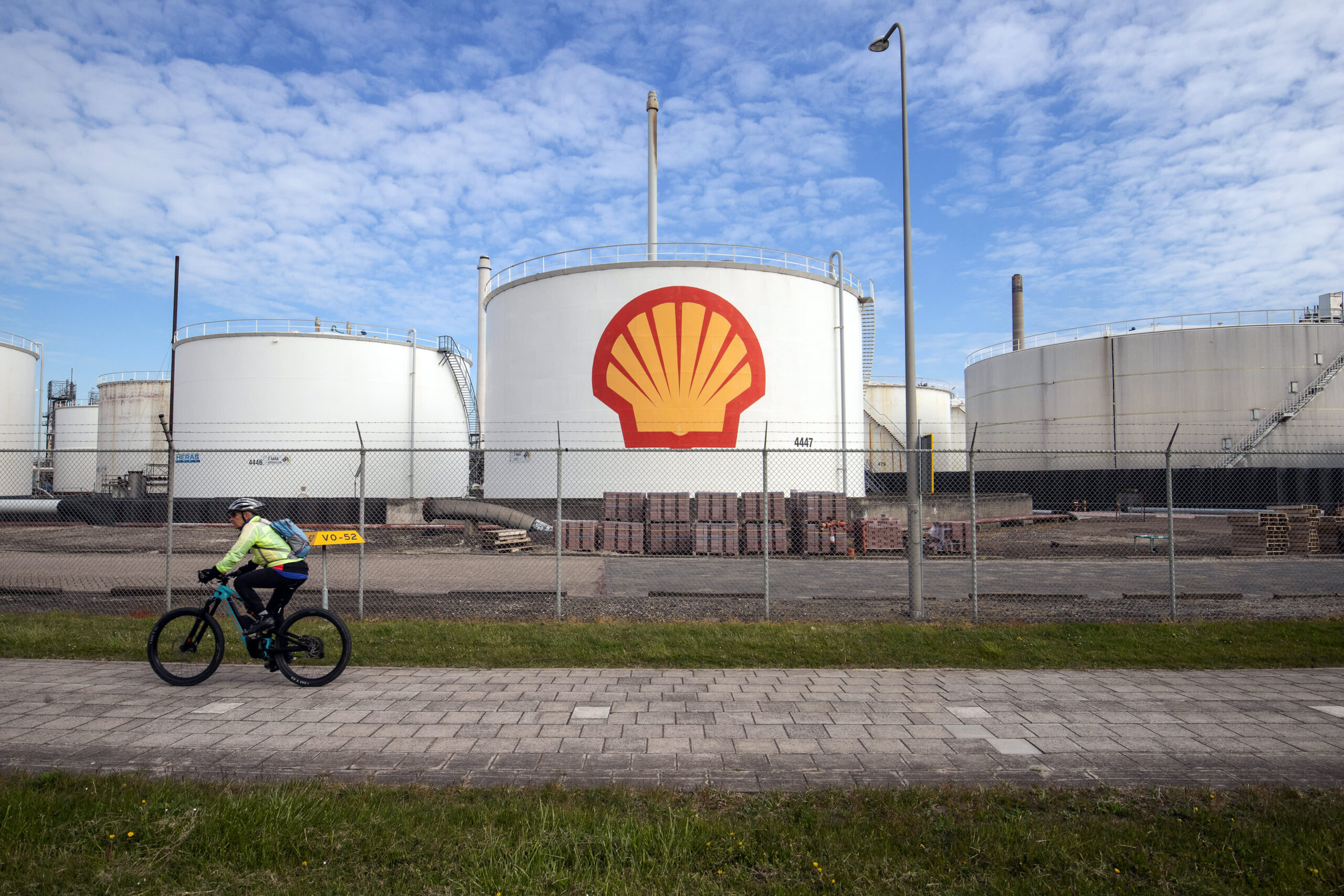
Shell (NYSE: SHEL) is returning $5 billion to shareholders over the next three months after a supply crisis across global energy markets drove its refining margins to unprecedented levels, Bloomberg reported on Thursday.
The company’s global indicative refining margin reached $42 per barrel in the third quarter, nearly twice the $24 per barrel recorded in the prior quarter and well above the previous all-time high of $28.04 per barrel set in the second quarter of 2022.
That margin surge, compounded by elevated LNG and gas prices, pushed Shell’s adjusted third-quarter earnings to $10.814 billion, a figure the company has not matched since 2022.
Analysts polled by LSEG had forecast earnings of $9.92 billion for the July-to-September period, meaning Shell’s result landed almost $900 million above consensus expectations.
The year-on-year comparison is striking: third-quarter earnings in the prior year stood at $5.432 billion, making the latest result nearly double what the company delivered twelve months earlier.
Shell described the results as reflecting “strong operational performance in a continued volatile and elevated commodity price environment with record refining margins,” pointing to both trading strength and high oil and gas realizations.
Behind the margin surge lies a severe global fuel shortage, with an estimated 7 to 8 million barrels per day of refined petroleum products effectively removed from international markets.
Russia’s ban on diesel exports and constrained fuel flows from the Middle East have together overwhelmed the capacity of refineries across the United States, Europe, and Asia to compensate.
Cash generation across the business was equally robust, with operating activities producing approximately $21 billion and free cash flow climbing to $16.3 billion from $10 billion in the same period a year earlier.
Shell also reported $12.1 billion in income attributable to shareholders, while net debt fell to $39.7 billion from $41.75 billion in the preceding quarter, reflecting the pace at which high commodity prices are strengthening the balance sheet.
Looking ahead, management trimmed its capital expenditure guidance for 2026, narrowing the expected range to between $23 billion and $25 billion, down from a prior forecast of $24 billion to $26 billion.
The combination of record margins, a reduced debt load, tighter spending targets, and a fresh buyback program signals that Shell is positioning itself to extract maximum financial advantage from what remains a deeply disrupted global energy system.
