
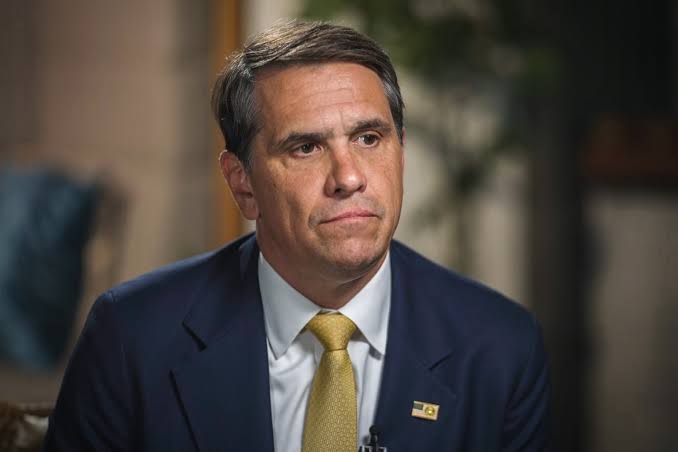
Attorney General Todd Blanche has publicly defended the Department of Justice’s decision to file a lawsuit aimed at blocking the certification of Alaska’s Senate election results.
President Donald Trump stated on Friday that he personally directed the DOJ to file the lawsuit, marking an unusual degree of presidential involvement in an active legal challenge to an election outcome.
The lawsuit centers on allegations that a candidate named Daniel J. Sullivan entered the race with the deliberate intention of confusing voters by sharing a similar name with incumbent Senator Dan Sullivan.
The department’s legal argument holds that Daniel J. Sullivan’s presence on the ballot was designed to siphon votes away from his opponent, Democrat Mary Peltola, in a calculated act of electoral confusion.
The DOJ is asking the court to block certification in any scenario where, had all votes cast for Daniel J. Sullivan been redirected to Peltola, she would have won the election.
Blanche articulated the administration’s position by framing the issue as one of voter disenfranchisement, arguing that Alaskans risk having their votes effectively nullified by the confusion.
“There could be a crime. But the real wrong here is that Alaskans are going to be confused and will not have their vote heard,” Blanche said during a CNN appearance.
Despite Trump’s public acknowledgment that he directed the lawsuit, Blanche declined to confirm whether the president had specifically instructed him to pursue the case when pressed by CNN host Dana Bash.
Blanche cited the confidentiality of his communications with the president as his reason for not directly answering, drawing a firm line around his interactions with the White House.
“I will never talk about any communications I have with the president of the United States,” he said, refusing to elaborate further on the directive.
The lawsuit represents a significant and controversial use of federal legal power to intervene in a state-level election certification process, drawing scrutiny from across the political spectrum.
Critics are likely to question whether the DOJ’s involvement reflects a politically motivated effort by the administration to influence election outcomes in a closely watched Senate race.
