
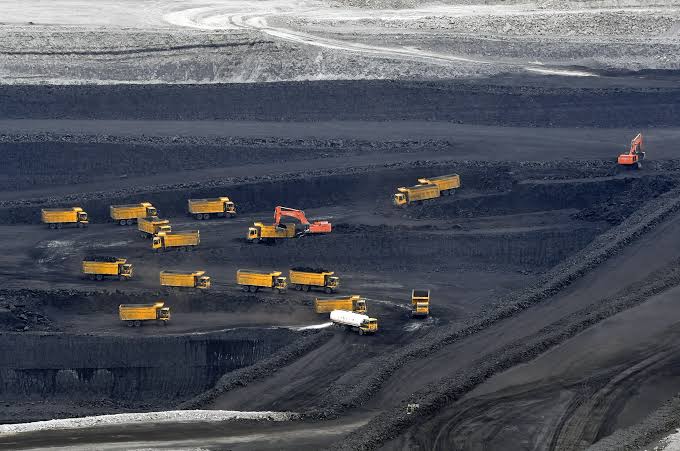
China’s coal production fell 6.8% year over year in September, reaching a total of 385 million tons, according to data from the country’s national statistics agency.
Despite the annual decline, the September figure represented an increase compared to August output, signaling some month-over-month recovery in production activity.
China has been deliberately curbing coal production throughout the year, driven by abundant inventories and weaker demand from power generators in earlier months.
Thermal power generation in September declined 1.4% year over year, reflecting the reduced pressure on fuel supply heading into the autumn period.
With winter now underway, analysts expect the production and power generation trend to reverse sharply as residential and commercial heating demand reaches its seasonal peak.
Import data reinforces the picture of a tightening market, with China bringing in 43.37 million tons of coal last month, a figure 5.7% lower than September 2025 import volumes.
Despite that annual drop, September import volumes also came in higher than August totals, suggesting a gradual ramp-up in procurement activity ahead of peak demand season.
Coal prices in China have surged 24% since mid-July, driven by a combination of tighter domestic supply and persistently high demand from the world’s largest coal consumer.
China still relies on coal for nearly 50% of its power generation, making the fuel’s supply dynamics a critical variable for the country’s energy security heading into the coldest months.
Spot thermal coal prices have been climbing since late spring, when a deadly mining disaster in May, described as the worst in 16 years, prompted authorities to step up safety inspections across the sector.
Following that disaster, officials ordered the suspension of mining activities at a number of sites in Shanxi, a key coal-producing region, further squeezing domestic supply at a critical time.
The combination of safety-driven production curbs, recovering demand, and seasonal buying pressure is setting the stage for what could be an especially strong fourth quarter for coal procurement in China.
