
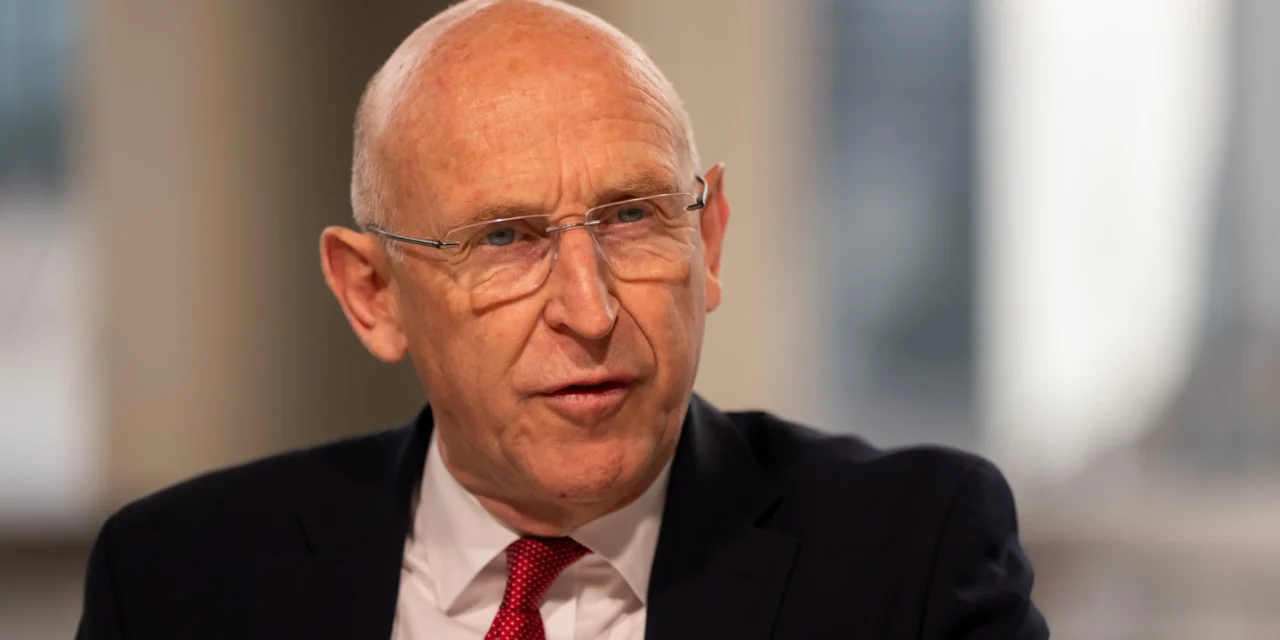
UK Chancellor John Healey has signaled a broadly supportive stance toward British banks, offering cautious relief to investors in Lloyds Banking Group (LSE: LLOY) and NatWest (LSE: NWG).
Speaking to Bloomberg at the annual IMF and World Bank meetings in Bangkok, Healey described banks as “a part of the jewel…in the British economic crown.”
He further told reporters that lenders are “hardwired into the economic fabric of this country and our future prospects,” language that many investors interpreted as a sign the sector may avoid a heavy tax raid in the upcoming Budget.
Despite the encouraging tone, Healey stopped short of making any firm commitments, telling reporters: “You know I’ve got decisions to take in the budget, and I will.”
The Chancellor’s remarks came alongside stronger-than-expected UK economic data, with GDP growing 0.1% in August, beating forecasts of a 0.1% contraction, while the three-month period to August saw growth of 0.7%.
Both Lloyds and NatWest shares moved higher on the day the data was released, with the broader FTSE 100 also rising 0.8% to reach 10,805, placing the index close to an all-time high.
The improved economic backdrop is a particular positive for domestically focused lenders like Lloyds and NatWest, which have significantly less international exposure than rivals such as Barclays and HSBC.
One ongoing concern for the sector remains the potential for an increase in the surcharge banks pay on UK profits, a risk that falls more heavily on domestic-focused institutions.
Lloyds, sometimes referred to as the Black Horse bank, has seen its share price surge nearly 150% over three years, with dividends growing at double-digit rates, while the stock trades at roughly 8.8 times next year’s forecast earnings and offers a prospective dividend yield of around 5%.
NatWest has outperformed even that impressive run, climbing approximately 210% over the same three-year period, with a forecast dividend yield of around 6%, above Lloyds and well ahead of the FTSE 100 average of less than 3.5%.
Both banks are also investing heavily in artificial intelligence to cut costs and drive productivity gains, with Lloyds targeting savings of 2 billion pounds over the next four years.
Bank executives met with Healey in Downing Street ahead of the Budget, though reports indicate they left without clear guidance on what tax changes, if any, the government plans to introduce for the sector.
With shares in both institutions still trading below recent peaks and offering yields that compare favorably to the wider market, income-focused investors may find the current environment worth watching closely ahead of the Budget.
