
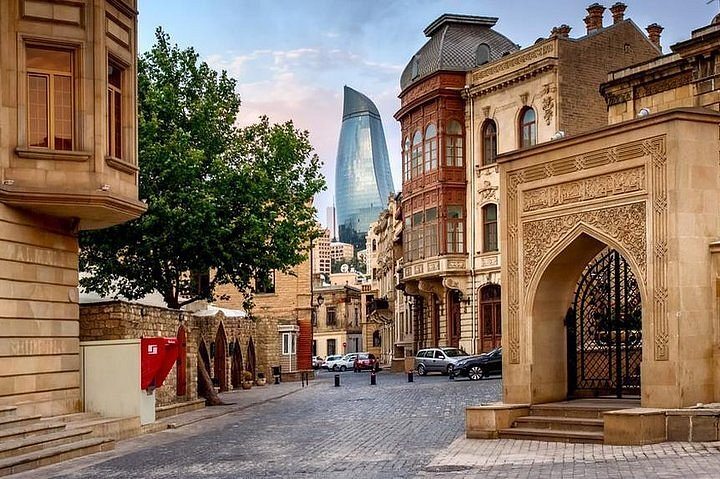
Open a flight-tracking map on any evening this year and two dark patches stand out. One lies over Ukraine, whose airspace has been closed to civil aviation since February 2022. The other, further south, has opened and closed over Iran and its neighbours since late February 2026. Between them runs a narrow, crowded lane of aircraft crossing Georgia, Azerbaijan and the Caspian Sea.
Baku sits in the middle of that lane.
Despite this, from 28 October to 8 November the city hosts the second Baku International Arts Festival consisting of 12 days, 11 core productions and more than 20 events, with artists and companies travelling from the United Kingdom, the United States, France, Monaco, Russia, Israel, Canada, Georgia and South Africa. English National Ballet and Les Ballets de Monte-Carlo are both making their first visits. Famed violinists Maxim Vengerov and David Garrett are on the bill, as are the choreographer Akram Khan and the artist illiam Kentridge.
On paper, it is a programme that would sit comfortably in London or Vienna, a considerable feat given where Baku sits on the world map.
In March, Azerbaijan closed part of its southern airspace for twelve hours. Across the wider region, the disruption extended deeper. At its peak, around 7 per cent of scheduled flights were cancelled- more than 7,000 departures- according to Cirium data reported by The Times of Central Asia, and jet fuel in some markets rose from about $742 to more than $1,700 per ton.
Elsewhere, fixtures fell away. The Saudi Arabian Grand Prix did not take place this year, but just last month Baku staged its tenth Formula 1 Grand Prix. The logistics of getting cars, drivers and equipment to this beautiful city on the Caspian demonstrates that Baku is doing a lot right.
For a touring company, logistics is equally difficult for a Formula 1 team. A ballet travels with its own floor, sets, lighting and wardrobe, usually sent by road or sea weeks ahead of the dancers. An orchestra travels with instruments that need specialist cases and specialist cover. Underwriters price routes, not reputations. And the large institutions plan two or three seasons, which means that a commitment made in a quiet month has to be honoured in a turbulent one.
So how has it been done? Three things stand out.
First, the corridor held. The same rerouting that emptied skies elsewhere pushed traffic towards the South Caucasus. Argus estimates pointed to rising volumes at Baku’s airport this summer as carriers looked for alternatives to the Gulf hubs, and Azerbaijan Airlines added Brussels to its network in July. A city that might have been bypassed became one that airlines were routing towards.
The second is personal. The festival’s founding father, violinist and conductor Dmitry Sitkovetsky, was born in Baku in 1954 and has spent half a century on the international circuit. Festivals in cities without a long-established touring market tend to run on close, long-standing and trusted relationships and Sitkovetsky’s track record of holding more than 20 successful festivals has been a major factor.
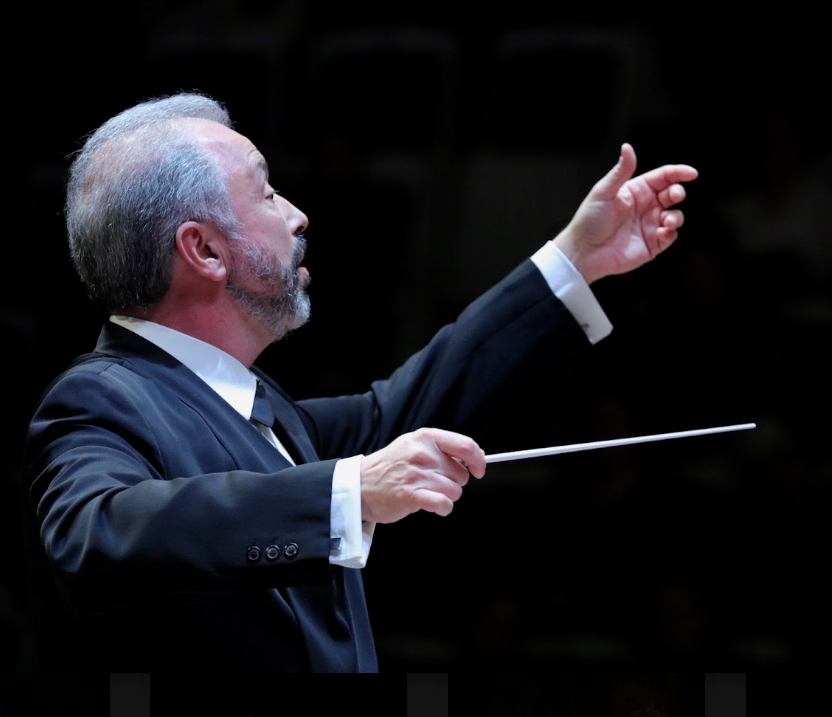
“Baku has a very special place in my heart and now it looks absolutely fantastic. There’s so many wonderful new buildings – the Heydar Aliyev Center is extraordinary, the Russian Drama Theater, Heydar Aliyev Palace, the beautiful Philharmonic Hall to name a few, are all part of a fantastic infrastructure which is in place to host everything from music to ballet, drama, comedy and film,” enthused Sitkovetsky.
The third is institutional. The festival is promoted by Daze Arts with decades of experience in live events across the globe and supported by the Heydar Aliyev Foundation and Azerbaijan’s Ministry of Culture, and its inaugural edition in 2025 brought more than 100 artists to the city.
Organizers are building something special and unique.
The programme also shares the load with acclaimed international artists sharing the stage with local talent. Dancers from the Azerbaijan State Academic Opera and Ballet Theatre and the Baku Choreography Academy will join Shahar Binyamini’s company on stage, and the festival orchestra is assembled for the occasion.
What does it amount to? Not a political statement. The festival makes none, and reading one into it would be a mistake. Its roster includes companies from Jaffa and Saint Petersburg, a British choreographer working with a Saudi artist, and a South African film-maker setting images to a Soviet symphony.
Art comes first, and the artists are invited to perform.
Yet this offers a modest point for anyone who studies how the region works. Much of the commentary on the South Caucasus concerns pipelines, railways and the Middle Corridor: the hard infrastructure of a crossroads. Cultural traffic is a softer measure of the same thing.
In the days before 28 October, some of the aircraft in that narrow lane over the Caspian will carry dancers, a Norwegian trumpeter, and a good many violin cases. Between those two dark patches on the map, the lights will be moving, and not just from The Flame Towers (Baku’s most famous modern architectural landmark, which consists of three iconic skyscrapers shaped like giant, curved tongues of fire that light up with animated LED displays at night) but also for 12 nights across the festival.
Baku, nicknamed the City of Flames, will spark, and in the best way.
Festival tickets are available at biaf.az
To discover more of Azerbaijan’s cultural heritage and travel experiences, visit Azerbaijan.travel and follow @ExperienceAzerbaijan #experienceazerbaijan
