
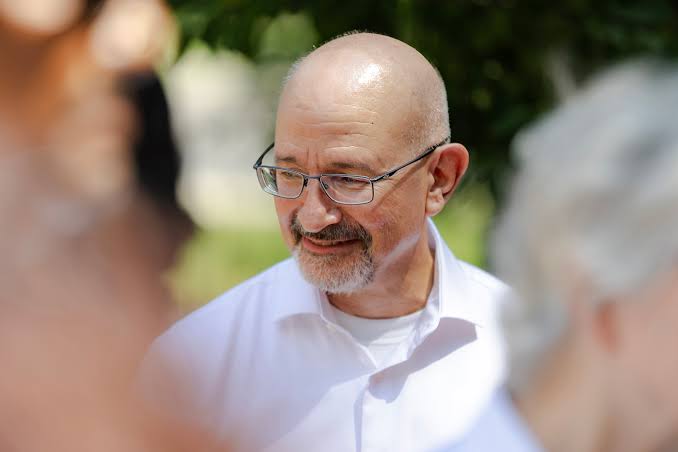
Jon Rosenthal, a Houston state representative and career mechanical engineer who spent decades working in the oil and gas industry, is mounting a long-shot campaign for a seat on the Texas Railroad Commission.
Rosenthal describes himself as a “drill-baby-drill Democrat,” a label he wears deliberately to signal his support for the energy industry while still pushing for stronger environmental accountability.
He decided to run for the Railroad Commission following the catastrophic 2021 Texas winter storm, which exposed serious weaknesses in the state’s energy infrastructure and regulatory oversight.
His Republican opponent is Bo French, a former Tarrant County Republican Party chairman and energy investor who has made deregulation and culture war politics the cornerstones of his campaign.
French has pledged to roll back regulations on oil and gas operators and eliminate what he characterizes as diversity-based contracting practices within the industry.
Rosenthal, by contrast, is calling for stronger enforcement of natural gas weatherization requirements and wants increased industry funding directed toward plugging abandoned wells across the state.
On the fundraising front, Rosenthal closed the gap significantly after trailing French through the first half of the year, raising $487,365 in the last reporting period compared to French’s $439,913.
The fundraising momentum gives Democrats some reason for optimism, though the structural challenge facing Rosenthal remains steep given the state’s deeply conservative political landscape.
Democrats have not won a Texas Railroad Commission election since Bob Krueger claimed the seat in 1990, and Republicans have controlled all three seats on the commission continuously since 1995.
The November contest will determine whether Rosenthal can break a more than three-decade losing streak for Democrats on an agency that holds enormous influence over the oil and gas regulations governing the nation’s top energy-producing state.
Rosenthal has argued that his professional background in the oil field gives him a credibility advantage over opponents who view energy regulation purely through a political lens.
The race has drawn attention as a test of whether a pro-industry Democrat can peel away enough moderate voters in a state where energy policy and economic identity are deeply intertwined.
