
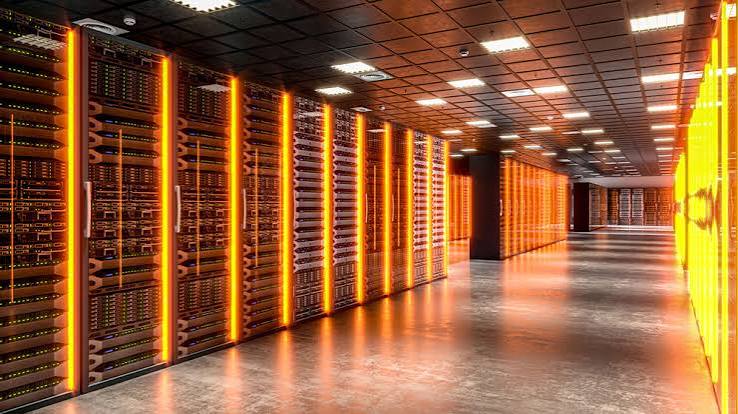
QuantumScape (NYSE: QS) made headlines this week with the announcement of the QS PowerBlock, a modular solid-state lithium-metal battery system designed specifically for AI data centers.
The company claims the QS PowerBlock delivered four times the power density and five times the runtime of Open Compute Project Open Rack V3 benchmarks in controlled prototype testing.
By targeting 800VDC, in-rack energy storage that exceeds key OCP specifications, QuantumScape is positioning its technology at the heart of next-generation data center power architecture.
The product is aimed squarely at 1 MW AI racks, the kind of high-demand infrastructure that hyperscalers and cloud providers are racing to deploy at scale.
A pivotal strategic move accompanying the launch was QuantumScape’s decision to join the Open Compute Project, aligning its QS PowerBlock directly with OCP Open Rack V3 standards and ecosystem partners.
That alignment matters because it ties QuantumScape’s data center ambitions to an established set of industry specifications, potentially accelerating the licensing model’s traction beyond its traditional automotive focus.
The investment narrative for QuantumScape has always required a leap of faith, specifically that its solid-state technology can transition from prototypes to meaningful licensing and product revenue before cash burn becomes an insurmountable obstacle.
The QS PowerBlock announcement strengthens the case for non-automotive applications, but analysts note it does not eliminate near-term execution risk around the Eagle Line scale-up or the challenge of converting development work into paid, recurring programs.
Projections attached to QuantumScape’s narrative forecast $242.3 million in revenue and $13.7 million in earnings by 2029, implying an earnings swing of approximately $418.7 million from the current level of negative $405.0 million.
More optimistic analysts have projected QuantumScape reaching approximately $335.6 million in revenue by 2029, a figure that highlights how widely expectations can diverge given execution uncertainty around both the PowerBlock and Eagle Line programs.
One fair value estimate for QuantumScape places the stock at $6.66, representing roughly 45% upside to its current trading price, though investors are cautioned that prolonged pre-revenue losses and delayed licensing commitments remain material downside risks.
The QS PowerBlock push into AI data center infrastructure marks a meaningful evolution in QuantumScape’s story, shifting the conversation beyond electric vehicles and into one of the fastest-growing power demand markets in the world.
Whether the company can convert prototype performance claims into commercial contracts will ultimately determine if this pivot justifies renewed investor confidence or remains an ambitious but unproven chapter in a high-risk turnaround.
