
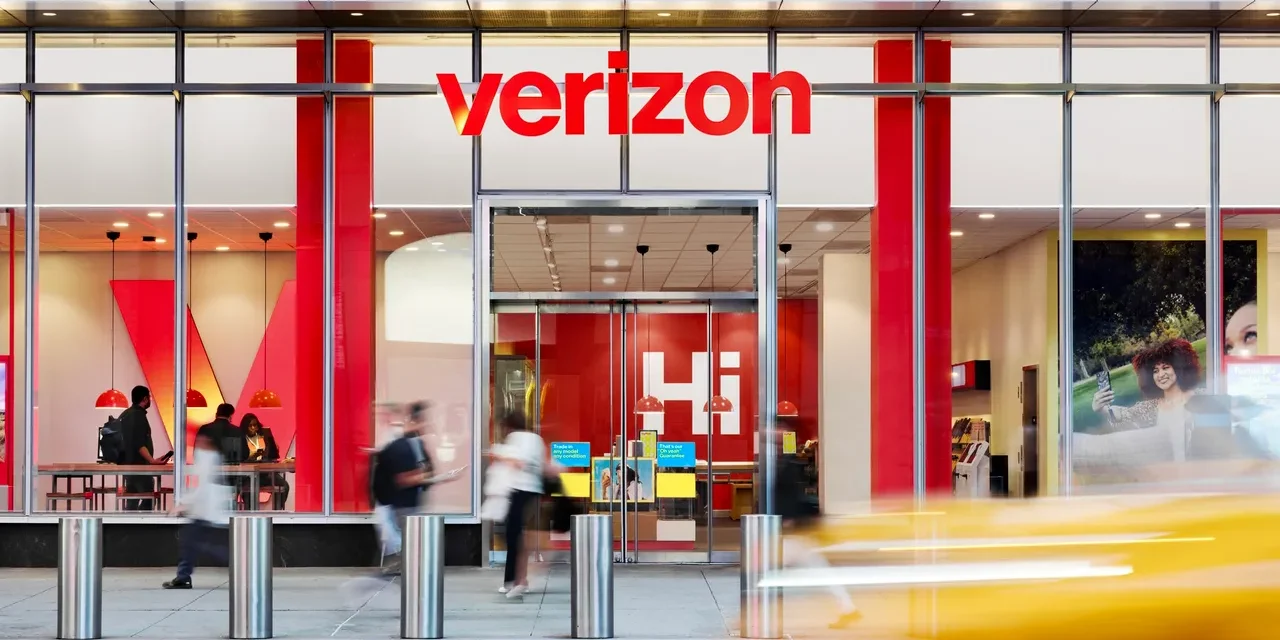
Verizon Communications (NYSE: VZ) closed at $41.65 on Friday, sliding more than 10% as a landmark spectrum acquisition by SpaceX rattled investors across the global telecom sector.
Trading volume in Verizon surged to 88.6 million shares, representing roughly 286% above the stock’s three-month average of 22.9 million shares, underscoring the severity of market reaction.
SpaceX announced an agreement to acquire Grain Management’s nationwide 800 MHz low-band wireless spectrum assets in a deal valued at approximately $8 billion, sending shockwaves through legacy carrier stocks.
Elon Musk described the spectrum as the final critical piece required for SpaceX to deliver complete mobile phone coverage across the country, a statement that immediately alarmed investors in legacy telecom names.
SpaceX noted the newly acquired low-band spectrum would help signals penetrate obstacles such as walls and support connectivity inside buildings, capabilities that are central to competing with established carriers.
The competitive threat is compounded by regulatory tailwinds already building behind SpaceX, with the FCC authorizing the company to deploy 15,000 mobile satellite service devices without paying ground operator lease fees just days before the spectrum deal.
By pairing low-band terrestrial frequencies with its direct-to-cell satellite constellation, SpaceX is laying the groundwork for a hybrid cellular-satellite network capable of competing head-to-head with traditional carrier networks.
Barclays analyst Anthony Valentini initiated coverage of SpaceX with a Buy rating and a $254 price target, adding further momentum to the narrative of the space company as a serious telecom contender.
T-Mobile US, Verizon, and AT&T fell between 5% and 6% in premarket trading, while the STOXX Europe 600 Telecommunications index dropped 3.3% to its lowest level since February.
Crown Castle, a provider of shared communications infrastructure, bucked the broader telecom selloff and jumped 11.27% following SpaceX’s agreement to acquire the nationwide block of low-band spectrum from Grain Management.
Scotiabank acknowledged that SpaceX’s wireless ambitions are becoming more credible, though the bank noted its ability to serve densely populated markets and the economics of building a network remain unproven.
Scotiabank lowered Verizon’s price target to $50 from $51.50 and T-Mobile’s to $212 from $217, maintaining Outperform ratings on both carriers despite the heightened competitive pressure.
Analyst Maher Yaghi also reduced AT&T’s target to $26.50 from $27.50, retaining a Sector Perform rating on the stock as the sector adjusts to the evolving competitive landscape.
Evercore ISI analyst Kutgun Maral said the carriers’ defenses against low-band spectrum claims are weakening, a view that reinforced bearish sentiment toward legacy wireless operators on Friday.
Adding a mechanical layer to Friday’s decline, October 9 is Verizon’s ex-dividend date for its $0.7075 quarterly dividend payable November 2, which automatically reduces the stock’s reference price at the open.
Investors are now watching Verizon’s October 26 earnings call closely for management guidance on subscriber trends and any strategic response to the growing satellite-terrestrial threat from SpaceX.
The broader market finished the session in positive territory, with the S&P 500 closing at 7,811, up 0.59%, and the Nasdaq Composite closing at 27,366, up 0.64%, as strength elsewhere offset the telecom selloff.
