
President Donald Trump announced a deal to import diesel fuel from Russia, reversing years of U.S. pressure on Moscow and attempting to address record-high fuel prices before midterm elections.
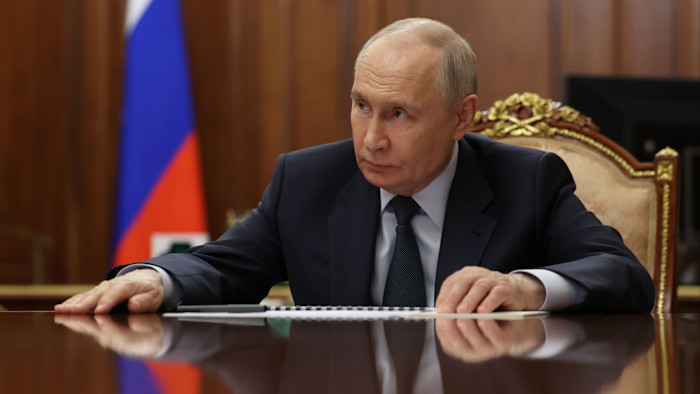
Trump said on social media Friday that he struck the agreement with Russian President Vladimir Putin during a phone call originally expected to focus on a suspected plague outbreak in Russia.
Under the deal, Russia will immediately supply more than 300,000 tons of diesel, followed by an additional 500,000 tons in November and 1 million tons “immediately thereafter,” Trump wrote.
Russia will then deliver an additional 3 million tons “within a short period of time,” according to Trump’s post, representing a sweeping reversal of years of American energy policy toward Moscow.
The announcement came just weeks after Trump signed a bipartisan Russia sanctions law targeting the country’s energy revenues, which critics say fuel its ongoing war against Ukraine.
Ukrainian President Volodymyr Zelenskyy responded sharply, calling the deal “a weak decision, unfortunately, a weak decision by strong partners,” according to a statement released by the Ukrainian Embassy in Washington.
Zelenskyy added that he believed Trump’s negotiating team was “simply being used as a smokescreen,” saying such treatment was “certainly not how partners should treat each other.”
The deal was announced while Trump’s envoy Steve Witkoff and son-in-law Jared Kushner were meeting with Ukrainian officials to discuss a proposal aimed at ending the Russia-Ukraine war.
Zelenskyy warned that Russia would repay the deal “with further terror and perfidy,” arguing it would allow Moscow “to kill more, wage war for longer, have even less respect for America.”
“It plays into Russia’s hands — allowing it to kill more, wage war for longer, have even less respect for America, and inflict even greater losses and damage on the world,” Zelenskyy said.
Rep. Don Beyer, the senior House Democrat on the Joint Economic Committee, called Trump’s announcement “infuriating,” saying the president “isn’t the slightest bit trustworthy when it comes to Russia.”
“Giving him expanded tariff powers in hopes he would use them to help Ukraine was a mistake. Now he’s lifting sanctions on Russian fossil fuels,” Beyer said in a statement posted to X.
Shortly after Trump’s announcement, the Treasury Department issued a temporary general license allowing Russian diesel to be supplied to the global market without sanctions applying until April 2027.
The new license applies to deliveries of Russian diesel loaded onto tankers as of Friday, marking the first such easing of diesel sanctions lasting longer than the standard 30-day window since the Ukraine war began.
Treasury Secretary Scott Bessent had earlier in the year ruled out such a move, though the department had already extended similar sanctions relief in March and April amid energy market turmoil tied to the Iran war.
The national average price per gallon of diesel in the U.S. stood at $6.23, according to AAA, after hitting a record $6.52 on September 22, driven by global energy disruptions from the ongoing conflict in Iran.
Diesel futures prices dipped on Friday following Trump’s announcement, though prices remain far above historical norms as energy markets continue to face significant supply pressures.
Trump, in his social media post, made no mention of the existing sanctions law or Russia’s war in Ukraine, stating only that “Lower prices for Americans, especially our Great Farmers, Ranchers, and Truckers, is my Greatest Priority.”
A Kremlin statement said Putin and Trump devoted “significant attention to the prospects of resolving the Ukrainian crisis” and discussed “the situation around Iran and various aspects of bilateral relations” during their call.
Putin said Russia “confirmed its readiness to supply oil and oil products to the American and global markets,” adding, “I am confident that this will have a positive impact on the entire global economy.”
Russian Deputy Prime Minister Alexander Novak told state news agency Tass that Russia is “immediately starting to lift restrictions on diesel exports ahead of schedule,” saying supplies to the U.S. could begin as early as October.
The International Energy Agency has noted that Russian diesel output has fallen by roughly 30%, following Ukraine’s repeated attacks on Russian oil refineries, with Russia having banned diesel exports since July.
The U.S. has not imported Russian oil or gas since 2022, when the Biden administration banned such imports following Moscow’s invasion of Ukraine, according to the U.S. Energy Information Administration.
