
Quantum computing is rapidly emerging as one of the next major frontiers in artificial intelligence development, sending investors scrambling to identify the next transformative technology winner.
The two names dominating quantum computing conversations among retail investors are IonQ (NASDAQ: IONQ) and D-Wave Quantum (NYSE: QBTS), both of which have attracted significant market attention in recent months.
Both companies are making respectable technological progress, but investors must separate exciting promises from proven business models before committing capital.
Neither IonQ nor D-Wave is profitable, and both must spend heavily to advance product roadmaps whose biggest commercial opportunities remain years away.
IonQ’s roots lie in trapped-ion quantum computers, and the company has recently expanded into networking, sensing, and security to build a broader platform.
IonQ’s acquisition of SkyWater gives the company exposure to semiconductor manufacturing capabilities as it pursues a vertically integrated quantum strategy.
IonQ’s revenue surged 287% to $80 million during the second quarter, and management raised its full-year 2026 revenue forecast to between $450 million and $460 million.
Despite that impressive top-line growth, IonQ posted a $120 million adjusted EBITDA loss during the same quarter, underscoring the financial strain of building cutting-edge quantum systems.
IonQ and D-Wave could deliver multibagger returns if they emerge as long-term winners, but both carry substantial technological, financial, and dilution risk at current valuations.
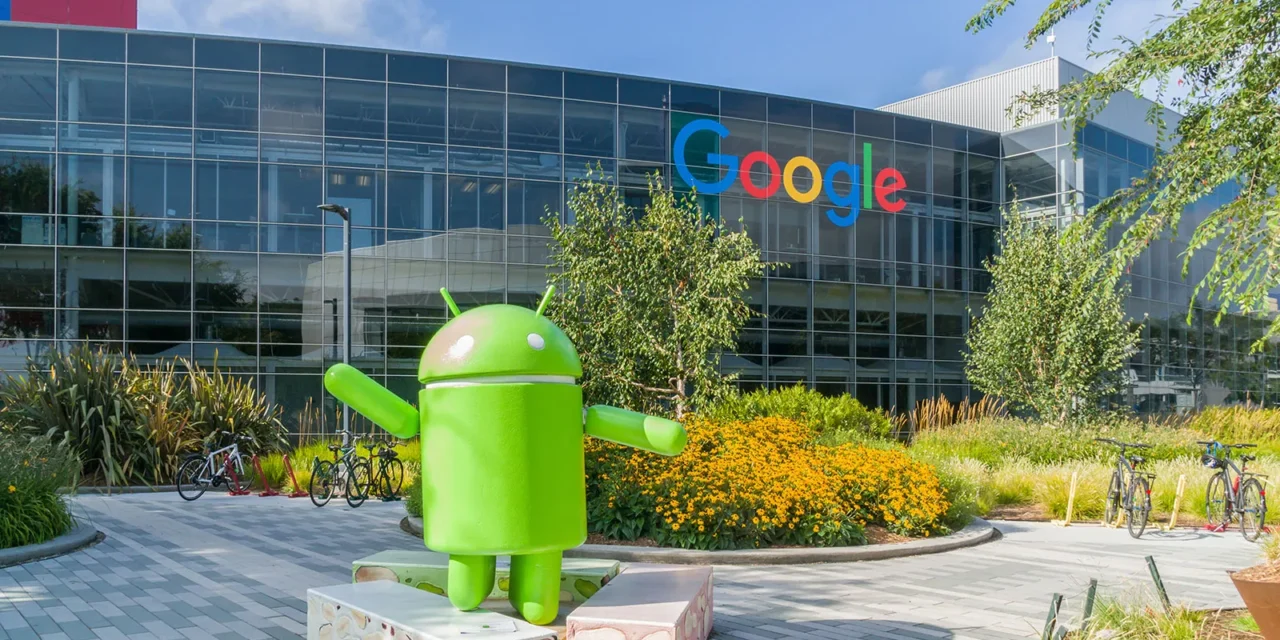
Alphabet (NASDAQ: GOOGL) already owns one of the world’s most advanced quantum research labs through Google Quantum AI, a fact that many investors overlook entirely.
Unlike the pure-play quantum companies, Alphabet does not need quantum computing to pay off immediately to justify its existing valuation, giving it a structural advantage over its smaller rivals.
Alphabet’s most significant recent quantum milestone centers on a chip called Willow, developed by the Google Quantum AI team after more than a decade of dedicated research.
Google’s Willow chip demonstrated that errors could decline exponentially as additional qubits are added, a critical step toward building larger and more reliable error-corrected quantum computers.
Willow also completed a computation in under five minutes that Google estimates would take one of today’s fastest supercomputers 10 septillion years to solve, a staggering demonstration of raw quantum capability.
Because Alphabet’s core advertising and cloud businesses generate enormous cash flows, the company can fund long-horizon quantum research without the dilution risk that burdens smaller pure-play competitors.
For investors who want meaningful exposure to quantum computing without betting everything on unproven companies, Alphabet represents the most strategically sound and financially durable option available today.
