
The Supreme Court faced the prospect of a crippling deadlock Monday over whether federal law prevents local governments from suing fossil fuel companies for climate-related damages.
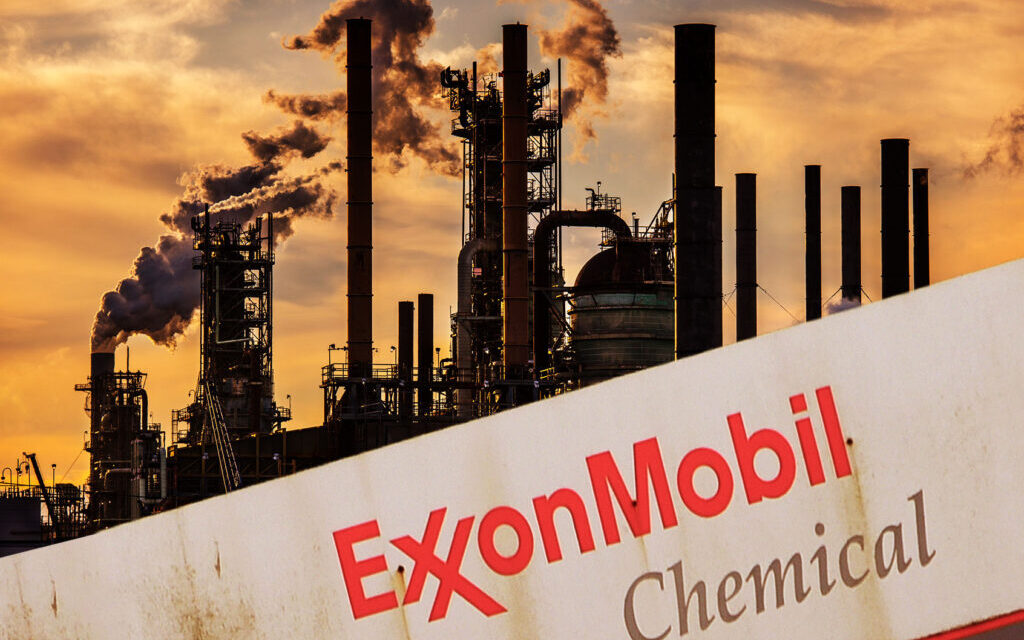
The case, Suncor v. Boulder, opened the court’s new term and centers on a lawsuit brought by several Colorado localities against Suncor and ExxonMobil (NYSE: XOM) over climate damages they allege the companies caused.
The suit is one of approximately three dozen filed across the country that oil companies have warned could create “ruinous” liability for their industry if allowed to proceed.
Justice Samuel Alito’s absence from the bench significantly altered the court’s dynamic, removing what was widely perceived as a likely conservative vote in favor of the oil companies.
With only eight justices seated, a 4-4 split would leave intact the Colorado Supreme Court’s ruling that Boulder’s claims against Suncor and ExxonMobil are not preempted by federal law.
A deadlocked court would set no nationwide precedent, meaning some climate lawsuits could advance toward trial while others might still be dismissed by state judges.
The court’s liberal wing was the most vocal in challenging arguments from both the oil companies and the Trump administration, which contended that federal law overrides state-level climate claims.
Justice Elena Kagan was sharply skeptical, demanding of oil company attorneys: “It’s like, wow, like, where is the text for that? Where’s the support for that? Where’s the precedent for that? Where’s the anything for that?”
Kagan and other justices drew parallels to past litigation against the tobacco and opioid industries, in which states and localities secured substantial damages from corporations.
Chief Justice John Roberts also signaled some sympathy toward Boulder’s position, pointing to mass torts and internet-related litigation as comparable legal territory.
Conservative Justice Brett Kavanaugh also questioned why previous court rulings had not already closed the door on Boulder’s legal theory, suggesting the oil companies faced more resistance than expected.
Kannon Shanmugam, an attorney representing the oil companies, warned the court that Boulder’s legal theory placed no meaningful limit on who could ultimately face liability.
Justice Ketanji Brown Jackson raised procedural concerns, stating: “A number of the discussions that you’ve had with my colleagues make me think that we’re really early in this case, that this is sort of premature from the standpoint of this court exercising its jurisdiction.”
Boulder’s attorney, Kevin K. Russell, argued that nothing in the Clean Air Act actually barred the city’s lawsuit, because Boulder sought damages rather than regulatory control over emissions.
Liberal justices nonetheless pressed Boulder’s side on whether suing oil companies for deceptive marketing would effectively function as a backdoor attempt to regulate fossil fuel output.
The Colorado Supreme Court cleared the case for trial in May 2025, but no jury has heard arguments and no judgment has been issued, raising questions about the case’s readiness for high court review.
After more than two hours of oral argument, the court’s ultimate direction remained deeply uncertain, with a final opinion not expected for several months.
