
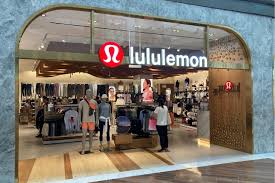
Lululemon athletica inc. (NASDAQ: LULU) closed at $95.86 on October 1, 2026, having lost close to half its value over the prior twelve months alongside rival Nike.
NIKE, Inc. (NYSE: NKE) reported first-quarter revenue of $11.21 billion on October 1, a decline of 4%, and guided full-year revenue to fall by a high single-digit percentage.
The profitability gap between the two companies is wider than their respective reputations suggest, with Lululemon converting 12.78% of revenue into net profit compared to Nike’s 6.70%.
Nike sells roughly four times the volume of Lululemon yet earns less than half as much on every dollar, a dynamic that undermines the traditional advantages of scale.
Return on equity reinforces the same conclusion, with Lululemon returning 30.90% against Nike’s 22.14%, despite operating with a considerably smaller balance sheet.
Nike’s most recent quarter did contain genuine positive signals, with earnings coming in at $0.48 per share against the $0.43 analysts had expected, and gross margin also finishing ahead of forecast.
The guidance is what rattled investors, as management now expects revenue to fall by a high single-digit percentage across fiscal 2027, a steeper decline than the 4% just reported.
Lululemon is contracting as well, with revenue falling 4.30% last quarter, and the company has cut its full-year guidance twice this year while a new chief executive is still settling into the role.
Nike’s dividend yield of approximately 4.7%, based on a forward dividend of $1.64 per share against the October 1 close of $35.15, appears attractive on paper but carries meaningful risk.
With approximately 1.48 billion shares outstanding across both classes, the dividend costs roughly $2.4 billion annually, while free cash flow over the past twelve months reached only $1.89 billion, meaning the payout already exceeds what the business generates in cash.
Nike holds $9.03 billion in cash against $11.04 billion of debt, giving it the capacity to bridge that gap for a period, though not indefinitely, particularly against a backdrop of accelerating revenue decline.
Lululemon pays no dividend and generates $1.15 billion in free cash flow against a market capitalization of approximately $11.4 billion, leaving its financial position notably less strained.
Short sellers have expressed stronger conviction against Lululemon, holding 13.07% of its free float compared to 8.98% of Nike’s, even though Lululemon trades at the lower valuation.
Nike trades at approximately 17 times trailing earnings as of October 1, while Lululemon trades near 10.7 times forward earnings, against roughly 19 times for the broader S&P 500.
The ten-year Treasury yielded 5.24% on October 1 with no earnings risk attached, making both equities harder to justify until either company demonstrates that its decline is stabilizing.
Hedge fund sentiment has shifted against both names, with Nike held by 56 hedge funds at the end of Q2 2026 with a combined stake value of approximately $1.35 billion, down from 71 funds the prior quarter.
Lululemon was held by 51 hedge funds with a combined stake value of approximately $610 million at the end of the same period, down from 61 funds holding roughly $1.14 billion three months earlier.
The conclusion that emerges from the comparison is that Lululemon is the stronger of the two businesses right now, given its superior margins, cleaner balance sheet, and less alarming revenue trajectory.
Nike represents the clearer avoid, having told investors to expect a high single-digit revenue decline for fiscal 2027 while simultaneously paying out more in dividends than the company generates in free cash flow.
Lululemon becomes a genuinely compelling opportunity once a quarter arrives that signals the decline has stopped, because 10.7 times earnings on a 30.90% return on equity would represent significant value.
