
The Trump administration has made last-minute changes to key absentee voting forms used by U.S. citizens living abroad, raising alarm among military and overseas voting advocates ahead of the 2026 midterm elections.
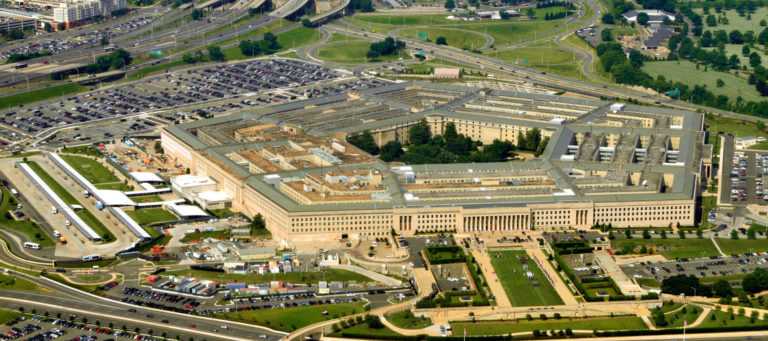
The revisions to two federal forms were submitted in late August by the Pentagon, which runs the Federal Voting Assistance Program (FVAP) that helps eligible overseas citizens, military members, and their families participate in federal elections.
The Pentagon filed “emergency” requests to bypass the standard months-long process for amending federal forms, doing so just weeks before a September 19 deadline for states to send overseas voters their midterm ballots.
Among the most significant changes was the removal of a checkbox allowing an overseas U.S. citizen to identify as having “never lived in the United States,” a category that has appeared on the forms since 2013.
Without that option, overseas citizens without an active-duty military connection are left with only two choices, both requiring a sworn declaration that they either intend to return to the U.S. or remain uncertain about returning.
However, some U.S. citizens born abroad have genuinely never lived in the United States and cannot honestly make either declaration.
Many states and Washington, D.C., permit so-called “never-resided” citizens to vote if they have a qualifying relative, such as a parent or legal guardian serving in the military, who last resided in that state before leaving the country.
Since 2024, Republican officials have mounted legal challenges arguing that state laws permitting never-resided citizens to vote violate state constitutions, and court filings have claimed these voters are disproportionately registered as non-Republicans.
Those challenges have succeeded in North Carolina but have been rejected twice in Michigan, while similar lawsuits remain active in Arizona and at least five other states.
Bob Carey, a retired U.S. Navy captain who led FVAP until 2012 and oversaw the original addition of the never-resided checkbox, says he added the category at the request of state election officials and overseas voting advocates after the 2012 election cycle.
“At the time, I was sort of saying to myself, ‘OK, this won’t make that big of a difference. I’ll add the block,'” Carey said, describing his thinking when he introduced the option that year.
Carey, who now serves as executive director of the National Defense Committee, a veterans advocacy organization focused on voting and civil rights, is urging the Pentagon to aggressively communicate the changes to voters and election administrators.
“If I was the under secretary of defense for personnel readiness, to which FVAP reports, or the secretary of defense, I’d be calling up the [FVAP] director and saying, ‘Spam the crap out of everyone,'” Carey said.
The Pentagon, in a letter from Sean O’Keefe, the deputy under secretary for personnel and readiness, said the changes were made because “the current format of these forms may confuse voters about the information they are required to provide under Federal law.”
Despite that stated rationale, overseas voting advocates argue the rushed rollout will create far more confusion than it resolves, particularly given the compressed timeline before Election Day.
Susan Dzieduszycka-Suinat, president and CEO of the U.S. Vote Foundation, warned the changes would backfire, saying, “I definitely believe that the new version of the form will create far more confusion than we ever encountered with any previous version.”
Dzieduszycka-Suinat pointed out that the forms were altered within a 90-day window before the election, giving states insufficient time to update instructions, train staff, or inform voters of the changes.
“It’s hard to ignore the fact that a spotlight has been shown onto this particular slice of voters,” Dzieduszycka-Suinat said, noting the timing coincides with the Republican National Committee ramping up legal challenges in Colorado, Nebraska, Nevada, New Jersey, and Virginia.
Sarah Streyder, executive director of Secure Families Initiative, which advocates for military families, criticized the lack of transparency around the Pentagon’s decision-making process.
“What were the voices prompting this change? Where did this come from? Military families are stakeholders who should have been included,” Streyder said, adding, “That’s our form you’re messing with. And you didn’t even ask us for the input. It’s just very insulting.”
