
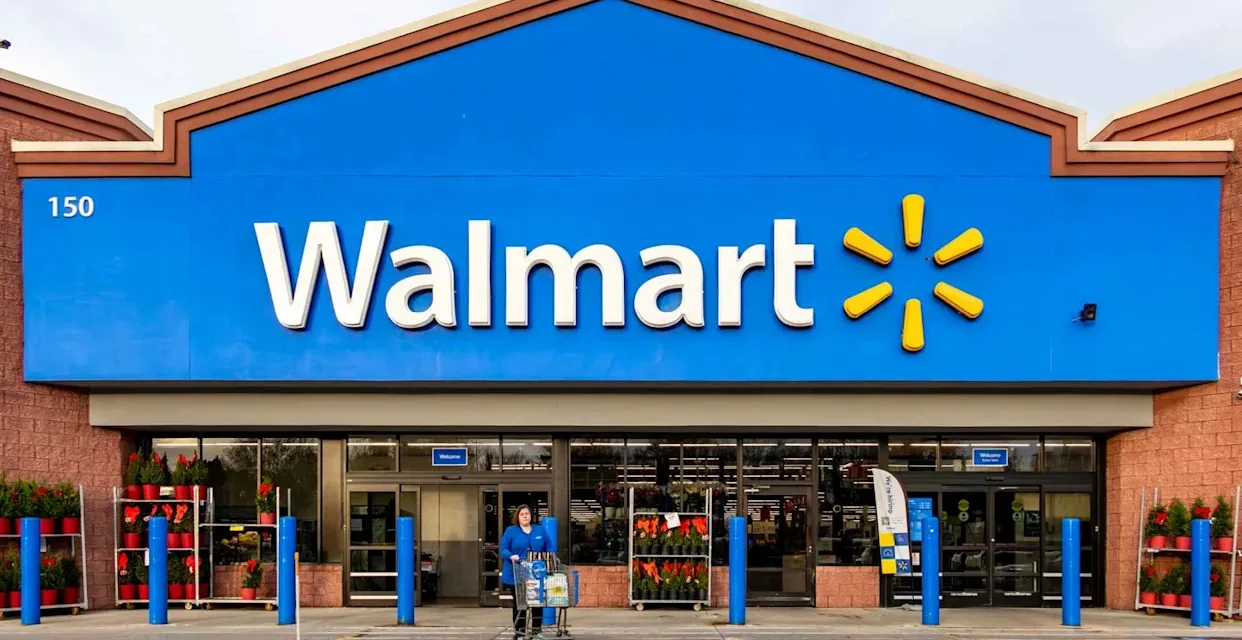
Walmart (NYSE: WMT) closed the most recent trading session at $106.80, representing a decline of 1.78%, a notably steeper drop than the broader market recorded on the same day.
The S&P 500 fell just 0.17% during that session, while the Dow Jones Industrial Average slipped 0.26% and the tech-heavy Nasdaq edged down only 0.09%.
Despite the single-day stumble, Walmart shares posted a gain of 3.68% over the prior month, a strong showing relative to peers.
The Retail-Wholesale sector declined 6.36% over that same one-month period, making Walmart’s monthly performance a clear outperformer against its broader industry group.
Investor attention is now turning toward the company’s upcoming earnings release, which is scheduled for November 19, 2026.
Analysts expect Walmart to report earnings per share of $0.63 for the upcoming quarter, reflecting a year-over-year increase of 1.61% from the comparable prior-year period.
Revenue consensus for the quarter sits at $186.47 billion, which would represent a 3.88% increase compared to the same quarter of the previous year.
Looking at full-year projections, Zacks Consensus Estimates call for earnings of $2.87 per share and total revenue of $750.79 billion, representing year-over-year growth of 8.71% and 5.28%, respectively.
Walmart currently holds a Zacks Rank of #3 (Hold), with the consensus EPS estimate remaining unchanged over the past 30 days.
On valuation, Walmart carries a Forward P/E ratio of 37.85, a significant premium compared to its industry’s average Forward P/E of 13.71, signaling elevated market expectations baked into the share price.
The company’s PEG ratio currently stands at 4.15, well above the Retail-Supermarkets industry average PEG ratio of 1.88 based on recent closing prices.
The PEG ratio builds on the traditional P/E metric by factoring in a company’s anticipated earnings growth rate, providing a more complete picture of valuation relative to growth prospects.
Walmart belongs to the Retail-Supermarkets industry, which falls within the broader Retail-Wholesale sector and currently holds a Zacks Industry Rank of 110, placing it in the top 45% of more than 250 tracked industries.
Research from Zacks shows that industries ranked in the top 50% tend to outperform those in the bottom half by a factor of 2 to 1, lending some constructive context to Walmart’s sector positioning despite the day’s share price weakness.
