
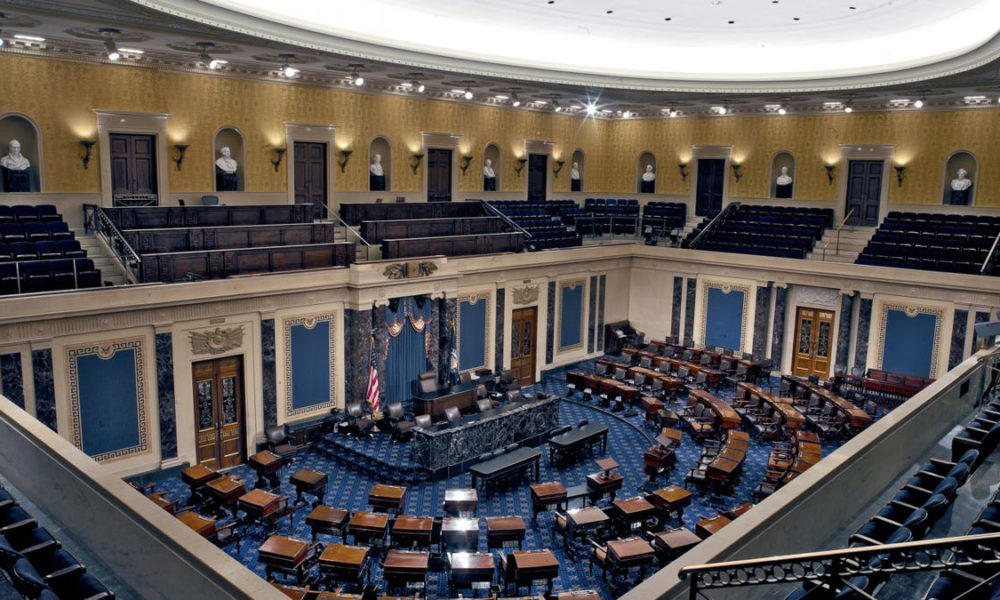
Senate negotiators have announced a bipartisan agreement on a permitting package designed to accelerate approvals for new energy projects across the country.
An aide for Sen. Martin Heinrich (D-N.M.), speaking anonymously, confirmed the breakthrough to Politico, stating: “We have reached a deal on text.”
Democratic negotiators Sens. Heinrich and Sheldon Whitehouse (D-R.I.) had been withholding final endorsements while working through what they described as “the last five yards” of the agreement.
The deal aims to reform the nation’s permitting structure, which energy advocates have long argued stifles development and delays critical infrastructure projects.
Sen. Shelley Moore Capito (R-W.Va.), chair of the Environment and Public Works Committee, said “the goal” is to release the full details of the agreement before the end of the week.
Despite the progress, a floor vote this week remains unlikely, with Capito warning that “lawmakers are running out of time” before the Senate enters recess.
The Senate does not return after this week’s recess until after the midterm elections, meaning any floor action would be pushed into a lame-duck session.
A persistent sticking point in negotiations has been the Trump administration’s blockade on wind and solar permitting approvals, with Democrats seeking firm assurances before lending their support.
Whitehouse made clear that Democrats require “[more] clarity from the Trump administration on what their return to regular order means” regarding wind and solar approvals.
President Donald Trump recently offered to ease his administration’s hold on renewable energy projects as an incentive for Democrats to sign onto the broader permitting deal.
Republicans shared a version of the bill with stakeholders on Friday that includes provisions preventing the executive branch from revoking permits except under limited exceptions.
Negotiators also settled on language requiring data centers to bear the costs of their higher energy consumption, ensuring those expenses are not passed on to ordinary consumers.
The outcome of lame-duck negotiations will be closely watched by the energy industry, as permitting reform has been debated for years without a legislative resolution.
