
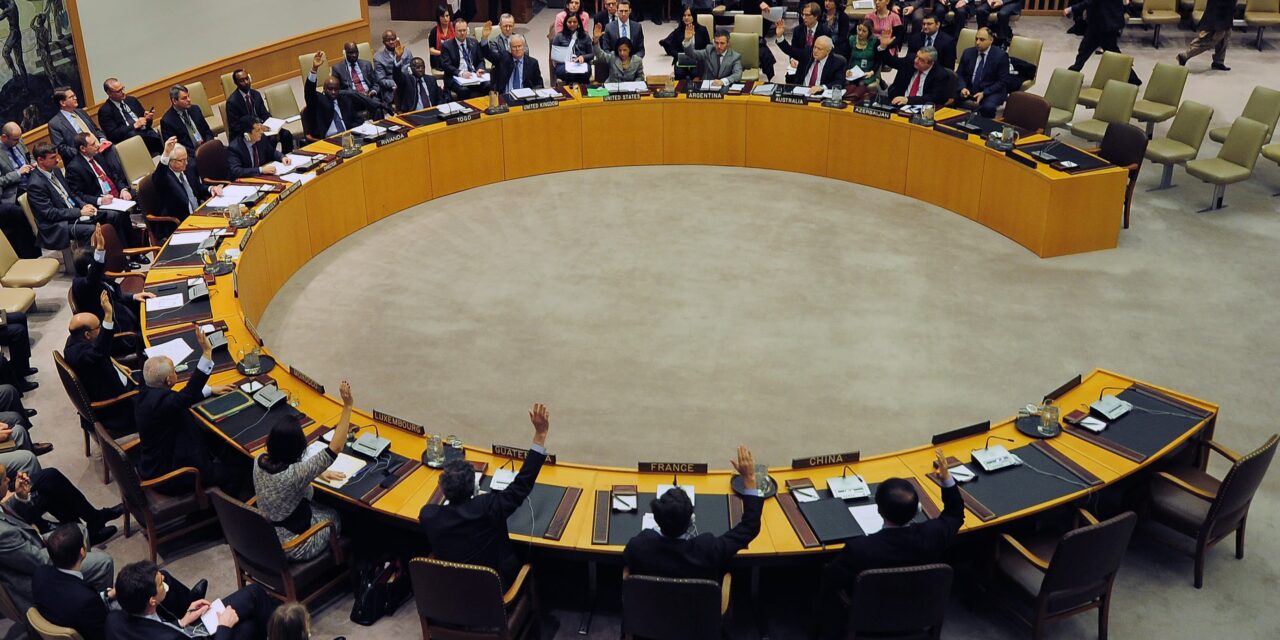
Pressure is mounting on the United Nations to restructure its most powerful body, with developing countries pushing for greater representation at the highest level of global governance.
Kyrgyzstan’s president has emerged as a prominent voice in the reform debate, calling explicitly for permanent Security Council seats to be granted to Africa and Latin America.
The push reflects a broader frustration among smaller and developing nations that the current UN Security Council structure fails to represent the realities of today’s geopolitical landscape.
The demand for reform comes as the UN faces a wider legitimacy crisis, with many countries arguing that the post-World War II institutional framework is long overdue for fundamental change.
Western sanctions policy also drew sharp criticism from the Kyrgyz leader, who accused the United States and Europe of weaponizing economic penalties to pressure smaller, less powerful countries into political compliance.
His remarks reflect a sentiment shared across much of Central Asia and the Global South, where sanctions imposed by Washington and Brussels are increasingly viewed as tools of coercion rather than instruments of international law.
The Kyrgyz president also offered an unexpected endorsement of the Trump administration’s decision to slash American financial support for non-governmental organizations operating abroad.
He argued that cutting US funding for foreign NGOs gave countries like Kyrgyzstan greater sovereignty and autonomy over their own political development and civil society landscapes.
The comments are notable given that US support for civil society organizations has long been framed in Washington as a cornerstone of its democracy promotion strategy across Central Asia and beyond.
The growing chorus of voices calling for Security Council reform signals that the debate is no longer confined to diplomatic back channels, but is becoming a central issue at the UN’s general annual gatherings.
Whether permanent members, who hold veto power and have long resisted structural changes that would dilute their authority, will engage meaningfully with these demands remains the defining question facing the institution.
The momentum behind reform proposals suggests that inaction itself carries growing diplomatic and reputational costs for a body that aspires to represent the interests of all nations equally.
