
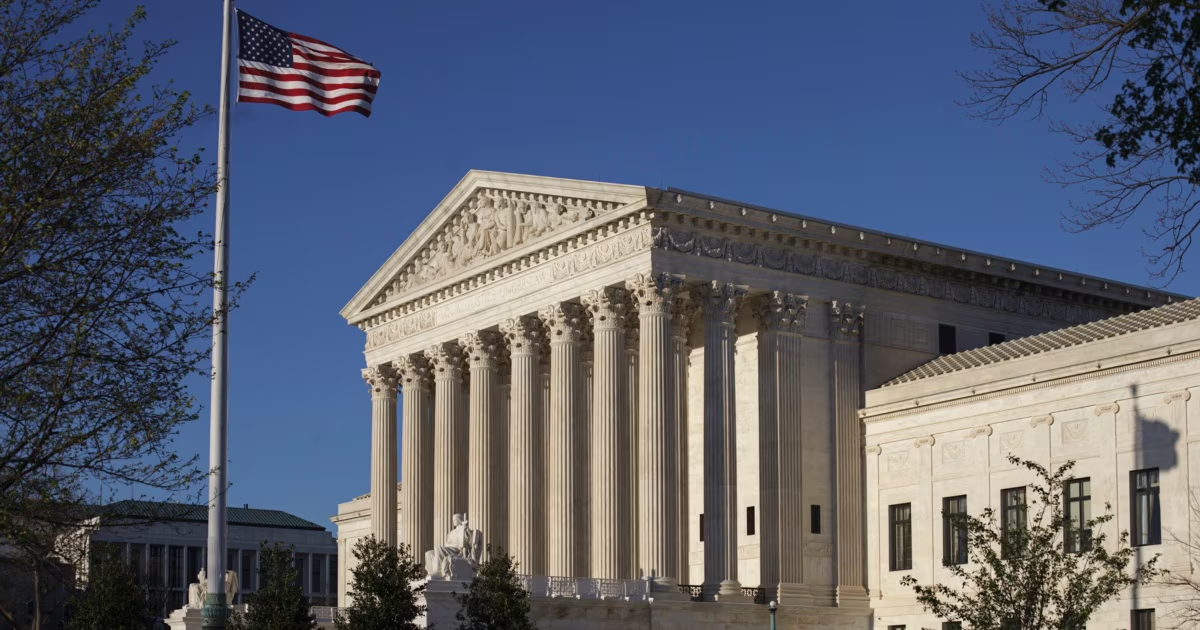
The U.S. Supreme Court has rejected a Republican-backed congressional map in Missouri, a ruling that preserves a critical seat for Democrats in the state.
The decision prevents the GOP-drawn redistricting plan from taking effect, maintaining the current district boundaries that have favored Democratic representation.
Missouri Republicans had pushed for the new map, which critics argued was designed to dilute Democratic voting power in at least one key congressional district.
The Supreme Court’s move to block the map is a significant legal setback for Missouri Republicans, who had sought to reshape the state’s congressional landscape ahead of upcoming elections.
Redistricting battles have become increasingly common across the United States, with both parties using the process to try to gain or consolidate political advantages at the congressional level.
The ruling keeps in place a district that Democrats have relied upon, ensuring that the party retains a competitive position in Missouri’s congressional delegation for the time being.
Missouri is generally considered a Republican-leaning state, making Democratic-held congressional seats particularly valuable and fiercely contested during redistricting cycles.
The Supreme Court’s intervention in state-level redistricting disputes reflects the broader national legal battles over how congressional maps are drawn and who benefits from those boundaries.
Legal challenges to congressional maps have intensified in recent election cycles, with courts at various levels weighing in on questions of partisan and racial gerrymandering across multiple states.
The decision underscores the continued importance of judicial oversight in the redistricting process, particularly in states where one party controls the legislature and seeks to maximize its congressional representation.
For Missouri Democrats, the ruling represents a meaningful political victory, protecting representation in a state where the party faces significant structural challenges at both the state and federal levels.
The outcome will likely have implications for the balance of power in the U.S. House of Representatives, where narrow margins have made every congressional seat a critical factor in determining which party holds the majority.
