
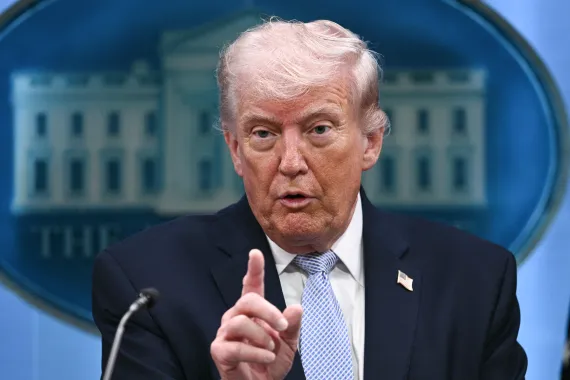
President Donald Trump cancelled nearly $810 million in federal funding late Friday through a maneuver known as a “pocket rescission,” circumventing the standard congressional approval process, as reported by CBS News.
The move marks only the second such pocket rescission in 50 years, with both instances occurring during Trump’s second term in office.
The pocket rescission process, as defined by the U.S. Government Accountability Office, “occurs when a president asks Congress to rescind funds very close to the end of the fiscal year, so close that the funds expire before they can be used for new obligations.”
Under the Impoundment Control Act, Congress is entitled to a 45-day review period before proposed spending cuts take effect, but Trump announced the rescissions with just five days remaining in the federal fiscal year.
The White House defended the cuts in a press release, stating: “These funds previously went to pro-illegal immigration programs and Non-Governmental Organizations that provided services to refugees, asylees, and other non-citizens and put unaccompanied children in harm’s way.”
The press release added: “Thanks to President Trump’s successful border policies, the illegal alien invasion is over and there are fewer people crossing our border than ever before.”
Among the programs targeted were Health and Human Services initiatives serving undocumented immigrants and unaccompanied children, along with the agency’s Minority Health office programs.
Additional cuts hit a Department of Education program for migrant students, a Department of Justice office focused on reducing racial tensions, a minority business development initiative, and housing counseling services under the Department of Housing and Urban Development.
The White House also labeled several Health and Human Services grants as “outright harmful and blatantly ideological,” and noted that some of the affected organizations are led by individuals who served under former Democratic President Barack Obama.
The last comparable use of the pocket rescission mechanism before Trump’s second term came in 1977, when then-President Jimmy Carter employed it, though Carter had proposed that clawback well ahead of the 45-day deadline.
The Trump administration argues the pocket rescission is a legally permissible tool, despite acknowledged legal ambiguity surrounding its use so late in the fiscal calendar.
The move drew swift criticism from Sen. Susan Collins of Maine, a Republican and chair of the Senate Appropriations Committee, who said in a statement that the action came without warning or consultation.
Collins, who faces a competitive reelection campaign, represents a notable voice of dissent from within Trump’s own party on the legality and process of the funding cancellations.
