
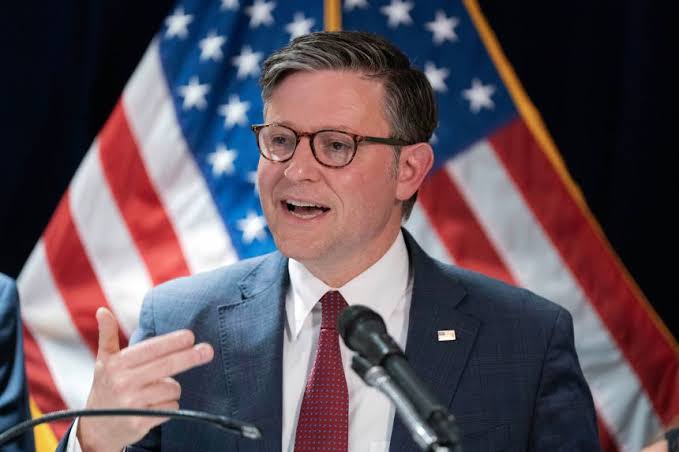
House Speaker Mike Johnson (R-La.) is publicly calling for “a resolution” to the Iran war, marking the strongest signal yet that Republicans are feeling political heat from the prolonged conflict ahead of midterm elections.
Johnson made the remarks during an interview with a local television station, framing the military operation against Iran as a clear-cut success while pivoting to the need for an endgame.
“It’s been a priority and an objective of every administration, for 50 years nearly, to ensure that Iran didn’t have a nuclear capability,” Johnson said in the interview.
“Now that’s done. Operation Epic Fury was an epic success. The world is safer because of it,” he continued, before adding the pointed caveat: “But now we’ve got to bring that to a resolution.”
Johnson stopped short of calling for an immediate ceasefire and did not outline any specific steps the administration should take to wind down the conflict.
His comments nonetheless represent a notable shift in tone, echoing a growing chorus of vulnerable Republicans in both chambers who have begun urging an end to the war in recent days.
The political pressure appears to be driven largely by the war’s domestic economic consequences, with rising fuel costs becoming an increasingly difficult issue for Republican incumbents to defend.
Johnson himself acknowledged the direct link between the Iran conflict and higher energy prices, telling the station that the closure of the Strait of Hormuz is reverberating throughout the American economy.
“The Strait of Hormuz not being open affects commerce. It directly affects gas prices and fuel prices. And also, you know, the price of groceries, for example, because they got to be transported,” Johnson said.
Democrats were quick to challenge the Republican shift in tone, arguing that their party had been urging an end to the conflict for months before Republicans began raising similar concerns.
“Where were these Republican sycophants over the last six-plus months when Democrats, in lockstep, have been fighting to end the war of choice in Iran,” a Democratic lawmaker said in a pointed rebuke.
The Democratic lawmaker went further, arguing that the war had fundamentally undermined American economic strength rather than enhanced national security, framing Republican opposition as purely election-driven.
“Precisely because it’s not made our country safer, but it has made America, and the American people, economically weaker. That’s the source of the problem,” the lawmaker said.
With midterm elections drawing closer, the Iran war is rapidly emerging as a defining fault line in American politics, forcing members of both parties to publicly stake out positions on a conflict with wide-ranging economic consequences for ordinary Americans.
