
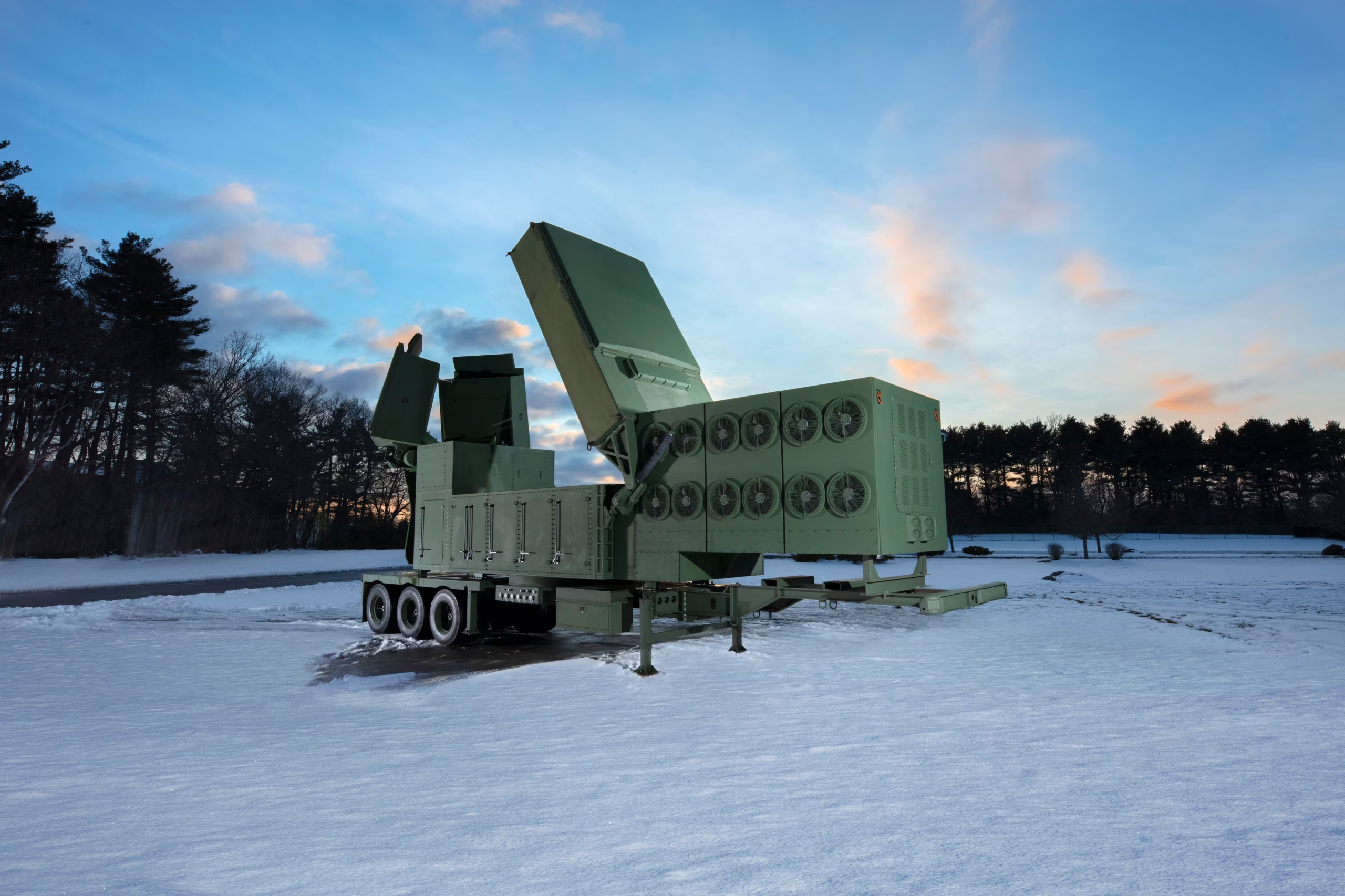
RTX (NYSE: RTX) has formed a new alliance with Xcimer Energy to explore advanced pulsed laser and fusion concepts for potential defense applications.
The partnership centers on fusion-based laser architectures that could eventually be integrated into next-generation directed energy weapon systems.
RTX has also confirmed a significant leadership change at Pratt & Whitney, with Jill Albertelli named as incoming president following a period of long-serving executive leadership.
The dual announcements arrive at a critical moment for RTX, as the company works to convert a substantial US$289 billion backlog into tangible output, improved margins, and stronger cash generation.
Analysts tracking the company have identified execution as the central variable, noting that supply chain expansion and factory investment must keep pace with growing contract obligations.
As RTX’s own commentary underscores, “A key factor is that RTX continues to execute on supply chain expansion and factory investments so that higher GTF MRO volumes and munitions contracts can translate into timely deliveries and cash generation.”
The Xcimer Energy alliance fits neatly within RTX’s broader long-term strategy, positioning the company to develop directed energy products that could sit alongside existing missiles and radar systems in future defense contracts.
Pratt & Whitney’s ongoing F135 Engine Core Upgrade further anchors RTX to high-specification propulsion work tied to established platforms, including the F-35, providing longer program visibility compared to shorter-cycle defense bets.
Compared to peers such as Lockheed Martin and Northrop Grumman, RTX’s positioning across both propulsion and advanced energy systems keeps the company embedded in programs with multi-year revenue predictability.
However, the risk profile remains meaningful, with analysts already flagging elevated debt levels, notable insider selling, and heavy capital expenditure commitments heading through 2026.
Fusion-laser development introduces additional engineering costs and supply chain complexity at a time when the company’s financial headroom is already being closely scrutinized by market participants.
Jill Albertelli’s appointment at Pratt & Whitney places significant responsibility on new leadership to maintain F135 upgrade timelines and GTF maintenance throughput without allowing backlog conversion to slip.
The leadership transition coincides with one of the more demanding operational periods in Pratt & Whitney’s recent history, as demand for engine maintenance services continues to outpace available capacity across the commercial aviation sector.
For investors, the RTX story ultimately hinges on whether the company’s future-technology optionality in areas like directed energy can be pursued without compromising the near-term execution discipline that underpins its valuation thesis.
RTX operates as a global aerospace and defense supplier, delivering systems and services across commercial aviation, armed forces, and government agencies, giving any strategic pivot a wide potential impact across its diversified portfolio.
