
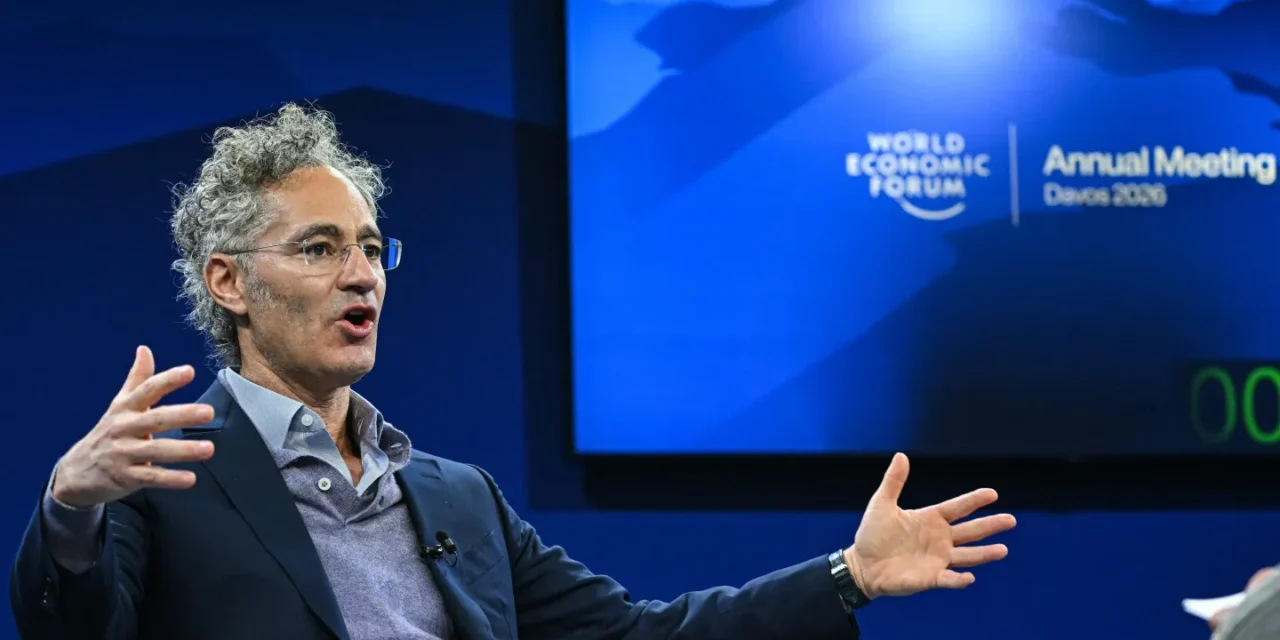
Palantir Technologies (NASDAQ: PLTR) chief executive Alex Karp has made a striking claim about the future trajectory of the artificial intelligence industry, suggesting its biggest players may never go public.
Speaking to CNBC on September 17, Karp argued that leading AI companies could instead pursue a strategy of government nationalization to escape mounting legal exposure.
The comments come amid a broader moment of reckoning in the tech sector, after current and former staffers blew the whistle on AI’s potential to cause catastrophic harm.
Those revelations prompted Elon Musk, OpenAI CEO Sam Altman, and Anthropic head Dario Amodei to issue a joint call urging the sector to slow its development pace.
Karp, whose company provides bridging software for cognitive computing programs, framed nationalization not as an idealistic outcome but as a practical escape hatch from enormous liability.
“These businesses have to be nationalized because if you don’t nationalize it, every single one of [their] clients is going to sue,” Karp said during the interview.
He also pushed for the Federal Reserve to establish a framework imposing greater civil and criminal penalties on firms that develop machine learning irresponsibly.
“The first line of defense is you’re liable for your own actions. So it’s a weird twist they’re asking for societal regulations to get out of the first line of defense, which is if you build a technology that can destroy 10% of the world, that has civil and criminal liability attached to it,” he noted.
When asked by CNBC how liability risks would be disclosed in a prospectus if a firm like OpenAI were to file for an IPO, Karp was blunt and dismissive of the premise.
“You’re assuming there will be an S-1… [but] the only way to deal with this kind of liability is to go to the government and say, ‘nationalize us, please!'” he said.
Observers have noted that Karp’s position is not entirely altruistic, given that Palantir offers AI sovereignty and oversight solutions that stand to benefit from increased government involvement in the sector.
The nationalization debate adds another layer of complexity to an industry where the biggest players have so far resisted going public in the traditional sense.
Sam Altman previously proposed granting Washington a 5% stake in OpenAI as part of a broader strategy of government engagement, and has also floated the idea of a public wealth fund allowing everyday people to share in AI’s financial upside.
Similar proposals for broader public ownership of AI assets have been advanced by Senator Bernie Sanders, though critics continue to question whether such arrangements are practical or even legally feasible.
The conversation around who ultimately controls and profits from transformative AI technology is intensifying, and Karp’s remarks suggest the industry may be approaching a decisive fork in the road between public markets and public ownership.
