
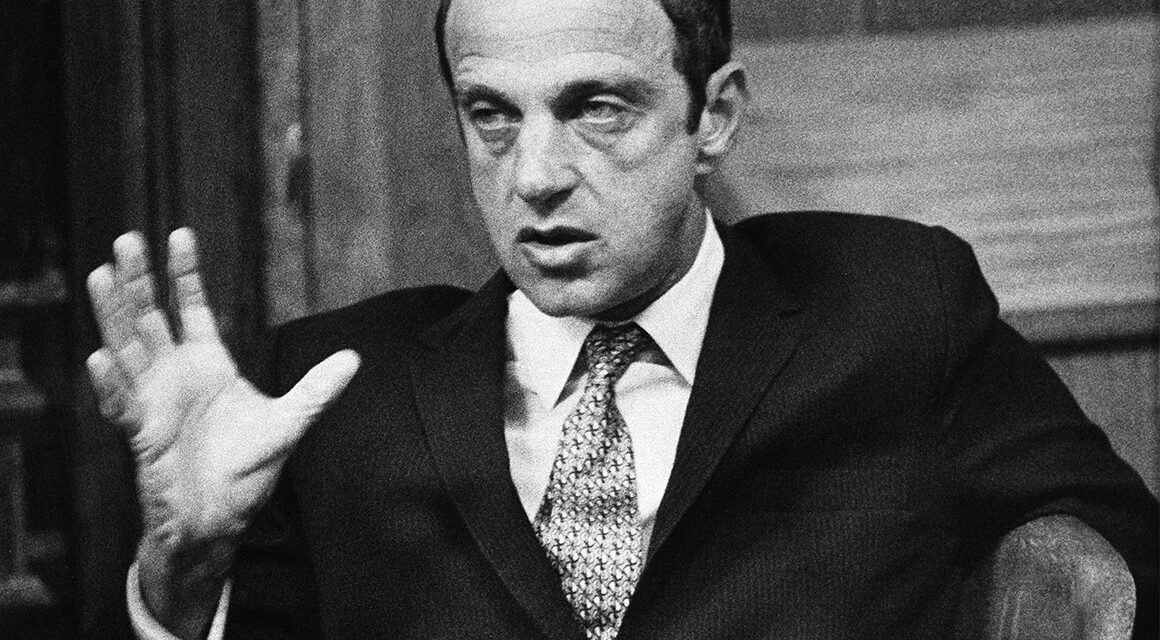
Pulitzer Prize-winning author Kai Bird has written a new biography examining the life and political legacy of Roy Cohn, one of America’s most controversial legal and political figures.
The book, titled “American Scoundrel,” traces how Cohn’s tactics and instincts shaped American political culture across several decades, from the McCarthy era through to Donald Trump’s political rise.
Cohn first gained national notoriety as a young prosecutor and aide to Senator Joseph McCarthy during the early 1950s anti-communist hearings that defined an era of political fear and blacklisting.
His methods during that period, including aggressive character attacks, media manipulation, and a refusal to concede any ground to opponents, became hallmarks of his later career as a powerful New York attorney.
Cohn went on to become a prominent and deeply polarizing figure in New York legal and social circles, cultivating relationships with powerful politicians, businessmen, and media figures over several decades.
Among his most significant later relationships was his mentorship of a young Donald Trump, whom he advised on legal strategy and deal-making throughout the 1970s and 1980s in New York.
Many political observers have long noted that Trump’s public combativeness, his instinct to never apologize, and his willingness to wage total war against critics bear strong resemblance to Cohn’s documented approach.
Bird, whose previous works include acclaimed biographies of J. Robert Oppenheimer and Jimmy Carter, brought his signature research-driven style to the examination of Cohn’s complicated and often troubling legacy.
The biography was discussed in an extended interview on NPR’s Fresh Air, hosted by Terry Gross, where Bird explored the through-line connecting Cohn’s McCarthy-era tactics to contemporary American political behavior.
Cohn died in 1986, but Bird’s work argues that his influence on American political life has proved remarkably durable, surfacing repeatedly in the style and strategy of those he mentored and influenced.
The publication of “American Scoundrel” arrives at a moment of renewed public interest in the historical roots of modern populist and combative political movements across the United States.
