
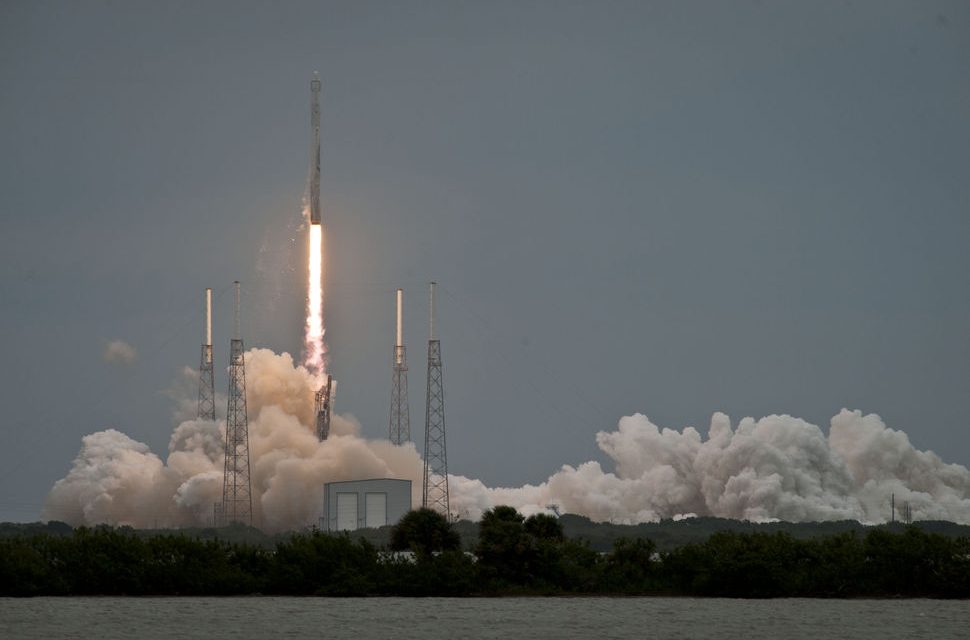
SpaceX (NASDAQ: SPCX) shares are climbing sharply Wednesday morning after Barron’s reported a firm launch date for Starship’s next test flight.
The company plans to fly Starship again on September 22, marking the vehicle’s first attempt to place its upper stage into a stable Earth orbit.
That distinction matters commercially, separating a vehicle still in its test program from one capable of carrying revenue-generating payloads.
SpaceX stock is trading at $151.12, up 5% on the session, though the stock remains down 7% since it began trading in June.
The broader space sector is barely participating in the move, with the Procure Space ETF (NASDAQ: UFO) up just 0.8% at $43.21 and the SPDR S&P 500 ETF Trust (NYSEARCA: SPY) up 0.3% at $759.99.
Rocket Lab (NASDAQ: RKLB) shares are essentially flat at $63.75, up just 0.3%, confirming that Wednesday’s rally is specific to SpaceX rather than a sector-wide move.
AST SpaceMobile (NASDAQ: ASTS) is also sitting out the move, trading at $59.27, up just 0.85%, reinforcing that investors are repricing SpaceX on its own headline rather than chasing broad space exposure.
Starship has now flown twice since SpaceX began trading, and both previous attempts remained suborbital, making September 22 the first real test of whether the vehicle can complete an orbital mission.
ARK Invest founder Cathie Wood has separately projected that Starship could generate $10 trillion in annual revenue by the end of the decade, calling SpaceX’s $1.75 trillion listing a bargain on that basis.
Wood’s projection builds from Starlink connectivity revenue per unit of launched network capacity rather than from launch fees, though the forecast rests on assumptions about flight cadence and payload utilization the vehicle has not yet demonstrated.
For context, the $10 trillion annual revenue figure would exceed the yearly economic output of every nation on Earth except the United States and China.
Wednesday’s 5% move tracks the launch date announcement far more than Wood’s long-range forecast, since near-term investor confidence depends on whether Starship can first reach stable orbit on September 22.
A successful orbital run would open the door to revenue-carrying payload flights and begin validating the commercial timeline that underpins SpaceX’s current valuation.
A second suborbital outcome, however, would leave that commercial timeline open-ended and put renewed pressure on a stock already trading below its June debut levels.
