
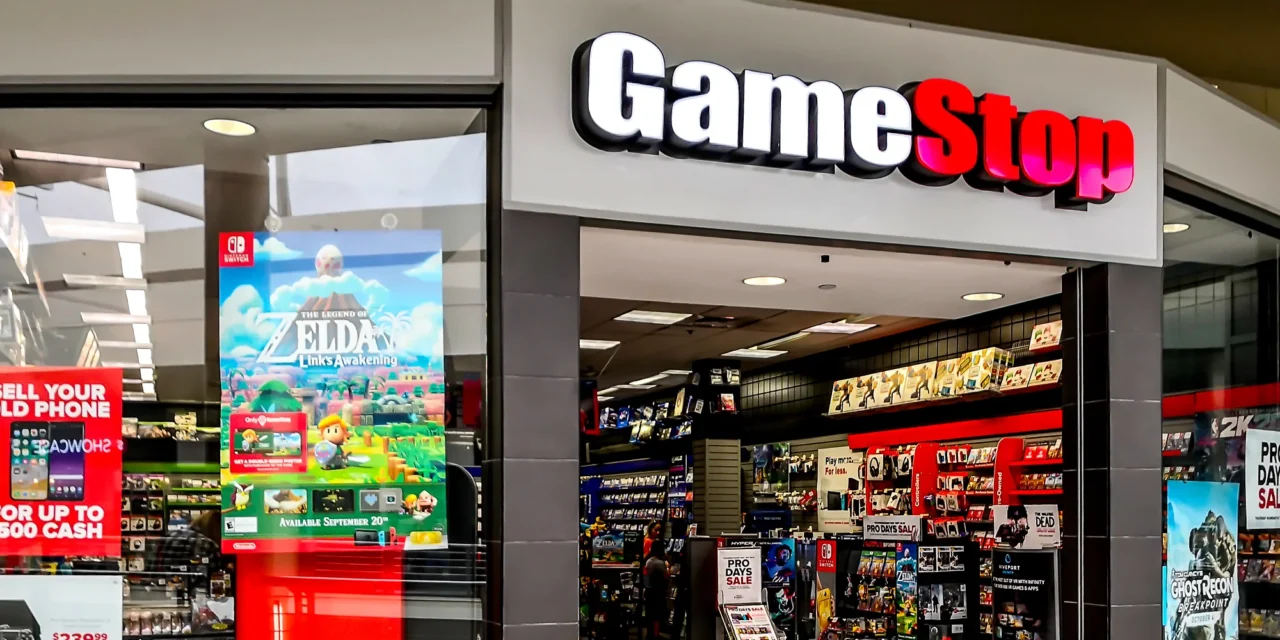
On September 10, 2026, Ryan Cohen of GameStop (NYSE: GME) and Dara Khosrowshahi of Uber Technologies (NYSE: UBER) each filed SEC Form 4 disclosures reporting open-market purchases of their own company’s shares.
Both filings carried transaction code P, the rarest insider action on a Form 4, indicating a direct, discretionary purchase made with personal funds rather than a prearranged trading plan.
The box indicating a Rule 10b5-1 prearranged trading plan was left unmarked on both filings, confirming each executive chose to buy at that specific price, on that specific day.
Unlike stock option exercises or restricted share vests, an open-market purchase carries no routine administrative explanation, making it one of the more closely watched insider signals on Wall Street.
Cohen, reporting as director, president, CEO, and board chair of GameStop, acquired 1,000,000 shares of Class A common stock at $20.3759, with Barron’s characterizing the total outlay at roughly $20 million.
GameStop director Alain Attal also bought 5,000 shares at $20.00 on the same day, adding a secondary signal of insider confidence at the same price level.
GameStop’s most recent close of $21.15 reflects a 10.0% gain over one week and a 12.4% gain over one month, with the company’s Q2 FY2026 collectibles revenue surging 57% year over year to $356.3 million.
Adjusted EBITDA more than doubled to $174.0 million in the same quarter, and management subsequently raised full-year FY2026 adjusted EBITDA guidance to more than $650 million.
Khosrowshahi, as director and chief executive of Uber, acquired 141,000 shares of common stock at $70.9642, stepping into a stock that has declined 12.3% year to date and 24.3% over the past year.
Despite the recent share price weakness, Uber’s underlying business delivered Q2 FY2026 gross bookings of $58.02 billion on 3.9 billion trips, representing 24% year-on-year growth.
Uber’s Q3 guidance calls for non-GAAP EPS of $0.84 to $0.88, implying growth of between 28% and 35%, while sell-side analysts maintain a consensus target price of $101.21 on the stock.
Barron’s noted that Wall Street’s reaction to the Cohen purchase was muted, headlining that Wall Street “doesn’t blink,” a useful reminder that an insider purchase is just one data point among many.
The two buys share the same transaction code and filing date but differ substantially in valuation context, price momentum, sell-side positioning, and the fundamental story driving each business.
Before treating any code P filing as actionable, investors should assess the purchase size relative to the insider’s existing stake, whether the filing fits a pattern of prior buying, and whether the underlying business numbers support a thesis independently.
A discretionary insider purchase signals executive alignment with shareholders but carries no predictive claim about future share price, making it a prompt for further analysis rather than a standalone buy signal.
