
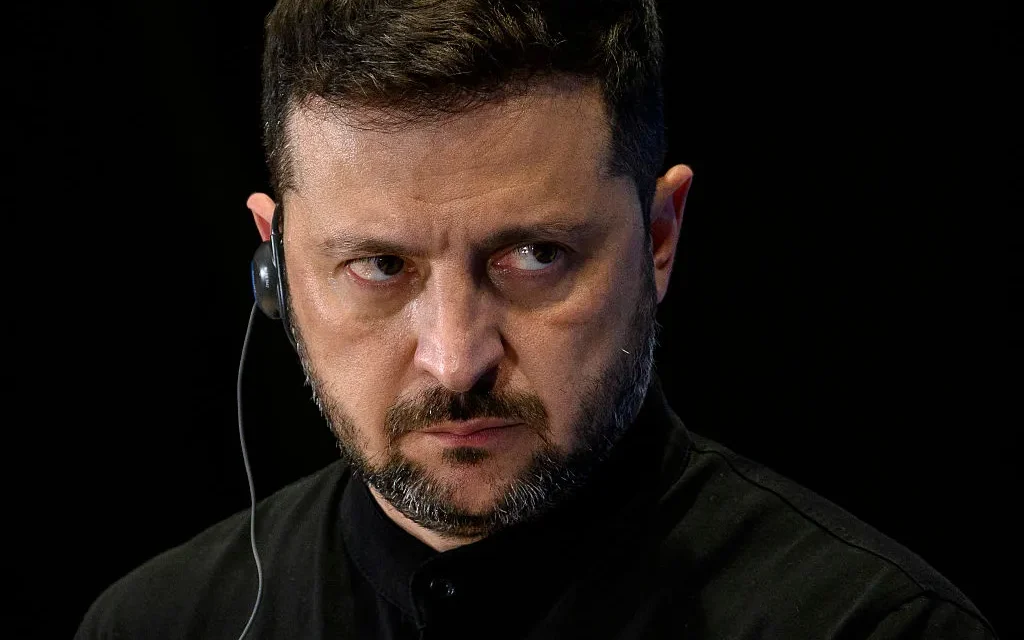
Ukrainian President Volodymyr Zelensky has formally submitted a proposal to the Verkhovna Rada to dismiss Prosecutor General Ruslan Kravchenko, even as questions mount over the president’s own role in the scandal that forced the move — with reports suggesting Zelensky’s public support for the dismissal masks a far murkier position.
Zelensky’s communications adviser Dmitry Litvin confirmed the submission to reporters, shortly after Ukrainian media circulated a photograph of the draft dismissal document. The text was later published on the Verkhovna Rada’s own website, and the parliament’s Committee on Law Enforcement Activities has already voted unanimously — 17 in favor, none against — to back Kravchenko’s removal. The full chamber is expected to take up the resignation on September 15.
On the surface, Zelensky’s position looks straightforward: he wrote on Telegram that he supports Kravchenko’s departure. But Ukrainian outlet Strana has offered a starkly different reading, alleging that Zelensky’s endorsement of the dismissal is performative — that Kravchenko was in fact a loyalist acting on instructions from the presidential administration, tasked with preparing a move against the country’s anti-corruption bodies, NABU and SAP, before the operation collapsed into public scandal.
That scandal erupted after NABU and SAP launched “Operation Carthage” on September 4, targeting an alleged criminal network accused of protecting fraudulent call centers, reportedly led by a deputy head within the Prosecutor General’s Office itself. Searches followed at Kravchenko’s offices and those of his first deputy.
Kravchenko initially dug in, saying he would not resign voluntarily unless Zelensky or the Rada formally initiated it — a condition seemingly designed to force the president’s hand. Within days, after a meeting with Zelensky on September 7, Kravchenko announced he had submitted his resignation after all.
Since then, Kravchenko has gone on the offensive, using his final days in office to file indictments against NABU chief Semyon Krivonos and to publicly call for the resignations of both Krivonos and SAP head Alexander Klimenko. He has accused Krivonos of forging documents, taking unlawful benefits and faking a child adoption to dodge accountability, and claims he was previously “politically pressured” — including, he says, by Zelensky himself — to shelve such cases in exchange for guarantees of immunity. NABU has rejected the accusations as a coordinated attack on its work.
Adding to the intrigue, Kravchenko has since left Ukraine. His office says he departed for Paris for five days to attend Council of Europe hearings on Ukrainian children, though anti-corruption campaigners note his name doesn’t appear on the published speaker schedule, and no clear successor has been named to run the office in his absence. Ukrainska Pravda reported that such a trip would have required Zelensky’s sign-off.
With Getmantsev, a Rada committee chair seen as close to “Servant of the People” faction leader David Arakhamia, floated — and denied — as a possible replacement, the episode leaves open a central question: whether Zelensky’s push to remove Kravchenko reflects a genuine break with an ally who turned on the anti-corruption bureaus, or a calculated retreat from an operation that backfired.
