
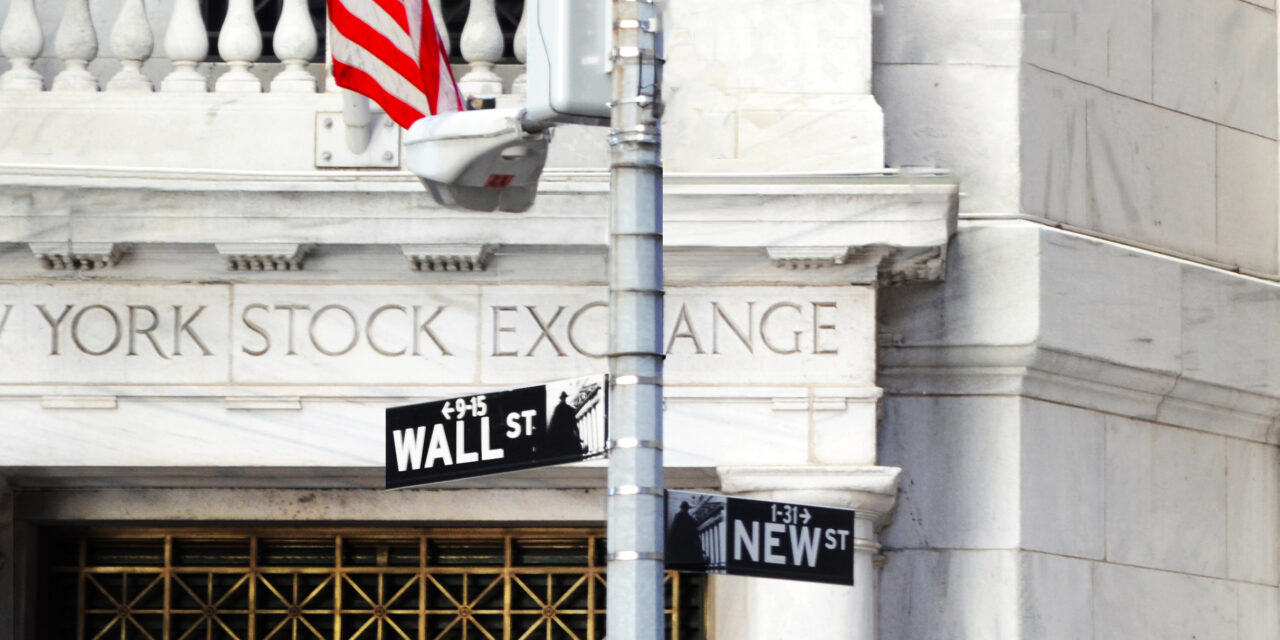
The S&P 500 Index (NYSE: SPY) closed down -0.48% on Wednesday, while the Dow Jones Industrial Average (NYSE: DIA) fell -0.77% to a 5-week low.
The Nasdaq 100 Index (NASDAQ: QQQ) closed down -0.29%, with E-mini S&P futures dropping -0.46% and September E-mini Nasdaq futures declining -0.30%.
WTI crude oil prices surged more than +3% to a 3.25-month high, driven by a sharp escalation of hostilities in the Middle East that raised serious concerns about energy flows through the Strait of Hormuz.
The US destroyed five Iranian tankers carrying crude oil in response to two attempts by Iran to strike US Navy ships with ballistic missiles, dramatically intensifying the conflict.
Iran retaliated by firing missiles at a US air base in Jordan and warned ships in the Persian Gulf they would face attack, while also declaring it was ready for a more intense war.
The spike in energy prices is stoking inflation fears and driving bond yields sharply higher, with the 10-year Treasury note yield climbing to a 2.75-year high of 4.853% on Wednesday.
December 10-year T-notes closed down -7.5 ticks, falling to a 20-month nearest-futures low, after the Treasury announced it would buy back only up to $6 billion in longer-dated Treasuries, well below expectations of at least $10 billion.
Despite those losses, T-notes recovered somewhat after the Treasury’s $39 billion auction of 10-year notes drew strong demand, with a bid-to-cover ratio of 2.71, far exceeding the 10-auction average of 2.49.
The US-Canada trade war continued to weigh on sentiment, after Canada imposed tariffs of 15% to 50% on hundreds of US goods, retaliating for Washington’s earlier move to slap 50% tariffs on $20 billion of Canadian imports.
The US responded by moving to block certain Canadian imports, imposing new tariffs on others, and seeking to bar Canadian companies from selling to US government contractors, further straining the bilateral relationship.
US MBA mortgage applications fell -2.7% in the week ended September 4, with the average 30-year fixed-rate mortgage rising 6 basis points to a 14-month high of 6.85%.
Markets are now pricing in a 61% chance of a +25 basis point rate hike at the next FOMC meeting on September 15-16, reflecting the intensifying inflation outlook.
Among the session’s biggest losers, Comcast (NASDAQ: CMCSA) fell -6% to lead Nasdaq 100 decliners after CFO Armstrong said he sees no improvement in Q3 broadband subscriber losses.
Charter Communications (NASDAQ: CHTR) dropped more than -8%, while Verizon Communications (NYSE: VZ) and AT&T (NYSE: T) each closed down more than -1%.
ServiceTitan (NASDAQ: TTAN) plunged more than -29% after reporting a Q2 EPS loss of -26 cents, wider than the consensus estimate of -25 cents.
Casey’s General Stores (NASDAQ: CASY) tumbled more than -14% to lead S&P 500 decliners after reporting a Q1 gross margin of 21.8%, below the consensus of 22.3%.
Chewy (NYSE: CHWY) fell more than -10% after forecasting a sequential decline in Q3 gross margin, citing a timing shift as certain rebate benefits moved from the second half of the year into Q2.
On the upside, Meta Platforms (NASDAQ: META) surged more than +6% after analysts offered positive reviews of the company’s debut of Muse, an AI assistant.
Chime Financial (NYSE: CHYM) climbed more than +7% after raising its full-year revenue forecast to between $2.76 billion and $2.77 billion, above both its prior guidance and the consensus of $2.74 billion.
Energy producers also rallied strongly, with APA Corp (NASDAQ: APA) and ExxonMobil (NYSE: XOM) each closing up more than +2%, while Chevron (NYSE: CVX), Devon Energy (NYSE: DVN), and ConocoPhillips (NYSE: COP) all gained more than +1%.
Chipmakers provided a partial offset to broader losses, with Marvell Technology (NASDAQ: MRVL) up more than +4% and Advanced Micro Devices (NASDAQ: AMD) rising more than +3%, while Micron Technology (NASDAQ: MU) added more than +2%.
European markets also fell under pressure, with the Euro Stoxx 50 dropping -1.58% to a 5-week low, while the 10-year German bund yield climbed to a new 15-year high of 3.444% and markets are pricing in a 100% probability of a +25 basis point ECB rate hike at Thursday’s policy meeting.
