
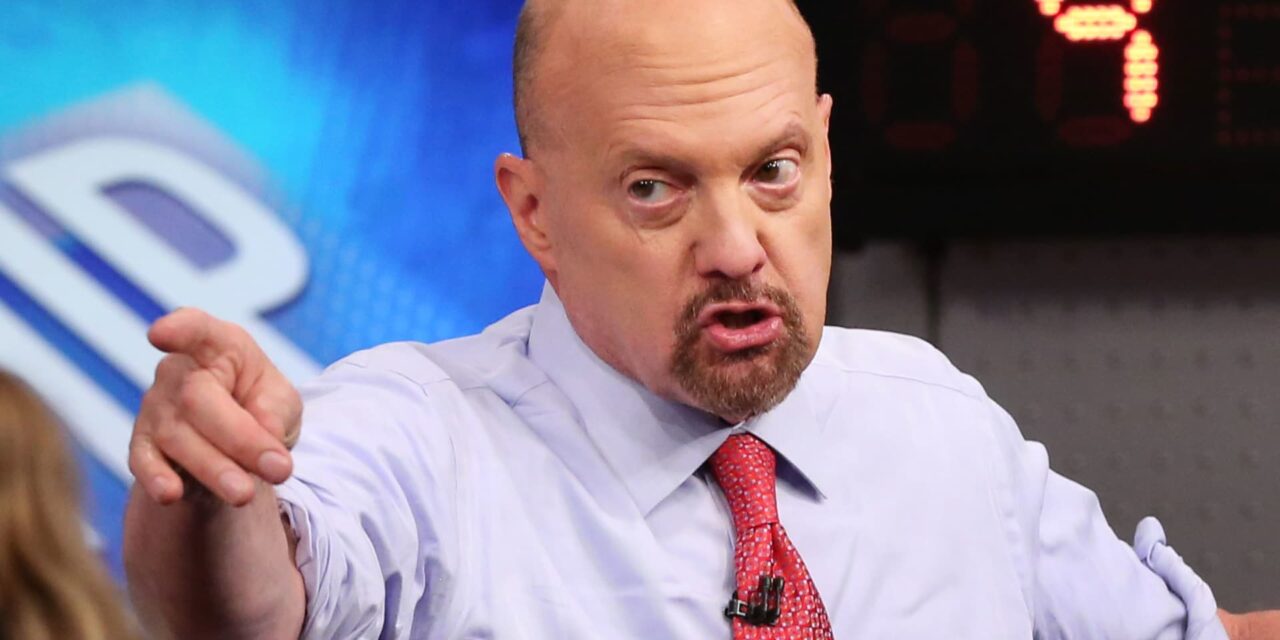
Cardinal Health, Inc. (NYSE: CAH) drew high praise from CNBC’s Jim Cramer on the September 2 episode of Mad Money, where he named it one of his “absolute favorites.”
Cramer highlighted the company’s growing exposure to specialty pharmaceuticals and higher-margin healthcare services as key drivers of his bullish outlook.
He argued that Cardinal has been “running circles” around rivals McKesson and Cencora, citing its consistent outperformance and strategic shift away from commoditized distribution.
Cardinal’s fiscal fourth-quarter revenue rose 6% to $63.7 billion, though the result missed analyst estimates, while adjusted earnings per share came in at $2.91 for the period.
Excluding a $0.31 per share tariff refund benefit, adjusted EPS stood at $2.60, a figure that gives a cleaner read on underlying operational performance heading into the new fiscal year.
Management issued fiscal 2027 non-GAAP EPS guidance of $12.40 to $12.60, representing growth of 13% to 15%, alongside an adjusted free cash flow forecast of $3.5 billion to $4 billion.
Cramer dismissed the revenue miss as largely irrelevant, stating: “Remember, volume is where Cardinal really makes the money, volume, okay? That’s why I keep shrugging off the revenue misses.”
The logic behind that view centers on the economics of pharmaceutical distribution, where lower branded-drug prices and a shift toward generics can reduce reported revenue without proportionally cutting into distributor fees or margins.
Cardinal’s Other segment, which includes Nuclear and Precision Health Solutions, OptiFreight Logistics, and at-Home Solutions, is projected to deliver 11% to 13% revenue growth and 15% to 18% profit growth in fiscal 2027.
The company also agreed in July to acquire AdaptHealth’s diabetes health business and Strive Medical for approximately $360 million, expanding its at-home medical-supply footprint and deepening its specialty positioning.
Despite the optimism, Cardinal faces meaningful execution risk, given that the stock has already rerated close to its record high and now trades at a forward price-to-earnings ratio of 19.01.
Customer concentration represents another vulnerability, with CVS Health accounting for 28% of Cardinal’s fiscal 2026 revenue and its five largest customers representing 43% of total sales combined.
The projected fiscal 2027 free cash flow of $3.5 billion to $4 billion also marks a step down from the roughly $5 billion generated in fiscal 2026, a trend that warrants monitoring.
Hedge fund interest showed a slight decline, with Insider Monkey data indicating 63 hedge funds held CAH in the second quarter, down from 66 in the first quarter, though short interest remained low at approximately 2.7% to 2.8% of the float.
Cramer closed his assessment with a direct endorsement: “Here’s the bottom line: In a world where investors are terrified of higher oil and higher interest rates, I think a stock like Cardinal Health can be a big winner.”
He added that the company has been performing well but has not received adequate credit from the market, and that current conditions make Cardinal too attractive to overlook for investors seeking durable earnings growth.
