
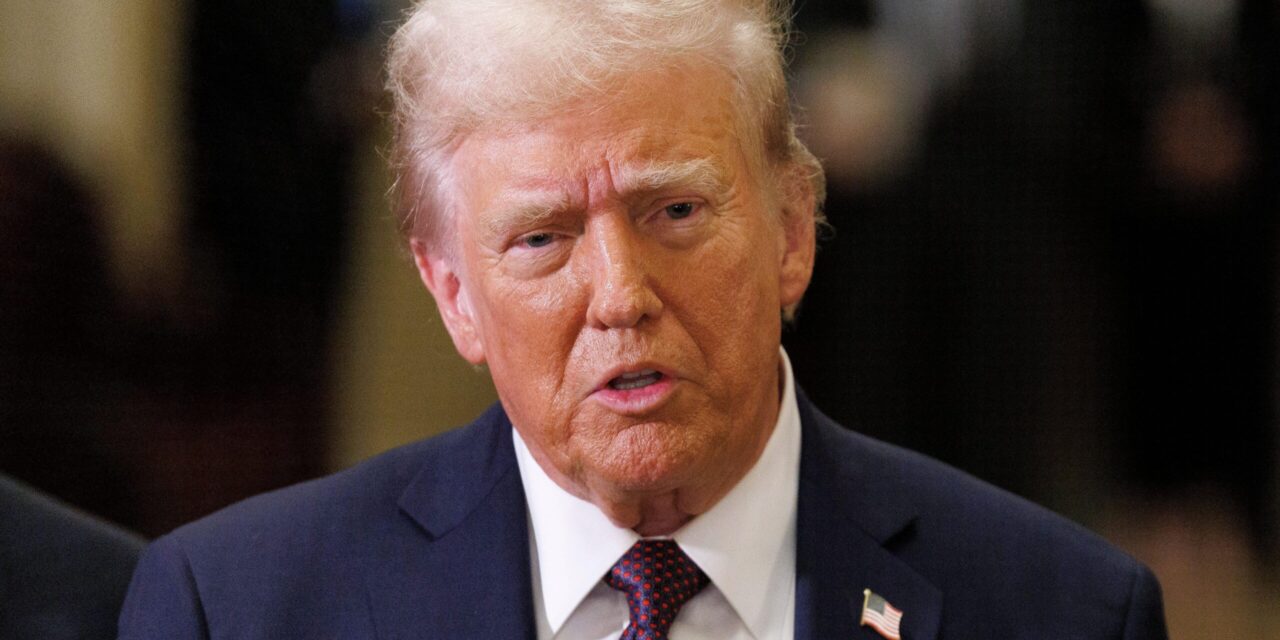
A federal judge in Maryland has blocked President Donald Trump’s latest executive order targeting birthright citizenship, partially halting the policy while a class-action lawsuit proceeds.
U.S. District Judge Deborah L. Boardman issued the injunction, which will remain in place until litigation brought by immigrant families and advocacy groups is fully resolved.
Trump’s August executive order sought to narrow the circumstances under which children born on U.S. soil would be recognized as citizens under the 14th Amendment.
The order targeted children whose parents are not citizens if either parent is “an alien enemy,” “a foreign government employee,” or engaged in so-called birth tourism.
The policy also sought to deny citizenship to children born to adults who “engaged in a commercial transaction to purchase or access birthright citizenship,” a provision that alarmed many families.
Some families said they feared their children could be denied citizenship simply because they purchased airfare to travel to the United States and later became pregnant after arriving.
Judge Boardman, appointed by President Joe Biden, pointed directly to the Supreme Court’s prior ruling in her decision, writing: “The Supreme Court has spoken: Children in the certified class are ‘citizens at birth.'”
The ruling came after the Supreme Court struck down a broader, earlier executive order from 2025 in a 6-3 decision in July, finding it unconstitutional.
In her 35-page opinion, Boardman wrote that the latest order represented only the most recent attempt to limit birthright citizenship by any means that could survive legal scrutiny.
She wrote directly: “Since his second term in office began on January 20, 2025, the president has tried, through executive order, to upend our country’s longstanding tradition of birthright citizenship.”
Boardman also stated: “The government cannot claim a legitimate interest in enforcing an executive order that is likely unconstitutional.”
She further found that “even a cursory review of the 2026 executive order’s carveouts to birthright citizenship reveals they bear little to no resemblance to the ‘narrow exceptions’ to the rule of citizenship by birth recognized by the Supreme Court.”
While the judge blocked enforcement of the new policy, she allowed federal agencies to continue developing internal guidance on how it would be carried out if enforcement is later permitted.
Shana Khader, legal director at We Are CASA, issued a statement saying: “The White House must recognize it will not succeed in stripping children of their right to citizenship, evading binding court decisions or placing the president’s anti-immigrant agenda above the Constitution.”
The White House did not immediately respond to a request for comment following the ruling.
