
Apple (NASDAQ: AAPL) has spent several decades building what Strategy Risks founder and CEO Isaac Stone Fish describes as a “multi-hundred billion dollar bet” on China, one that now defines the company’s greatest vulnerability.
Stone Fish argues that Apple’s deep integration with the Chinese Communist Party, Chinese supply chains, data laws, and consumers has left the company exposed at a critical geopolitical moment.
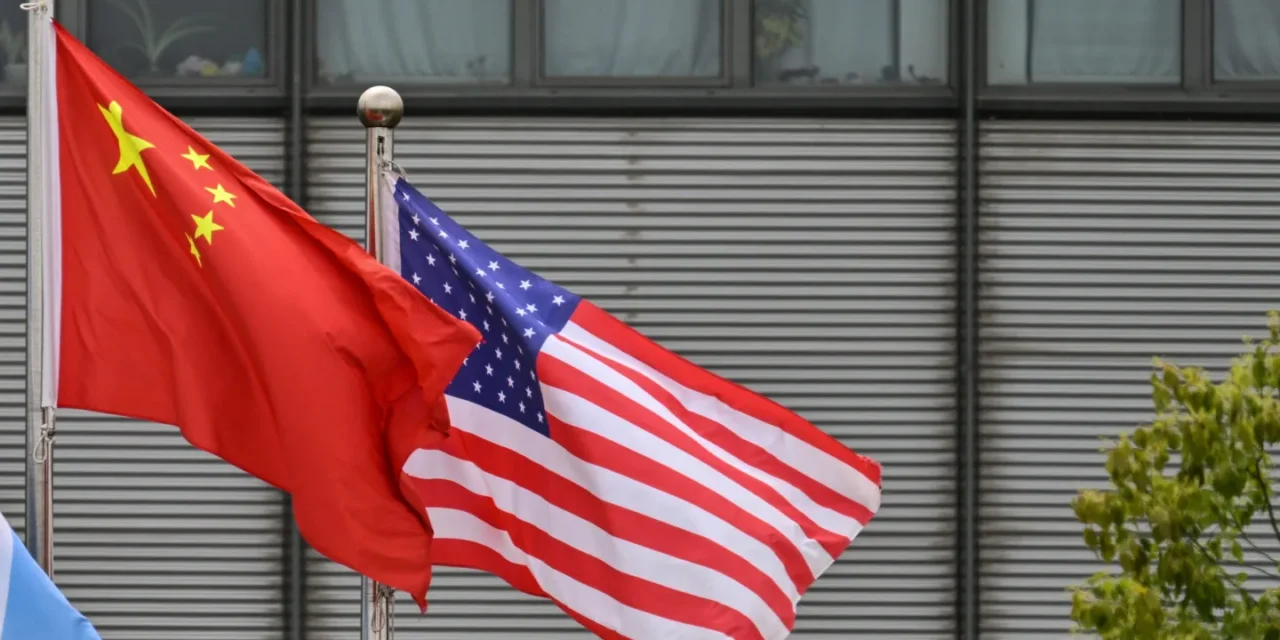
Speaking with Yahoo Finance’s Market Domination host Josh Lipton, Stone Fish said the world in 2026 is “very much in a bifurcating” state, forcing companies to begin choosing sides between the United States and China.
Apple’s new CEO finds himself at the center of that tension, inheriting a strategic dilemma that Stone Fish contends “can no longer be avoided or hedged.”
Many investors point to Apple’s manufacturing diversification efforts, including moves into Vietnam and India, as evidence the company is reducing its China exposure, but Stone Fish pushes back on that view.
He argues that the manufacturers Apple relies on in India, Vietnam, and Malaysia are themselves heavily dependent on Chinese supply chains, meaning the underlying risk has not been meaningfully reduced.
Stone Fish made the point plainly: “I think that if you had to choose, Apple would absolutely need China more than India even if it says made in India.”
He added that Apple would likely need to invest in India at a scale comparable to what it has already committed in China before that country could serve as a genuine alternative manufacturing base.
On whether China is actively working to prevent Apple from decoupling, Stone Fish said Beijing is already doing exactly that, sometimes quietly and sometimes loudly, pressuring manufacturers across Asia to maintain their Chinese supply chain ties.
He noted that China has passed legislation restricting companies’ ability to decouple, introduced new sanctions measures, and facilitated phone calls between Chinese executives and counterparts in India, Vietnam, and Thailand to remind them, in his words, “on which side their bread is buttered.”
The emergence of artificial intelligence adds another layer of complexity, with Stone Fish suggesting AI could either offer Apple a path toward reduced hardware dependency on China or push the company toward integrating Chinese AI directly into its products and models.
That second scenario, he warned, could make Apple “the first major US company to do that,” creating an entirely new category of national security concern for regulators and investors alike.
Stone Fish’s proposed solution centers on what he calls “managed decoupling,” a deliberate, line-by-line assessment of every point of China engagement across Apple’s sprawling operations, which he estimates involves tens of thousands of individual items.
The goal, he explained, is for Apple to “better price its risk” and then execute a gradual withdrawal from overexposed positions in a way that avoids triggering a sudden rupture in its current Chinese operations.
Stone Fish’s broader argument is that Apple has historically been one of the world’s most successful companies precisely because of its strategic discipline, and that same discipline must now be applied to honestly accounting for the true cost and risk of its China relationship.
