
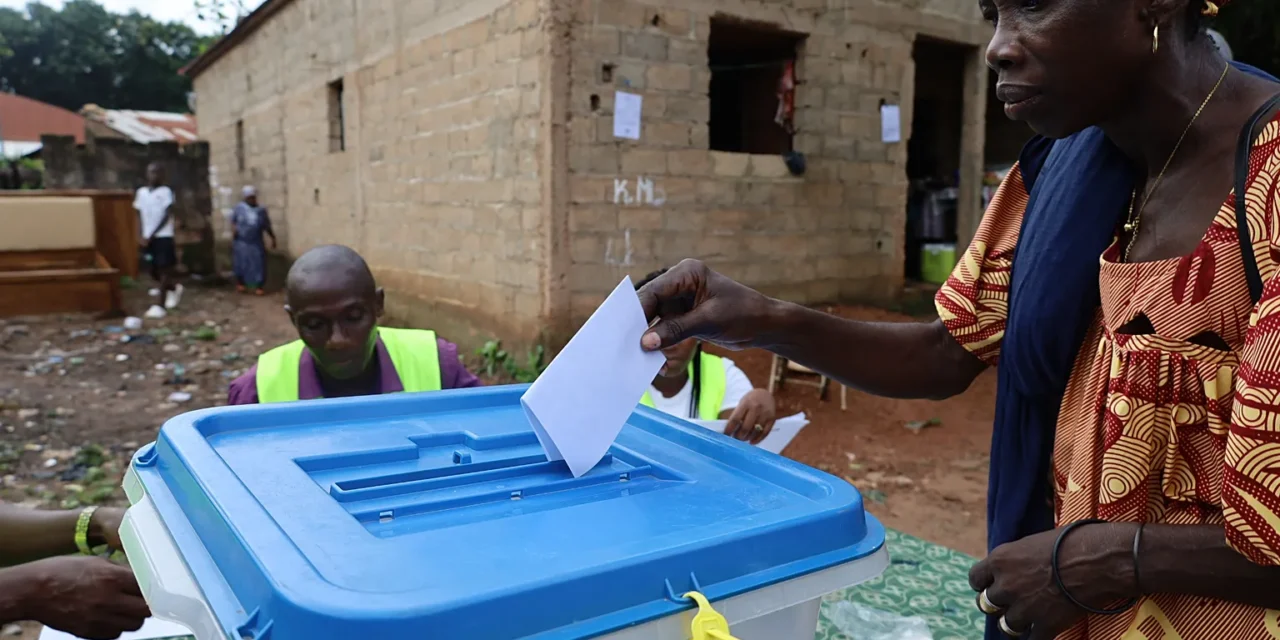
Guinea-Bissau voted Sunday on a referendum that could fundamentally reshape how the small West African nation of around 2.2 million people is governed.
The junta-backed vote asks citizens whether to grant the president sweeping new powers, shifting the country away from a parliamentary model toward a presidential system.
Under the proposed constitutional changes, the president would gain the authority to appoint and dismiss the prime minister and to dissolve parliament at will.
The amendment, unanimously approved by the ruling military junta, would also reduce the number of parliamentary seats from 102 to 65.
According to the Associated Press, many polling stations reported low turnout, reflecting the impact of an opposition-led call to boycott the referendum.
Opposition groups have urged the public to reject the vote, warning that it will allow the junta leader to cement power and describing it as a “source of political instability at all levels.”
The junta, however, argues the constitutional overhaul is a necessary step to stabilize the country’s institutions before new elections scheduled for December 6.
Those elections are intended to return power to civilian rule following months of military governance that began last November after a disputed presidential election.
That disputed vote saw former President Umaro Sissoco Embalo and opposition candidate Fernando Dias both claim victory, triggering the military seizure of power.
Guinea-Bissau’s political instability is not new, as the country has endured five coups and a series of attempted coups since gaining independence in 1974.
In 2023, Embalo himself dissolved the opposition-dominated parliament following what he described at the time as an attempted coup against his government.
Polls closed at 1700 GMT on Sunday, with the first provisional results expected to be released from Tuesday onward.
The outcome of the referendum will determine whether December’s elections take place under a fundamentally different constitutional framework than any the country has previously operated under.
