
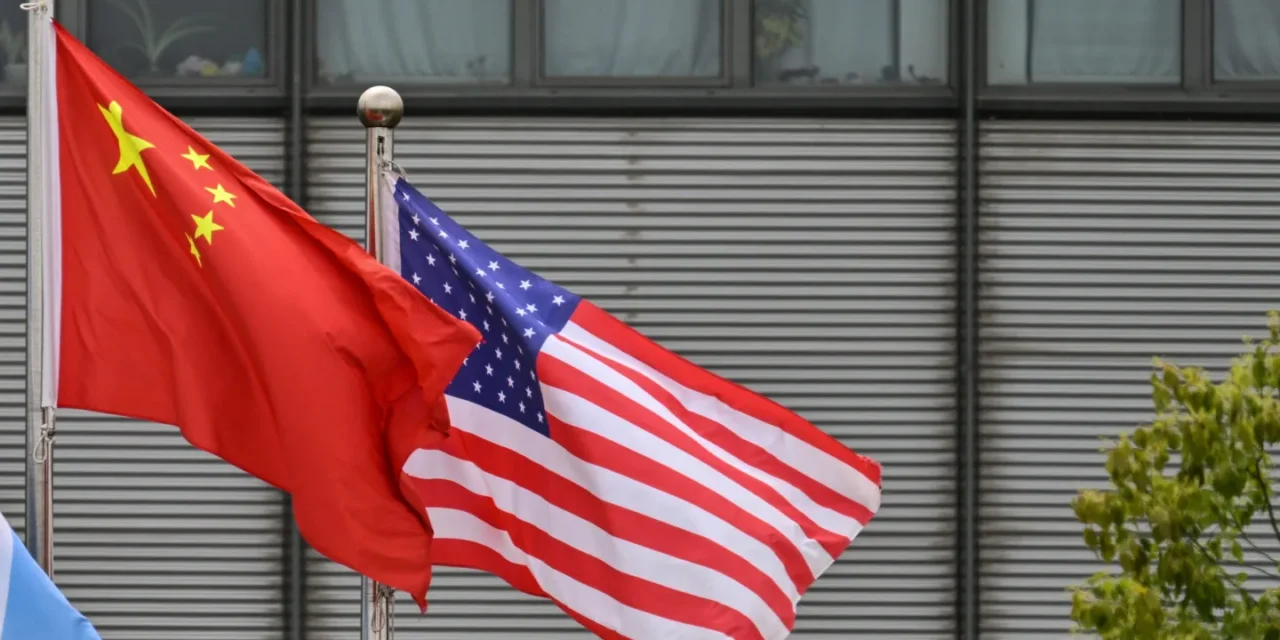
The Chinese Embassy in Washington has hit out at the latest round of US sanctions targeting Iran’s oil exports, warning the move threatens to further destabilize an already volatile Middle East and could drag on global economic growth.
The pushback comes as Washington continues its “maximum pressure” campaign against Tehran’s energy sector. Throughout 2025, the Treasury and State Departments have repeatedly named China-based “teapot” refineries, storage terminals, and shadow-fleet tankers accused of funneling sanctioned Iranian crude into Chinese ports.
A September round of sanctions targeted a China-based terminal operator accused of receiving at least eight Iranian crude cargoes, along with several vessel management firms. An October round widened the net further, adding roughly 40 individuals, entities and vessels linked to the Iranian energy trade, including another Chinese petrochemical terminal. That marked the fourth such action against Chinese refineries this year alone.
The newest expansion follows the same pattern, again placing Chinese buyers and facilitators of Iranian oil squarely in Washington’s sights.
Speaking to Congress.net, embassy spokesperson Liu Pengyu said the sanctions would fail to achieve their intended goal and urged all parties to step back from confrontation.
“Sanctions and pressure tactics do no help in resolving issues. They will only lead to escalation that serves no one’s interest,” Liu said.
He called for restraint on all sides and a return to diplomacy.
“China calls on parties to act rationally and with restraint, and avoid taking any measure that may further escalate tensions or deal a blow to global economic growth and financial stability,” Liu added.
“They need to return to the right track of political settlement through dialogue and negotiation at an early date. China will closely watch relevant developments and do what is necessary to protect our legitimate rights and interests.”
The embassy’s comments arrive amid ongoing instability around the Strait of Hormuz, the narrow waterway separating Iran, Oman and the UAE through which a large share of the world’s traded oil and liquefied natural gas passes.
The strait has repeatedly emerged as a flashpoint in the broader Iran-Israel conflict, including reported Iranian proposals to impose tolls on ships transiting the waterway, an idea the UN’s International Maritime Organization has warned would set a dangerous precedent.
Liu addressed the strait directly, framing safe passage as a shared global interest rather than a dispute confined to Iran and the West.
“The Strait of Hormuz is a strait for international navigation. It is in the common interest of regional countries and the international community to resume unimpeded passage through the strait as soon as possible,” he said.
“We call for concrete steps from relevant parties to prevent deterioration of the situation. China stands ready to work together with the international community and make sustained efforts to promote peace talks and deescalation.”
On the broader Iran-Israel conflict, Liu repeated Beijing’s long-held view that a military solution is not achievable, pointing to diplomatic proposals China has put forward since fighting began.
“China’s position on this issue is clear and consistent. We have always believed that dialogue and negotiation are the right way forward, and that military means offer no solution,” Liu said.
“Since the outbreak of the conflict, China has been working actively for a ceasefire and making every effort to promote peace. President Xi Jinping has put forward four proposals for maintaining and promoting peace and stability in the Middle East, and China and Pakistan have jointly proposed a five-point initiative on restoring peace and stability in the Gulf region and the Middle East.”
Liu said Beijing intends to keep pushing that diplomatic track.
“China will continue to follow the spirit of President Xi Jinping’s four proposals, work with the international community to provide greater support for dialogue and negotiations, and play a constructive role in achieving lasting peace in the Middle East,” he told Congress.net.
