
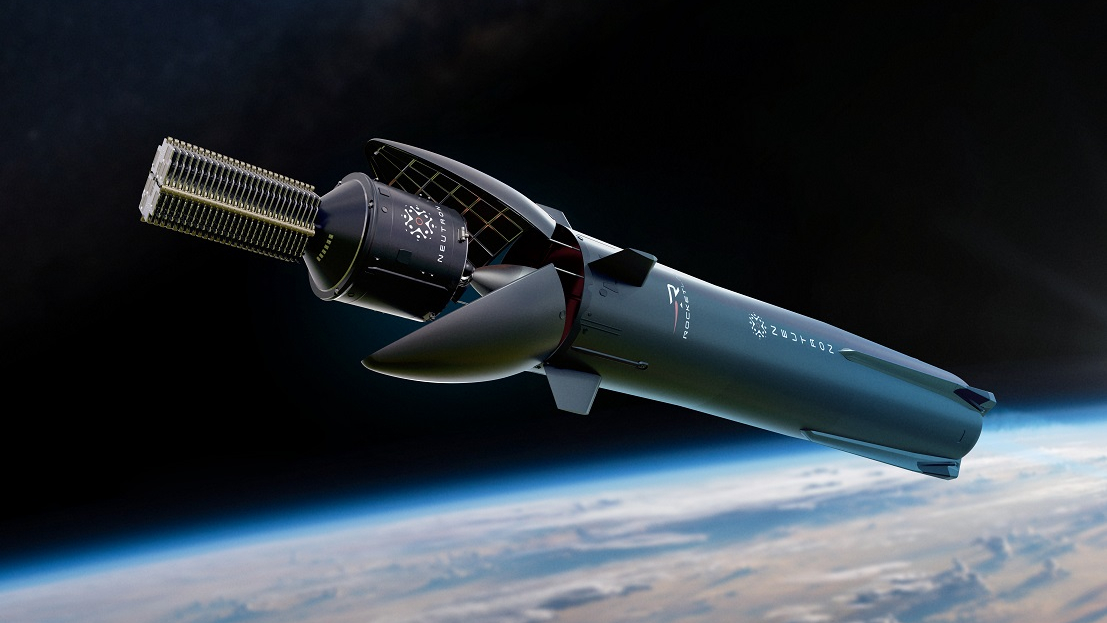
Rocket Lab (NASDAQ: RKLB) CEO Peter Beck is urging investors to stop measuring the Neutron program by its debut flight and start asking how quickly the company can reach its 10th mission.
Beck made his case as RKLB shares have shed nearly half their value over the past three months, weighed down by repeated delays to Neutron’s first launch.
The stock has closed lower for five consecutive sessions and is now down 2% for the year, though it remains 54% higher over the past 12 months.
Neutron’s earliest possible launch has slipped to the fourth quarter of 2026, following a first-stage tank rupture caused by a manufacturing defect in a critical joint during a hydrostatic pressure test in January.
Beck acknowledged on the company’s latest earnings call that “the window for an end-of-year launch is narrowing,” even as the first-stage tank is expected to reach Rocket Lab’s Virginia launch complex this quarter.
Rather than defending the timeline, Beck reframed the debate entirely, arguing that a 10th flight proves far more than a first. “The question that investors and analysts should be asking me is like, Pete, when’s the 10th rocket going to be on the pad?” he said.
Beck explained that reaching that milestone would confirm repeatable manufacturing, working reusability, and high-cadence operations. “By the time you get to rocket 10, your reusability’s sorted, all your production’s sorted, you’re banging out whole stages, and, you know, all the launch infrastructure is just cranking,” he said.
He was equally direct about the outcome he wants to avoid, warning that a long gap between first and second flights would be damaging. “It would really be bad if, like, we put the first rocket on the pad, and then it was like two years before we went and put the next one on the pad,” he said. “I just don’t want to be there.”
Beck acknowledged that optimism routinely outruns reality across the industry, saying: “I think every rocket CEO is probably inflicted with the same, you know, optimism then reality.”
Rocket Lab’s existing small-launch vehicle, Electron, provides a practical blueprint for what Neutron could become at scale, with the company completing its 93rd Electron launch on Thursday while booking nine additional dedicated missions through 2030.
According to data from Fiscal.ai, Rocket Lab’s quarterly launch cadence rose from two vehicles in the fourth quarter of 2021 to six in the second quarter of 2026, a 200% increase, while launch-services revenue climbed from $13.8 million to $44.6 million over the same period.
The company reported record second-quarter revenue of $234 million, up 62% year-over-year, and a record backlog of $2.36 billion, supported by more than $437 million in recent launch contracts expanding its manifest beyond 90 missions.
Beck described Rocket Lab’s dual role as both prime contractor and component supplier as a structural advantage. “Even if we lose, we still win,” he said. “And when we win, we win twice,” pointing to an $800 million Space Development Agency award that became worth more than $1 billion after competing primes ordered Rocket Lab hardware.
SpaceX CEO Elon Musk has said the company will eventually wind down Falcon once Starship is launching reliably several times a week, and SpaceX has reportedly stopped accepting most new dedicated Falcon 9 and rideshare bookings beyond late 2028, potentially opening the market for Neutron.
Beck does not intend to compete with SpaceX across every segment, acknowledging that “it would be very difficult to go and play in the broadband market,” given the capital behind Starlink.
Instead, Rocket Lab is pursuing Iridium through a proposed $8 billion acquisition, targeting defense and safety-critical communications. “If you ignore broadband because, you know, two really well-capitalized people are taking care of that, what’s the next logical thing to do in comms?” Beck said. “It’s like, you know, safety-critical, defense-critical services. That is Iridium.”
The deal, structured at $27 in cash per Iridium share plus Rocket Lab stock, would add an operational constellation, L-band spectrum, and recurring subscription revenue to Rocket Lab’s portfolio, with the two companies generating $1.47 billion in combined 2025 revenue on a pro forma basis.
Beck said the transaction would also make Rocket Lab its own Neutron customer, mirroring the internal launch demand Starlink generates for SpaceX. “I’m now my own user of launch for Iridium,” he said. “I need launch too. So I’m like my harshest customer.”
Iridium shareholders are scheduled to vote on the deal on September 24, and Beck is already signaling further moves ahead, teasing “a series of, like, transformational things” over the coming years.
Retail sentiment on Stocktwits for RKLB has turned bearish, with its sentiment score falling to 36 out of 100, just above a record low of 30, as message volume has dropped nearly 60% over the past three months.
