
RTX Corporation (NYSE: RTX) has reported a record-breaking backlog of $289 billion, reflecting surging demand across both its commercial aerospace and defense business segments.
The total backlog grew 22% year over year and 6% sequentially, marking the largest order pipeline in the company’s history.
Of the $289 billion total, approximately $170 billion is attributable to commercial aerospace operations, with the remaining $119 billion coming from the defense side of the business.
To put that figure into context, RTX management’s recently upgraded guidance projects adjusted sales of $95 billion to $96 billion for 2026, meaning the backlog represents roughly three times the company’s projected annual revenue.
That ratio signals a substantial runway of secured future business, providing the company with a significant buffer against near-term economic uncertainty or demand fluctuations.
Ongoing order growth outpacing sales growth is what continues to drive the backlog higher, and that dynamic also serves to de-risk RTX from short-term economic weakness.
The defense segment produced particularly striking results, with Raytheon bookings reaching $19.9 billion for the quarter and a book-to-bill ratio of 2.42, one of the strongest readings in recent memory.
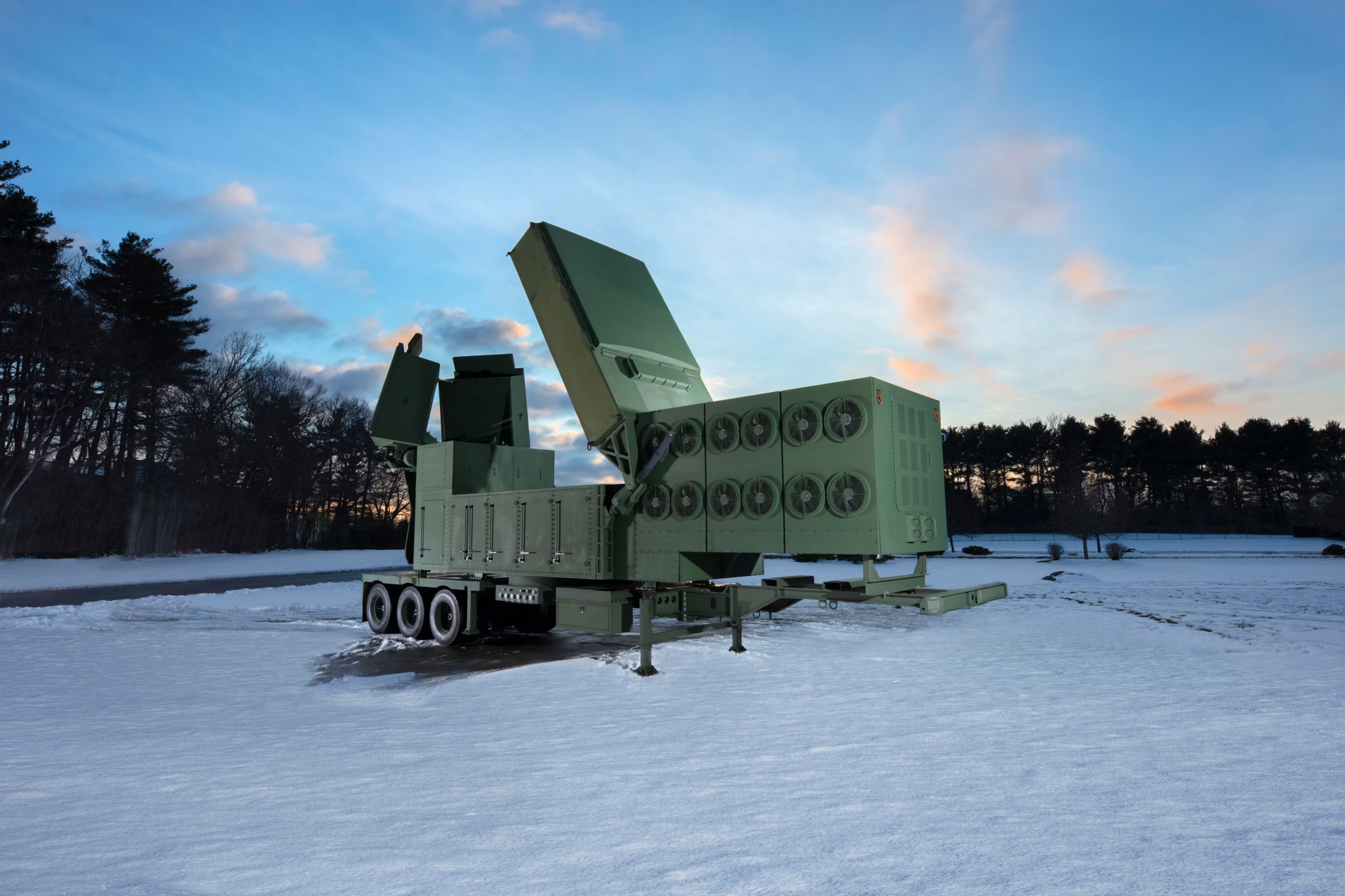
That defense order surge was driven by $5 billion in GEM-T Patriot effector orders and an additional $4 billion in classified awards, underscoring robust government demand for advanced defense systems.
RTX’s second-quarter 2026 financial performance reinforced the strength of the backlog narrative, with adjusted sales coming in at $24.7 billion, representing 16% organic growth for the period.
Adjusted earnings per share reached $1.89, a 21% increase year over year, supported by 18% growth in segment operating profit across the company’s business units.
Free cash flow for the quarter came in at $2.9 billion, providing RTX with meaningful financial flexibility to invest in production capacity and return capital to shareholders.
A growing backlog at this scale is widely regarded as a cornerstone of the investment case for RTX, as it signals that both revenue and earnings are likely to continue expanding in the years ahead.
Analysts and investors watching RTX will want to monitor management commentary on margin expansion alongside backlog growth, as the two metrics ideally move in tandem to support long-term value creation.
