
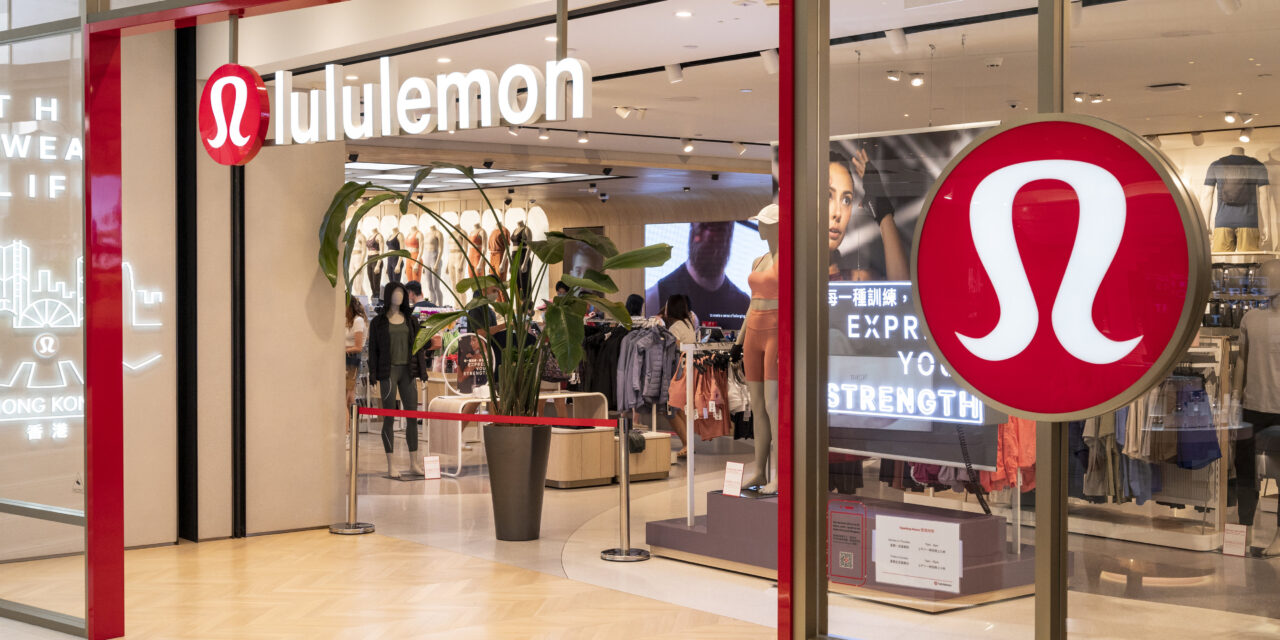
Lululemon (NASDAQ: LULU) has overhauled its leadership structure across Greater China and the Asia-Pacific region, signaling a deepened commitment to growth in some of the world’s most competitive consumer markets.
The Vancouver, Canada-based athleisure brand has promoted San Yan Ng, who has served as general manager of Lululemon’s China business for the past eight years, to the newly expanded role of regional president of China and APAC.
The promotion takes effect immediately, placing Ng at the helm of a broader combined regional structure that consolidates China and APAC under shared leadership for the first time.
Simultaneously, Lululemon announced the hiring of Jeffrey Hang as senior vice president and general manager of APAC, a newly created position at the company that also takes effect immediately.
Hang brings a distinguished luxury retail background to the role, having previously served as managing director for Bulgari across Southeast Asia, India, Australia and New Zealand, and as senior vice president and CEO of Louis Vuitton China.
Ng also carries deep luxury sector experience, having spent 12 years at Loewe where she rose to managing director of Asia-Pacific, before moving to Tory Burch as managing director and vice president of Asia retail and wholesale.
The dual appointments reflect Lululemon’s stated ambition to “strategically increase” market share and build greater “local relevance” across China and the broader Asia-Pacific region.
Andre Maestrini, interim co-chief executive officer, president, and chief commercial officer at Lululemon, framed the moves as central to the company’s long-term growth strategy in a formal statement.
“China and the Asia-Pacific region represent some of the most dynamic consumer markets globally, and they are critical to Lululemon’s growth,” Maestrini said in a statement.
The unified leadership structure is intended to help the company “better leverage market insights, scale capabilities, and continue delivering experiences that resonate with guests across diverse cultures and communities,” according to the company.
Hang expressed confidence in the region’s prospects, emphasizing the importance of culturally attuned strategy across varied markets with distinct consumer profiles.
“Each market in the region holds significant growth potential, with distinct guest needs, cultural backgrounds and market environments,” Hang said, adding that the teams would remain “relentlessly focused on our guests to create greater value for the company.”
The leadership restructuring underscores Lululemon’s recognition that Asia-Pacific, and China in particular, require dedicated, locally informed executives capable of navigating complex and fast-evolving retail landscapes.
