
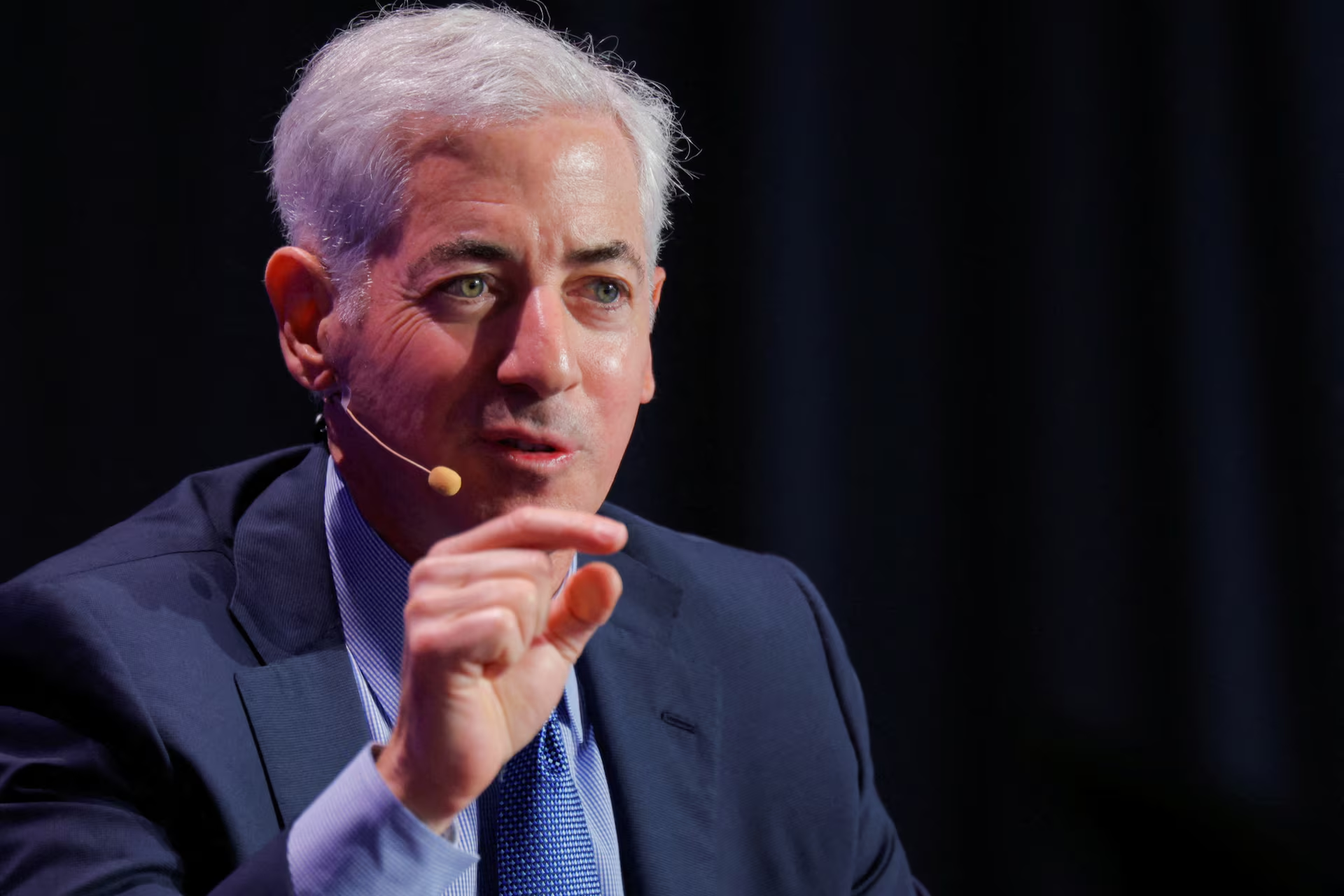
Billionaire investor Bill Ackman loaded up on two underperforming stocks during the second quarter, signaling he sees significant value where Wall Street currently does not.
Ackman’s firm, Pershing Square Capital Management, purchased shares of Netflix (NASDAQ: NFLX) and added to its existing position in Uber Technologies (NYSE: UBER), both of which have struggled badly over the past year.
Netflix has fallen 33% over that period, while Uber has declined 18%, making these buys notable contrarian bets from one of the market’s most closely watched investors.
Ackman founded Pershing Square Capital Management and has built a reputation for outperforming the S&P 500 over multiple decades, lending considerable weight to every portfolio decision his firm makes.
Netflix has faced a difficult stretch recently, dealing with slower revenue growth, unimpressive guidance, and a failed blockbuster acquisition that rattled investor confidence.
The company also announced it will release its “What We Watched” engagement report just once a year starting in 2027, down from twice annually, a move that has not been well received by investors already questioning its growth trajectory.
Despite those headwinds, Netflix still expects its ad revenue to reach $3 billion this year, double what it generated in 2025, suggesting the advertising business remains a meaningful and expanding pillar of its future growth.
Uber’s recent troubles stem from weak revenue growth, disappointing guidance, and heavy spending on artificial intelligence that some analysts believe will not deliver returns proportionate to the investment.
The rise of autonomous vehicles and robotaxis has also cast a long shadow over Uber, with many market participants arguing the technology could severely damage or even render obsolete Uber’s core ride-hailing business model.
Ackman and his team appear to hold a contrarian view on autonomous vehicles, with the argument being that reduced reliance on human drivers could actually improve the economics of Uber’s platform rather than destroy it.
Uber’s globally recognized brand and existing ride-hailing infrastructure give it a potential edge in adapting to an autonomous future, rather than being displaced by it.
Both stocks, despite their recent underperformance, carry bull cases rooted in durable competitive advantages, expanding revenue streams, and long-term market positioning that Ackman’s track record suggests should not be dismissed lightly.
